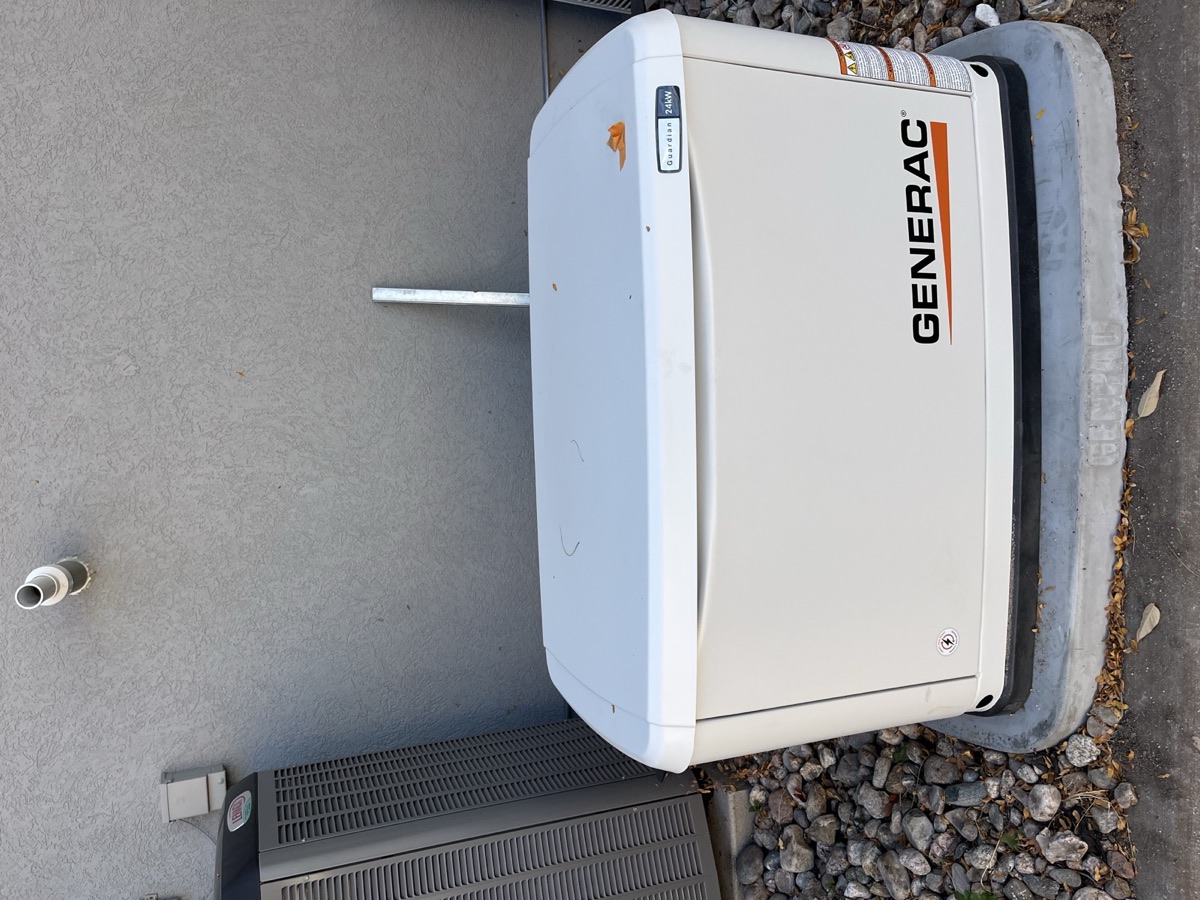
The natural gas vs propane generator question usually answers itself: if your house has a gas line, run the generator on natural gas. It never runs out, it costs less per hour, and there’s nothing to refill. Propane is the answer for rural Northern Colorado — Wellington, Berthoud, Estes Park, the foothills — where there is no gas line and a tank on the property is the only option. Propane isn’t a downgrade. It actually carries more energy per cubic foot than natural gas. It just adds a tank to size, fill, and keep an eye on in cold weather.
Homeowners comparing a natural gas vs propane generator are usually asking the wrong first question. The fuel decision isn’t really a preference — it’s mostly decided by where your house sits. Three Crowns Electric has installed 70+ standby generators across Northern Colorado, and the pattern is consistent: homes in Fort Collins, Loveland, Greeley, and Windsor already have a gas line from Xcel or Atmos, and the generator ties straight into it. Homes east of Wellington, out past Berthoud, or up toward Estes Park often have no gas service at all — so the generator runs on propane from a tank on the property.
Here’s how the two fuels compare, what altitude and cold do to both, and how to think about it before you get a quote.
The short answer: if you have a gas line, use it
Jon Trujillo, the Master Electrician behind Three Crowns, has a simple hierarchy when a homeowner asks about generator fuel type:
“Number one is always trying to run the generator from natural gas. So everything’s just tied into the home.”
— Jon Trujillo, Master Electrician
The reasoning is practical. A natural gas standby generator has no fuel to store, no tank to fill, and no delivery truck to schedule. When the next Front Range windstorm takes power out for days, it just keeps running without anyone touching it.
Propane comes into the conversation when there is no gas line, or when running one to the generator location would cost more than it’s worth. That’s not a consolation prize. It’s the standard setup for a big share of rural Northern Colorado, and it works.
Natural gas vs propane: the side-by-side
| Natural gas | Propane | |
|---|---|---|
| Fuel supply | Piped from the utility (Xcel or Atmos in most NoCo towns). Effectively unlimited. | Stored in a tank on your property. Finite — you’re limited by tank size and fill level. |
| Runtime in an outage | Indefinite, as long as the gas keeps flowing (it almost always does — see below) | Days, not weeks. A 500-gallon tank buys roughly 5–8 days of continuous moderate-load runtime. |
| Energy content | ~1,000 BTU per cubic foot | ~2,500 BTU per cubic foot — most units produce full nameplate output on propane |
| Output rating | Most air-cooled standby units rate about 10% lower on natural gas (a 24kW unit delivers roughly 21–22kW) | Full rated output |
| Cold-weather behavior | Unaffected by temperature at the meter | Tank pressure drops in deep cold, especially on a low tank — size and fill level matter |
| Fuel cost during an outage | Cheapest option — typically a few dollars an hour at moderate load | Noticeably more per hour, plus refill delivery during extended regional outages |
| Install considerations | Gas line run from the meter — sometimes 30–40 feet of trenching if the meter and panel are on opposite sides of the house | Tank set (buy or lease), code setback clearances, line from tank to unit — Jon’s standard is a tank about 15 feet from the generator |
| Permitting | Permit + one-line drawings + licensed plumber for the gas line | Permit + one-line drawings + tank placement per code + propane supplier coordination |
| Who it fits | Town homes with existing gas service | Rural Wellington, Berthoud, Estes Park, foothills, and anywhere without a gas main |
One honest note on that output row: the derating on natural gas is published right on the manufacturer’s spec sheets — Generac, Kohler, and Cummins all list separate output ratings per fuel — and a proper load calculation accounts for it. It’s not a reason to pick propane. It’s a reason to size the unit correctly for the fuel it will actually burn — which is exactly what the on-site load calculation is for.
Does natural gas keep flowing when the power goes out?
Yes. This is the question homeowners ask most, and it’s the one that makes natural gas the default:
“You’ll always have natural gas going to your house.”
— Jon Trujillo, Master Electrician
An electrical outage kills the wires, not the pipes. The gas distribution system doesn’t depend on your neighborhood’s power lines, so when a windstorm drops a line on County Road 30, your meter keeps supplying gas. The generator senses the outage, starts itself, and runs the whole house off the same gas supply your furnace was already using. A simultaneous electric-and-gas outage in Northern Colorado is rare enough that it isn’t the scenario worth planning around.
Why propane is the rural answer, not a downgrade
Drive fifteen minutes east of I-25 or up the Big Thompson Canyon and the gas mains stop. Rural Wellington, unincorporated Larimer County, Berthoud acreage properties, Estes Park, Glen Haven — a lot of these homes already run the fireplace or the water heater off a propane tank. For them, a propane standby generator isn’t plan B. It’s the plan.
And rural homes often need a generator most. A home on a well loses water the moment the power drops — no faucets, no flushing toilets. Add a multi-day mountain outage, which is routine in the foothills, and backup power stops being a luxury.
The propane setup is straightforward: a tank set near the unit — Jon’s standard is about 15 feet from the generator — with a buried line to the generator. If you already have a tank for the house, the install may tie into it or add a second tank depending on capacity. Three Crowns coordinates the tank work and the gas plumbing with the third-party plumber they use on every job, so there’s one point of contact instead of three contractors pointing at each other.
Two things propane does better than natural gas: it delivers full nameplate output (no derating), and it’s not dependent on any utility. If you want backup power that answers to nobody’s infrastructure but your own, a full propane tank is it.
What altitude and cold do to generator output in Colorado
Two Colorado realities that the national generator guides skip:
Altitude derating. Engines breathe air, and there’s less of it at 5,000 feet. As a rule of thumb, a standby generator loses roughly 2–3% of its output per 1,000 feet of elevation. In Fort Collins or Loveland, that can mean 10% or more off the number on the box — in Estes Park, more still. Stack that on top of the natural gas derating and a “22kW” unit may deliver several kilowatts less than the brochure suggests. This is why sizing off square footage alone gets homes in trouble, and why the on-site load calculation matters more here than at sea level.
Cold and propane pressure. Propane is stored as a liquid and has to vaporize before the engine can burn it. Vaporization slows as the tank gets cold, and slows further as the tank gets empty. In below-zero stretches, a small or near-empty tank can struggle to feed a generator under load. The fixes are simple: size the tank generously, and don’t let it ride below about 30% going into winter.
Cold affects the engine itself too, on either fuel — which is why Jon recommends a cold weather kit on every Northern Colorado install. It keeps the oil pan warm so the engine actually starts at the coldest moment of the year. That’s covered in the cold weather kit guide.
How big a propane tank do you need for a multi-day outage?
Rough math, not a quote — but it’s the right starting frame.
A typical 22–26kW whole-home unit burns somewhere around 2–3 gallons of propane per hour at moderate load. A 500-gallon tank is filled to 80% for safety, so call it 400 usable gallons. That works out to roughly 5–8 days of round-the-clock runtime — longer if you’re disciplined about load, since the generator only burns what the house is drawing.
A few practical notes:
- A 250-gallon tank is tight for whole-home backup. A foothills home planning for a three-plus-day outage should be thinking 500 gallons.
- The generator self-tests either way. Every Three Crowns install is programmed to run itself for about 15 minutes every two weeks — trivial fuel use, but the unit stays exercised and ready.
- Regional outages strain propane delivery. When half the county loses power for a week, everyone calls the propane company at once. A generously sized tank is the buffer between you and that phone queue.
Tank sizing interacts with unit sizing, which interacts with what you want backed up. That’s a site-visit conversation, not a chart lookup.
What does each setup cost to install and run?
The typical Three Crowns whole-home generator package runs about $14,000 complete — the unit, the automatic transfer switch, the concrete pad, the gas connection, the permit, and the inspection — with roughly a two-week timeline from estimate to install, most of which is permitting. That number holds for both fuels. What moves it:
- On natural gas: distance from the gas meter to the generator location. If the meter and the electrical panel are on opposite sides of the house, there may be 30–40 feet of trenching to get gas to where the generator needs to sit. More trench, more cost.
- On propane: the tank. Buying a tank costs more up front; leasing from a propane supplier costs less up front and more over time. Setback clearances and tank placement can also dictate line length.
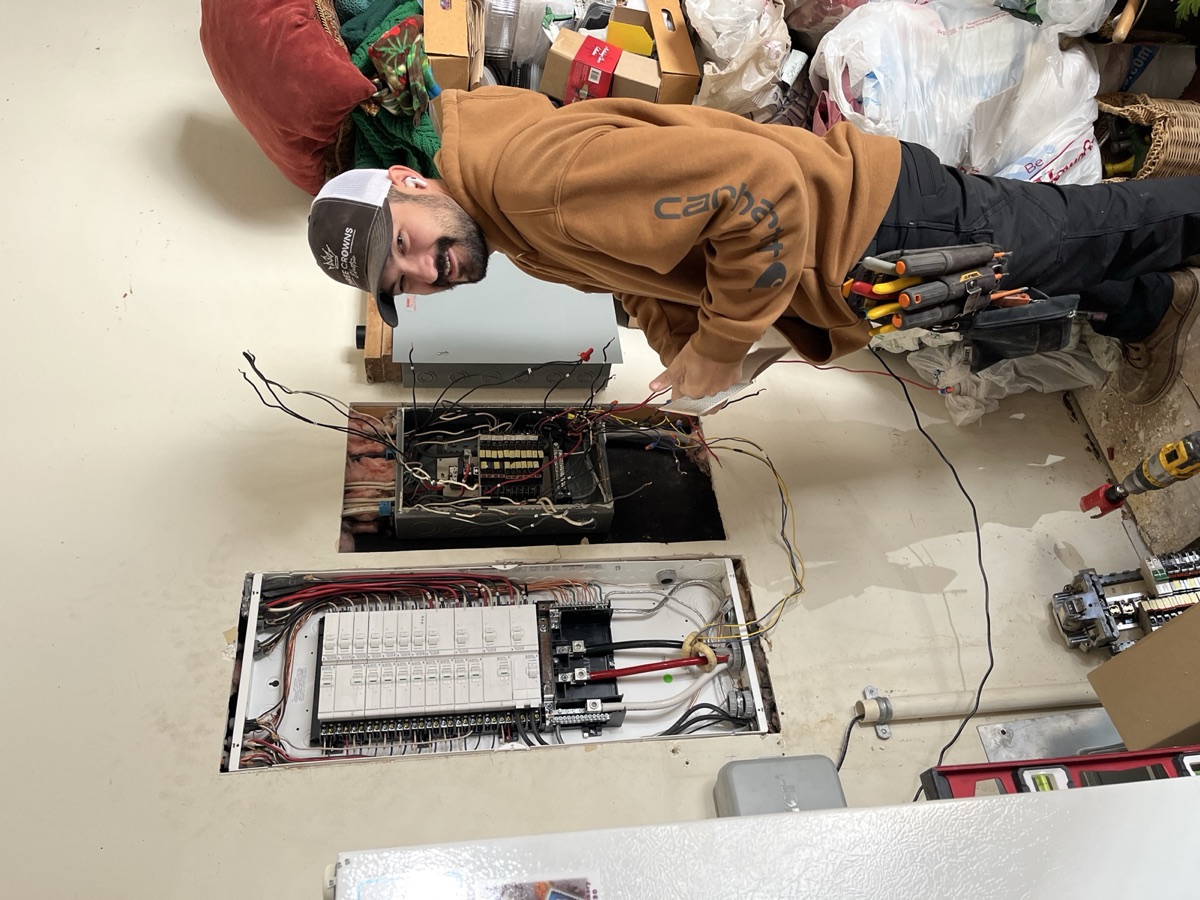
- On either: panel condition. If the house is running a 100-amp panel from the 1970s, that gets addressed before a generator hangs new load on it.
Running cost is where the fuels genuinely separate. Natural gas is the cheapest way to run a generator — typically a few dollars an hour at moderate load, billed on your regular gas bill. Propane can run several times that per hour during a long outage, plus the refill. For a fuel you burn a few days a year, that difference rarely decides the purchase — but it’s worth knowing before the first week-long outage, not after.
On brands: Three Crowns installs Generac, Kohler, and Cummins — all three run on either fuel, and most air-cooled units can be configured for one or the other at install. The Generac vs Kohler vs Cummins comparison covers why Generac gets the nod most often in NoCo (parts availability, mostly). Still weighing a standby unit against a portable? That comparison is here.
When to call a licensed electrician
Fuel choice is only one piece of a standby generator install. Call a licensed electrician when:
- The fuel plan in a quote is vague. A real quote names the fuel, the gas line route or tank location, the trench length, and what’s included. “Plus gas hookup, TBD” is how a $14K job becomes a $20K job.
- You’re on propane and nobody has talked about tank sizing. If the installer hasn’t asked how long you expect outages to last, the tank is being guessed at.
- Your panel is 100 amps or the house predates 1980. The generator connection may need panel work first — better to know at the estimate than at the inspection.
- Someone proposes skipping the permit. Every legitimate NoCo install involves a permit, one-line drawings, a licensed plumber for the gas work, and an inspection. An unpermitted install can void the warranty and create insurance problems after a fire. The Electrical Safety Foundation treats permanent standby units as professional-install equipment for the same reason.
Three Crowns Electric handles the whole sequence — electrical, gas coordination, permit, inspection — as one job with one point of contact, on whole-home generator installs across Northern Colorado. 518+ five-star Google reviews, salaried technicians who aren’t paid to upsell, and a Master Electrician with 20 years on the tools. Call (970) 460-0014 for a free quote — the site visit includes the load calculation and a straight answer on which fuel your property actually supports.
Frequently asked questions
Can a generator be switched from natural gas to propane later?
Usually, yes. Most Generac, Kohler, and Cummins air-cooled standby units are convertible between the two fuels — the conversion changes the fuel settings and regulator configuration. It’s a job for the installer, not a weekend project, but if you’re on propane today and the gas main reaches your road in five years, the generator doesn’t become obsolete.
Is a propane generator more powerful than a natural gas generator?
Slightly, unit for unit. Propane carries about 2.5 times the energy per cubic foot, so most standby generators are rated around 10% higher on propane than on natural gas. In practice this doesn’t drive the decision — a proper load calculation sizes the unit for the fuel it will actually burn, on either fuel.
How far does the propane tank need to be from the generator?
Jon’s standard setup places the tank about 15 feet from the generator, with a buried line between them. Exact clearances from the house and property lines depend on tank size and code — tank placement is part of the site visit and the one-line drawings submitted for the permit, not something to eyeball.
Will a propane generator start in below-zero weather?
Yes, if the install accounts for Colorado. Two things matter: a cold weather kit so the engine oil stays warm enough to crank, and a tank that’s adequately sized and reasonably full — propane vaporizes more slowly in deep cold, and a near-empty tank in a cold snap can starve the engine.
Do I have to arrange the gas line or propane tank myself?
No. Three Crowns coordinates the licensed plumber for natural gas line work and the propane supplier for tank setups, schedules the inspections, and handles the permit paperwork. One contact, start to finish, inside the roughly two-week timeline.
Last reviewed by a licensed Master Electrician: August 2026