




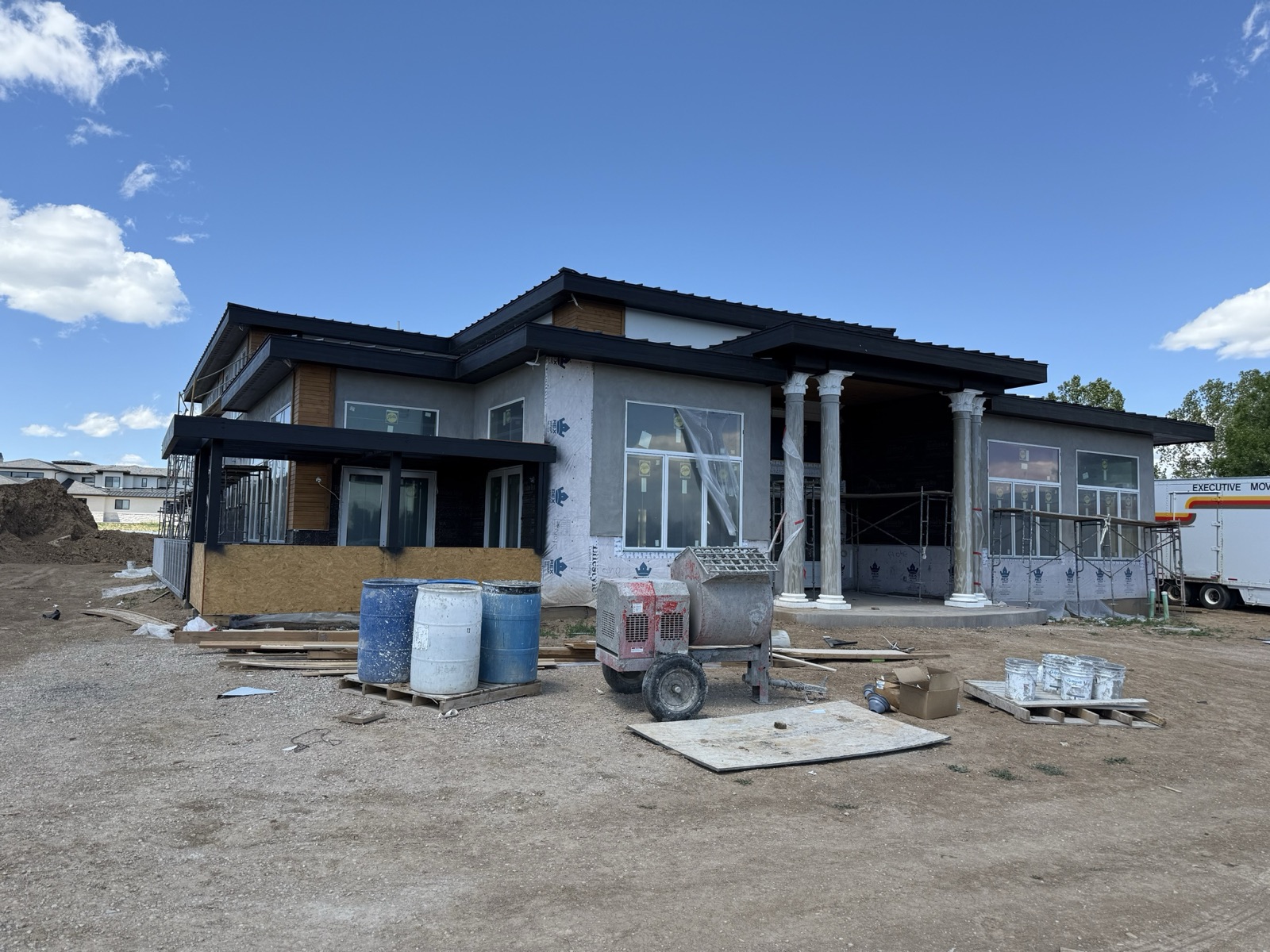

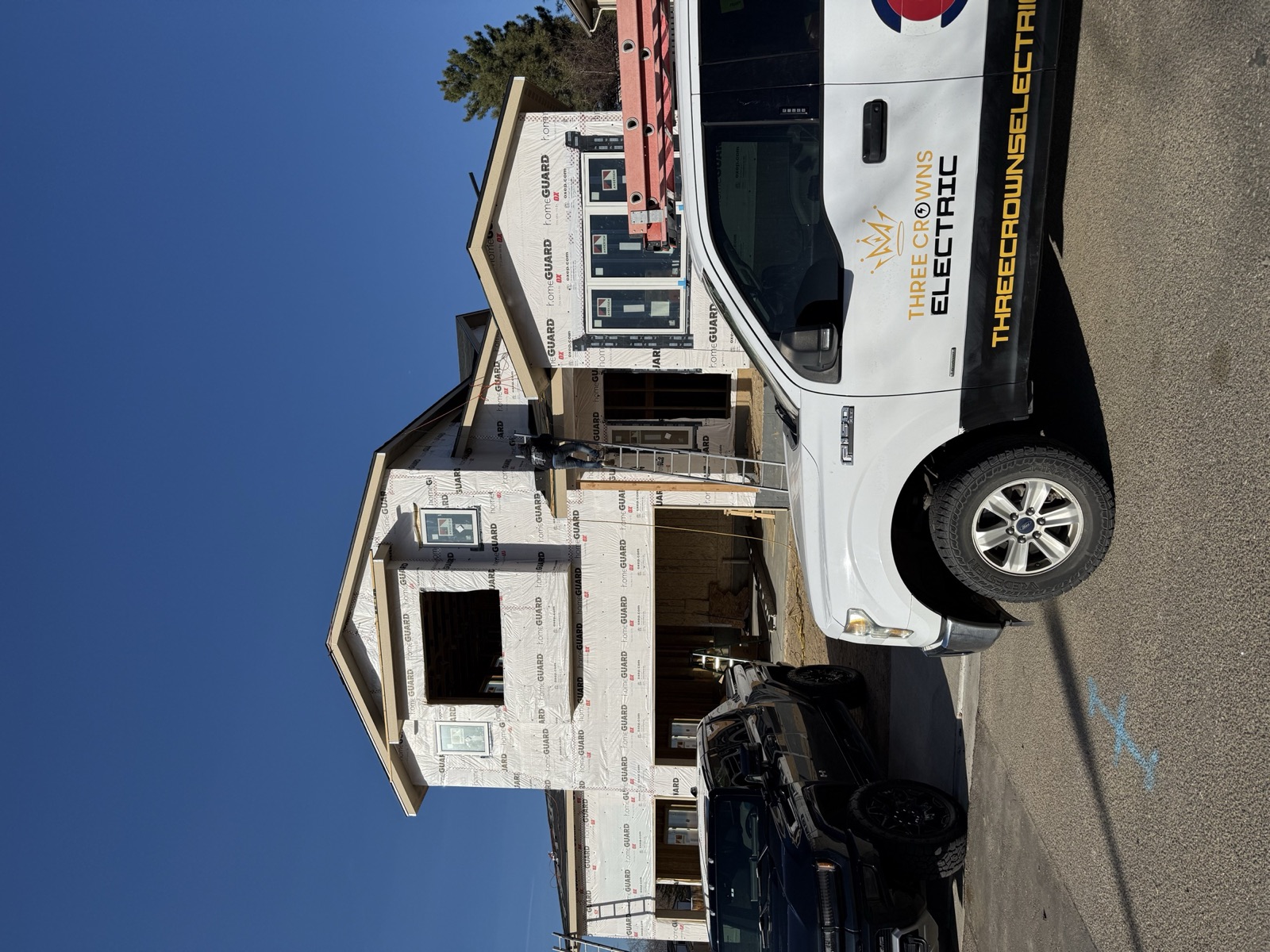
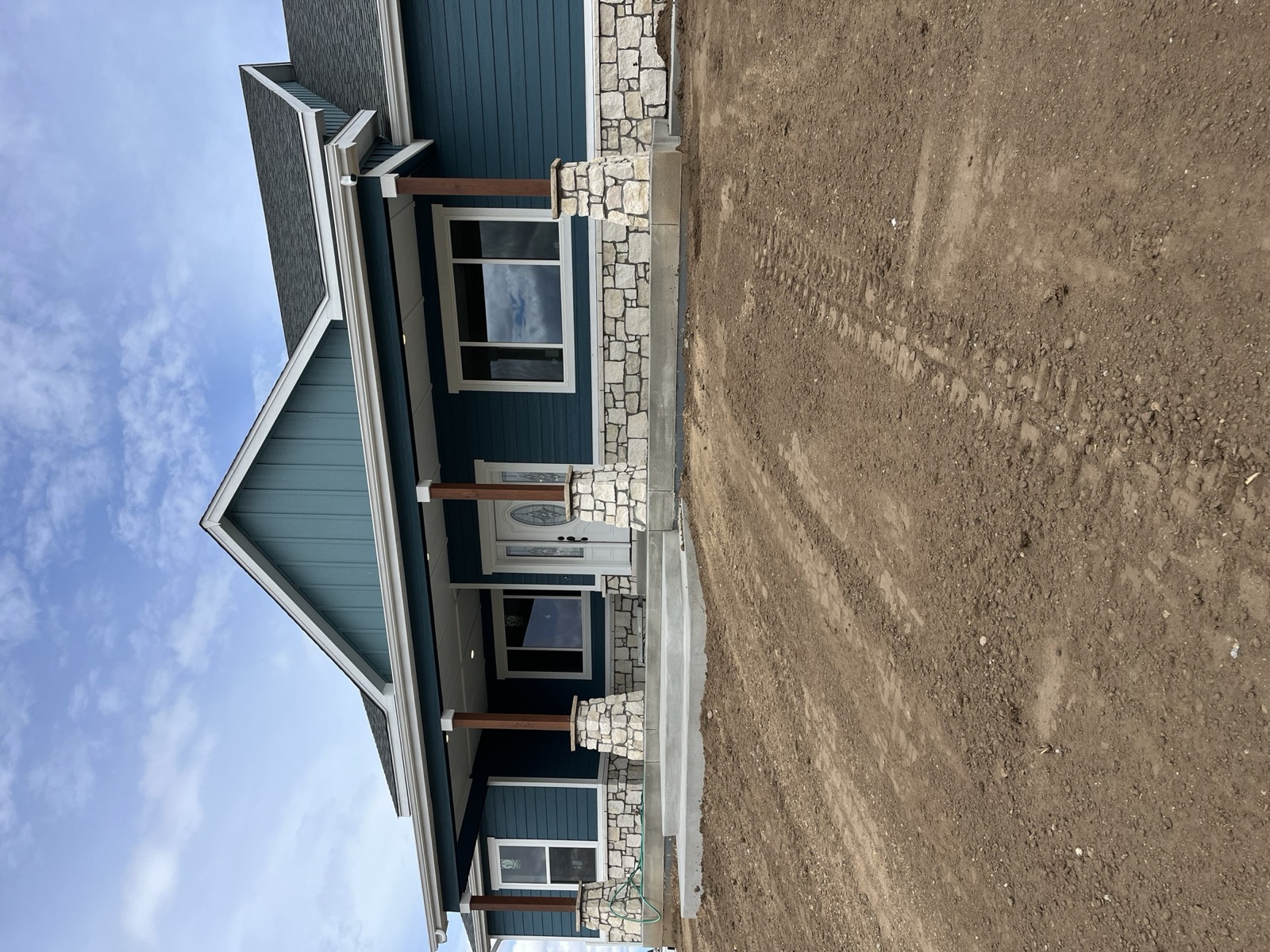
New construction electrical wiring in Northern Colorado typically runs $5,000–$20,000+ depending on square footage, fixture count, low-voltage scope, and finish level. We work with custom builders, owner-builders, and production builders. Standard scope: rough-in (after framing, before drywall), trim-out (after drywall + cabinets), final (after fixtures + inspection) — quoted as a single fixed price. Smart-home pre-wire, EV charger rough-in, and solar-ready 200A panel included on every build that wants them. NEC code compliance + AFCI/GFCI/TR outlets standard.
New construction is the easiest time to do every electrical thing right. The walls are open, the ceiling is exposed, and every outlet, switch, fan box, conduit run, and low-voltage cable can be placed where the homeowner actually wants it — not where the original builder’s spec sheet said. We wire for the house people live in, and we plan ahead for the EV charger, the heat pump, the home office, and the solar array that may not be installed yet but probably will be.
We work with custom builders, owner-builders, and production builders across Northern Colorado. About 70% of our new construction work is with custom builders and GCs; the remaining 30% is owner-builders running their own project. The scope, schedule, and quote process is the same.
How much does it cost to wire a new home in Northern Colorado?
A complete new construction electrical scope runs $5,000 to $20,000+ depending on the home size, fixture count, low-voltage scope, and finish level. The median project lands around $12,500.
| Home profile | Typical electrical cost | Notes |
|---|---|---|
| 1,500 sq ft production / spec home | $4,500–$6,500 | Standard fixtures, code-minimum scope |
| 2,500 sq ft production / typical custom | $6,500–$10,000 | More circuits, some lighting design |
| 3,500 sq ft custom (smart home + EV rough-in) | $10,000–$15,000 | Layered lighting, low-voltage, smart switches |
| 5,000+ sq ft custom (theater + smart + multi-EV + solar-ready) | $15,000–$25,000+ | Full luxury build scope |
The price drivers are:
- Square footage — more wall surface = more circuits, outlets, switches, fixtures
- Fixture count — every recessed can, pendant, sconce, switched outlet, and dimmer adds material + labor
- Low-voltage scope — Cat6 drops, security camera runs, AV pre-wire, smart thermostats — these scale fast on smart-home builds
- Smart switches and dimmers — Lutron Caseta vs RadioRA vs Crestron levels
- EV rough-in count — single charger vs two-bay vs panel-side conduit for future
- Solar-readiness — interconnect breaker slot, inverter conduit, optional pre-wire to roof
We quote rough-in, trim-out, and final as a single fixed price at the start of the project. No change orders unless you change the scope yourself. No mid-build “we found something” surprises.
When in the build do you come in?
Three site visits, minimum, plus as many coordination visits as the project needs:
| Stage | Timing | Scope |
|---|---|---|
| Rough-in | After framing, before drywall | Pull all wire, set boxes, panel install, prep for inspection |
| Rough-in inspection | After our rough-in, before insulation | City/county inspector verifies code compliance |
| Insulation + drywall | (Not us) | GC’s drywallers go in after rough-in inspection passes |
| Trim-out | After drywall, paint, and cabinets | Install all receptacles, switches, fixtures, panel finish |
| Final inspection | After trim-out + fixtures set | Inspector signs off; meter goes live |
| Final | After final inspection | Walk-through, dimmer programming, smart-home setup |
For larger custom builds, we’re on site more often — sometimes weekly during rough-in for things like medium-frame wall corrections, smart-home conduit additions, or in-floor heating tie-ins. Whatever the GC needs.
The GC owns the master schedule. We work to it.
Do you work with custom builders, owner-builders, and production builds?
All three. The scope and quote process is the same regardless of who we report to.
Custom builders / GCs — most of our new construction work. We work directly with the project manager on rough-in/inspection/trim timing, attend coordination meetings if requested, and treat them as the primary point of contact. The homeowner gets to make their preferences known, but the GC is who signs the change orders.
Owner-builders — homeowners running their own project without a GC. We treat them the same as a GC: same coordination, same milestones, same accountability for our piece. Owner-builders often run smoother projects than they expect because we communicate the same way we would with a contractor.
Production builders — track home builders running 10+ similar units. We’ve worked with a few smaller NoCo production builders. The economics work differently (more units = lower per-unit pricing) but the scope per home is mostly the same.
The variable that matters more than who you are is whether the build is committed to good electrical infrastructure. A 2,500 sq ft production home with a thoughtful homeowner who specs proper EV rough-in, smart switches, and a solar-ready panel can be a better project than a 5,000 sq ft custom where the GC fights every code-required upgrade. We work both extremes.
What’s included in the rough-in?
The rough-in is the pre-drywall electrical phase — by far the biggest single visit. Standard scope:
- Service entrance — meter base, mast, service conductors to the panel location
- Main panel install — 200A typical (sometimes 320A for larger custom homes), AFCI/GFCI breakers per current code
- Sub-panel install if applicable — basement, detached garage, ADU
- Branch circuits — every receptacle, switch, lighting fixture, and dedicated appliance circuit pulled to its location
- Low-voltage rough-in — Cat6 drops, alarm wiring, thermostat wiring, doorbell, audio
- Smart-home pre-wire — neutral wires to switches (required for smart switches), camera drops, network rack location
- EV charger rough-in (if requested) — dedicated 50A conduit + wire from panel to garage wall location
- Solar pre-wire (if requested) — conduit from panel to roof for future inverter, interconnect slot reserved on panel
- Box installation — every electrical box set, leveled, and stubbed to the appropriate depth for drywall
- Inspection prep — labeled circuits, organized panel, ready for the city/county inspector
The rough-in stage typically runs 3–7 days on site for a typical home, longer for custom and smart-home builds.
Do you rough in for EV chargers and solar?
Yes — on every build that wants it. Both are dramatically cheaper at rough-in than at retrofit:
EV charger rough-in: typically $400–$700 added during rough-in. Dedicated 50A conduit and wire from the main panel to the garage wall location, capped and labeled. When the homeowner buys the EV (now or in 5 years), the actual charger install is a 1-hour job because the rough-in did the hard work.
Compare that to a retrofit: $1,500–$3,500 to fish wire through finished walls, sometimes plus a panel upgrade. The math says rough-in every time.
Solar pre-wire: typically $500–$1,000 added during rough-in. We install a 200A panel (instead of 100A or 125A), reserve a slot for the solar interconnect breaker, and run conduit from the panel to where the roof inverter would go. Even if the homeowner never installs solar, the 200A panel pays for itself in headroom for future EV chargers, hot tubs, heat pumps.
For full backup integration, see our Tesla Powerwall page.
Who pulls permits and coordinates the rough-in inspection?
We do, on every project. Permits and inspections are part of the fixed-price scope.
Permitting:
- We submit the electrical permit application to your jurisdiction (Fort Collins, Loveland, Windsor, Greeley, Boulder, Longmont, Wellington, etc. — each runs a separate office)
- Application includes the panel schedule, service size, and the GC’s general permit number
- Permit gets pulled before any wire goes in the wall
Rough-in inspection:
- We schedule the inspector after we finish rough-in, usually with 24–48 hours notice
- Most inspectors do walk-throughs in the morning — we plan to be on site
- Inspector checks: box fill, wire gauge, GFCI/AFCI breaker placement, grounding, conductor protection, smoke/CO interconnect
- A clean rough-in passes first time. We don’t write quotes that include “inspection rework labor.”
Final inspection:
- After trim-out, we schedule the final inspection
- Inspector verifies: receptacle wiring, dimmer compatibility, panel finish, GFCI testing, smoke/CO verification
- Once final passes, your meter goes live
For full-fledged custom homes with multiple inspections (foundation, framing, rough-in, insulation, drywall, final), we work with the GC’s master schedule and don’t bill for coordination time.
Can you pre-wire for smart home, network, and cameras?
Yes — and we recommend it on every build that has any interest. The cost-vs-value math on smart-home pre-wire is the strongest case in residential electrical:
During rough-in (open walls):
- Cat6 to every TV and desk location: $30–$50 per drop
- Camera drops at every exterior corner: $40–$80 per drop
- Smart switch neutral wires throughout: included in standard rough-in
- Network rack location with conduit pulled: $200–$400
- Audio pre-wire (in-ceiling speakers, soundbar locations): $30–$50 per drop
Total smart-home pre-wire on a typical 3,500 sq ft custom: $1,500–$2,500.
Same scope as a retrofit (closed walls):
- Cat6 retrofit: $200–$400 per drop
- Camera retrofit: $300–$500 per drop
- Smart switch upgrade requires neutral wire that may not exist: sometimes panel work needed
- Network rack with conduit: $1,500–$3,000
Total smart-home retrofit on the same home: $8,000–$15,000+.
The arithmetic is so lopsided that we recommend pre-wire even for homeowners who haven’t yet decided whether they’ll use it. Capping a Cat6 in a wall during rough-in costs $30; pulling one through a finished wall costs 10x.
What does owner-builder coordination look like?
For homeowners running their own build (no GC), we structure the relationship to give you the support you need without making you do the GC’s job:
- Single point of contact at TCE — one project manager who knows your build start to finish
- Clear milestones — when we’re there, when the inspector is there, when the GC’s other subs need to be done before us
- Schedule defense — if the framer is two days late, we tell you what that means for our rough-in slot and the inspector
- Subcontractor recommendations — if you need a low-voltage specialist for AV, a structured-cable installer, or a generator certified installer, we have NoCo people we trust
- No “this isn’t my job” excuses — owner-builders often deal with subs who blame each other when something goes wrong; we own our piece end-to-end
We’ve worked with dozens of owner-builders across Fort Collins, Loveland, Windsor, and Wellington. The most common owner-builder feedback we get is that we made the electrical part of the build the easiest part — which says more about how rough other subs make it than how good we are.
Last reviewed by a Master Electrician: April 29, 2026.
Have a new build coming up? Call (970) 460-0014 for a free walkthrough call. We’ll talk through your floor plan, scope smart-home + EV + solar pre-wire, and put a single fixed-price quote on paper before any framers show up.