






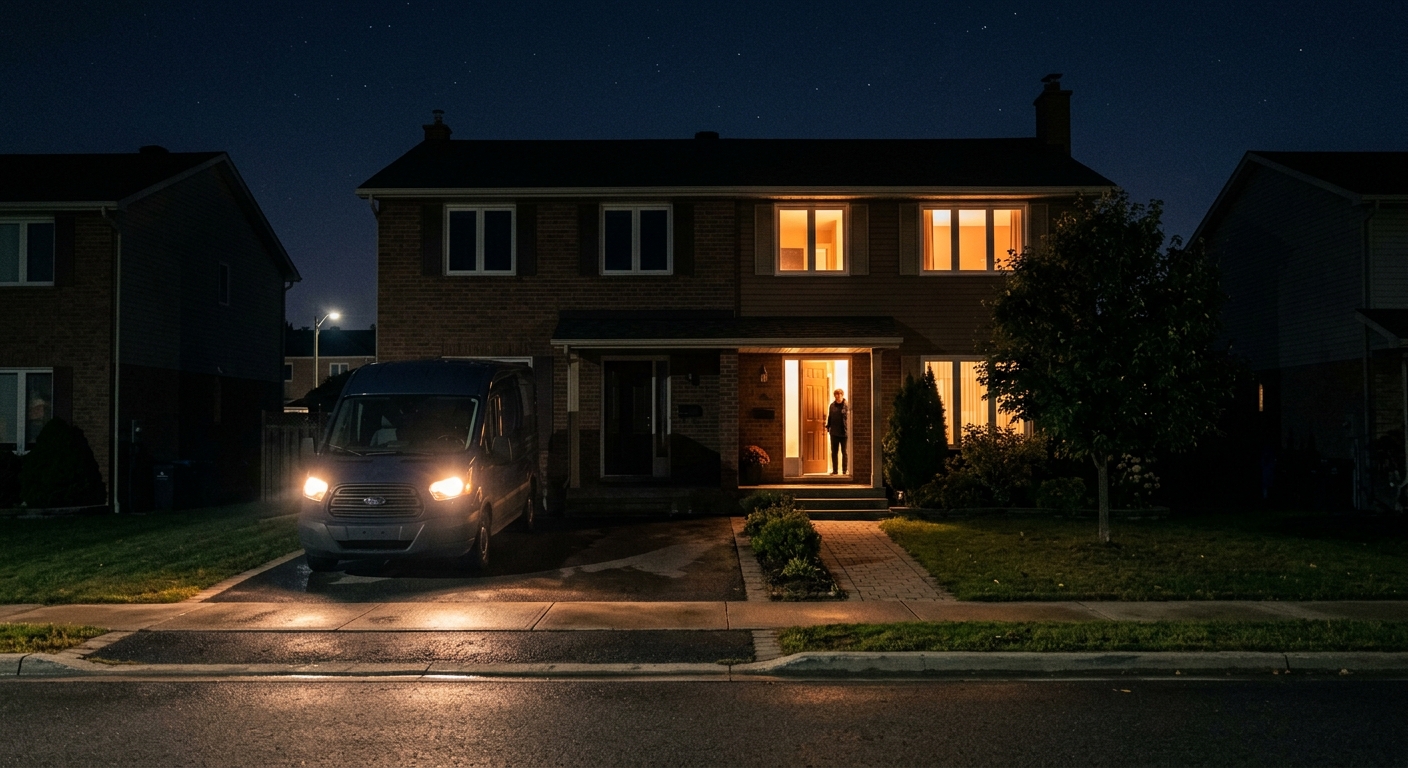
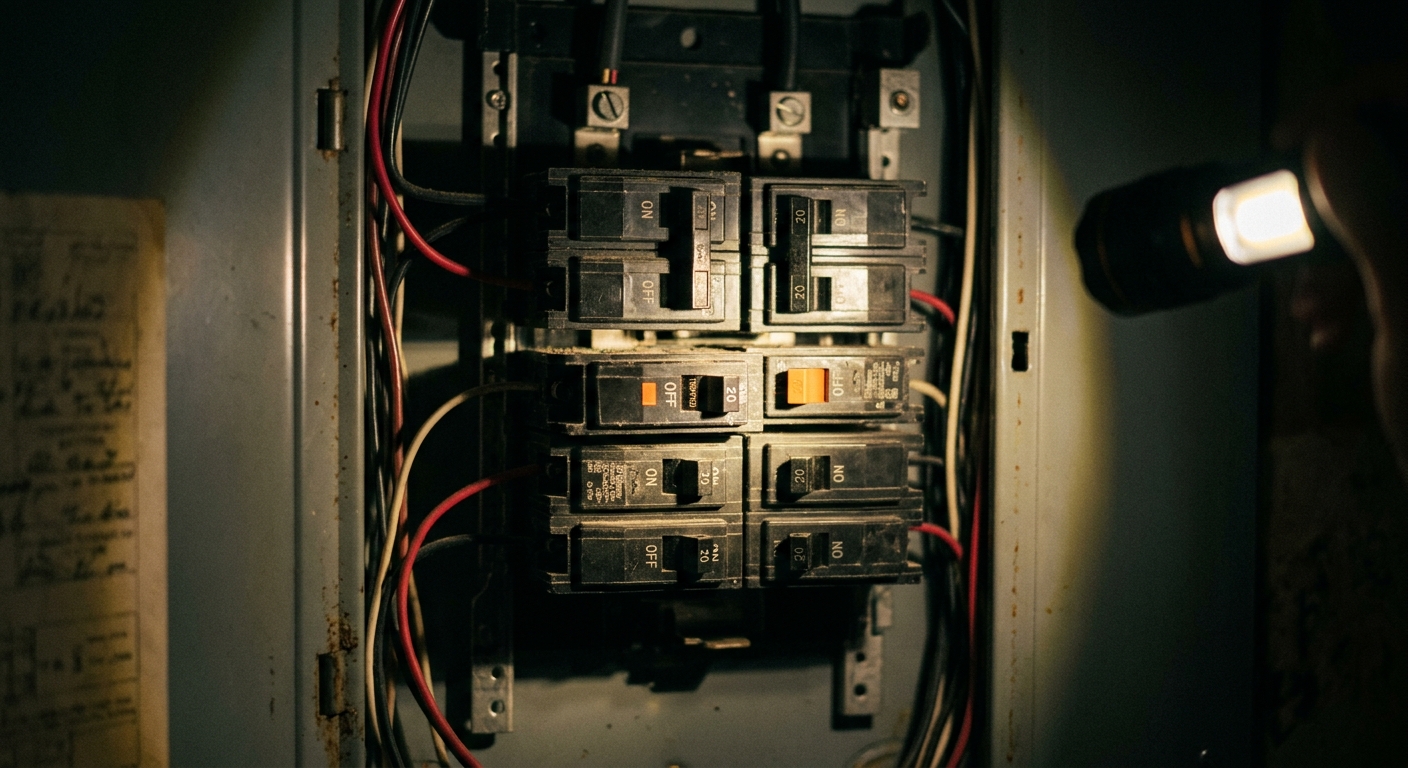
If you’re calling at 11pm with a burning outlet or a sparking panel, a real person picks up our phone — not a bot, not a callback promise. Truck rolls within 2 hours during business hours and on the same emergency clock after-hours. Typical emergency call cost in Northern Colorado: $200–$500+ depending on time of day and what we find. We’ll FaceTime you through shutting off power safely BEFORE the truck arrives if needed. Cover all 19 NoCo towns.
The reason most homeowners can’t get an emergency electrician on the phone after 6pm isn’t a mystery — Jon names it directly:
“They’re either busy on another job or sitting on vacation somewhere.”
— Jon Trujillo, Master Electrician
That’s the real answer. There’s no marketing language for it. Most electricians don’t structure their business to actually pick up the phone after hours. We do. When you call our line at 11pm with a burning smell coming from a wall, a person answers — not a bot, not a callback promise, not a service in another state. Then we get a truck rolling.
What follows is what we treat as a real emergency, what we don’t, what to do before we arrive, and what an emergency call actually costs in Northern Colorado.
What counts as a real electrical emergency?
Emergencies fall into two buckets: things that need a truck right now regardless of the hour, and things that look scary but can wait until morning to save you the overtime rates.
“If you smell any burning of wiring, we highly recommend those, and we put those a top priority. But if you have outlets that just quit working, we kind of try to push the customer off until normal business hours so we don’t have to charge any kind of overtime rates.”
— Jon Trujillo, Master Electrician
Jon’s triage in plain table form:
| Situation | Our call | Why |
|---|---|---|
| Smell of burning wiring | Top priority — dispatch immediately, any hour | Something is overheating; wall fire risk |
| Scorched / burning outlet face | Top priority — dispatch immediately | Same as above; visible heat damage |
| Sparking panel or visible arcing | Top priority — dispatch immediately | Live fault; fire and shock risk |
| Anything visibly on fire | Call 911 first, then us | Active fire — fire dept must respond first |
| Partial outage taking out heat in winter | Same-day priority, after-hours if needed | Pipe-freeze risk in NoCo Jan/Feb |
| Dead circuit on a medical device | Same-day priority, any hour | Health/safety load |
| Outlets just quit working (no smell, no smoke) | Push to normal hours | No active risk; saves you overtime rates |
| Lights flickering for over a week | Diagnose during normal hours | Real issue but not time-critical |
The honest part is the last two rows. Plenty of “emergency electricians” will dispatch a truck at 9pm for a dead outlet because the after-hours rate pays better. We’d rather tell you straight that it’ll cost you less to wait until 8am, and book you on the morning route.
How fast can you get here? (the 2-hour commitment)
“For emergency electrical work, we’ll be there within two hours of the call.”
— Jon Trujillo, Master Electrician
That’s the hard number. During business hours we’re usually rolling within 1–2 hours. After-hours response varies depending on which on-call tech is closest — a Loveland call at 10pm gets a truck faster than an Estes Park call at the same time, simply because of distance.
We’re honest about that on the first call:
If the nearest on-call tech is 40 minutes away, you hear “40 minutes minimum” on the call instead of an hour into waiting. We’d rather lose the call to a closer competitor than make you sit on your couch wondering when we’re showing up.
The clock starts when the truck has the work order. Travel time is included in the 2-hour commitment.
How much does an emergency electrician cost in Northern Colorado?
Emergency calls typically run $200 to $500+ depending on three things: time of day (after-hours and weekends are higher), what we find when we get there, and how long the fix takes. We quote the dispatch fee on the phone before any truck rolls, so the first number you hear is what shows up on the invoice.
| Scenario | Approx. cost | Notes |
|---|---|---|
| Business-hours emergency, simple fix (loose neutral, failed receptacle) | $200–$350 | Includes diagnosis + repair |
| After-hours emergency (evening/weekend), simple fix | $300–$500 | Higher rate reflects on-call premium |
| Overnight emergency (10pm–7am), simple fix | $400–$600+ | Highest rate; reserved for true emergencies |
| Larger emergency (panel damage, underground feed repair, multiple circuits) | $700–$3,000+ | Itemized quote BEFORE work; no surprises |
We don’t quote by phone for anything beyond the dispatch fee. The diagnosis happens on site, the written quote comes before any work, and you decide whether to authorize. The one thing we won’t do is start ripping wire out of a wall without your sign-off.
Should I call the fire department or an electrician first?
Call the electrician first — unless something is visibly on fire.
“It’s kind of a mix both ways. I’ve seen a customer call into the fire department right away, then call us. Well, the fire department gets there and tells them to call electrician anyway. If nothing’s actually on fire.”
— Jon Trujillo, Master Electrician
“If you’re not actually seeing any kind of physical fire or knowing something’s going to turn into a fire, then I would call the electrician right away.”
— Jon Trujillo, Master Electrician
The reason: when there’s no active fire, the fire department’s only move is to redirect you to an electrician anyway. Calling them first adds 30+ minutes of response time without solving the actual problem. By the time the fire engine leaves, you still need an electrician on the phone.
The exception is unambiguous: visible flames, active fire, or any situation where someone’s safety is at risk — call 911 first, always. The electrician comes after the fire is out.
What should I do before the electrician arrives?
Three things — in order of importance:
1. Be on site. Sounds obvious but we’ve beaten customers to emergency calls and ended up parked in the driveway with no way in:
“Just be on site, let us get access into the property. We’ve had emergency calls come in where we’ve actually beat the customer to the job site and then we have no access to get into the home. So we’re waiting for them to get inside.”
— Jon Trujillo, Master Electrician
2. Shut off power if you smell or see burning. If you know which breaker controls the affected outlet/circuit, shut that one off. If you don’t:
“They shut their whole main off. They can do that, just shut the whole main off to the house until we get there. Then we can turn breakers one at a time and start isolating the problem.”
— Jon Trujillo, Master Electrician
Shutting off the main is fine — we’ll bring the breakers back up one at a time when we arrive to isolate which circuit has the fault.
3. If you’re not sure what to do, get on FaceTime. This is a real, legitimate differentiator we offer that no other Northern Colorado electrician does:
“We definitely get on FaceTime with them. If they have a smartphone and we have a smartphone to communicate with them, we’ll definitely get on FaceTime, walk them through step by step on the process on what to do to kill power until we get on site.”
— Jon Trujillo, Master Electrician
If you have a smartphone, we’ll get on FaceTime and walk you through shutting off power safely BEFORE the truck rolls. That can be the difference between a $185 fix and a wall fire while you’re waiting for us.
Why don’t most emergency electricians answer the phone?
“They’re either busy on another job or sitting on vacation somewhere.”
— Jon Trujillo, Master Electrician
Jon’s answer is direct because the answer is direct. The reason most emergency lines go to voicemail isn’t that the electricians are bad people — it’s that the business model isn’t built for it. Most small electrical contractors run lean: the owner runs jobs during the day and is asleep or off-site at night. There’s nobody on the schedule to answer.
We’ve structured for it. The after-hours line routes to a real person. The on-call rotation is a salaried position, not a volunteer asks. When the phone rings at 11pm on a Sunday, somebody on our team is on call, expects the call, and is already moving toward the truck before you finish describing the burning smell.
That’s the moat on this service. It isn’t faster trucks or cheaper rates or better diagnostic skill (though we have all three). It’s that the phone gets answered. Everything else flows from there.
What if my problem can wait until Monday?
Tell us, and we’ll book you on the Monday route at the standard rate. We’d rather lose the after-hours premium than charge you overtime for a non-emergency.
The honest checklist for “can this wait?”:
- No burning smell? Probably can wait.
- No visible damage to the outlet or panel? Probably can wait.
- No medical device dependency? Probably can wait.
- It’s been like this for more than 24 hours? Definitely can wait.
- Heat or fridge still working? Can wait through the night.
If any of those flip the other way, call us regardless of the hour.
Hero story: the Fort Collins apartment complex underground feed
The hardest emergency call we’ve taken in the last year was an apartment complex in Fort Collins with intermittent flickering across the entire building. Voltage at every panel inside the units checked out normal. The fault wasn’t there:
“We got a call to an apartment complex in Fort Collins that the lights were flickering, the power was kind of intermittent going in and out. And we got to the units and were troubleshooting inside the units and could not figure out what was going on. We had all proper voltages at the electrical panels, but then once in a while we’d see the lights flicker. And after further investigation and troubleshooting, we found out from the utility transformer to the power to the building, there was a nicked wire somewhere underground that was leaking voltage. So all within the matter of three days, we direct buried main power back in from the utility transformer to the building’s service equipment, pulled new wiring from the transformer to the building equipment and got the apartment building re-energized with new wiring and solved the problem with lights flickering and power going in and out like they’re having.”
— Jon Trujillo, Master Electrician
The reason this one matters as a story: most emergency electricians would have stopped at the panel reading, called it a utility-side problem, and walked away. The right answer was a 3-day excavation between the transformer and the service entrance. Diagnostic depth is the difference between an emergency call that gets fixed and one that gets handed off until somebody else figures it out.
For more on the diagnostic side — flickering lights, partial outages, and what they really mean — see our electrical repairs page.
Last reviewed by a Master Electrician: April 29, 2026.
Have an electrical emergency right now? Call (970) 460-0014. A real person picks up — even at 11pm on a Sunday. We’ll FaceTime you through shutting off power if needed, then roll a truck within 2 hours.