






Commercial thermal imaging (infrared) inspection of panels and switchgear in Northern Colorado typically runs $2,100 flat for a small-to-mid commercial facility (~12 sub-panels and 2 mains). Bigger facilities scale up from there. We catch overheating connections, loose lugs, and overloaded circuits before they cause downtime or fires — and deliver a written report with annotated images, severity ratings, and recommended corrective actions in the format insurance companies expect. The inspection happens while the facility is running (loads have to be active for thermal anomalies to show).
Loose lugs, overloaded circuits, corroded connections, and undersized breakers all show up as heat long before they fail. An infrared scan catches them while the facility is running, and insurance companies increasingly require a thermal imaging report as a condition of coverage on commercial panels. One written report, one clear list of problems, one planned-maintenance shutdown instead of an unplanned fire.
We do thermal imaging inspections on commercial facilities across Northern Colorado — usually once a year for facilities with insurance requirements, sometimes after an electrical incident, and occasionally as part of pre-acquisition due diligence on a commercial property purchase. The differentiator vs general property inspectors with a thermal camera add-on: we’re licensed electricians, so when the report identifies a problem, we can also fix it.
How does a commercial thermal imaging inspection work?
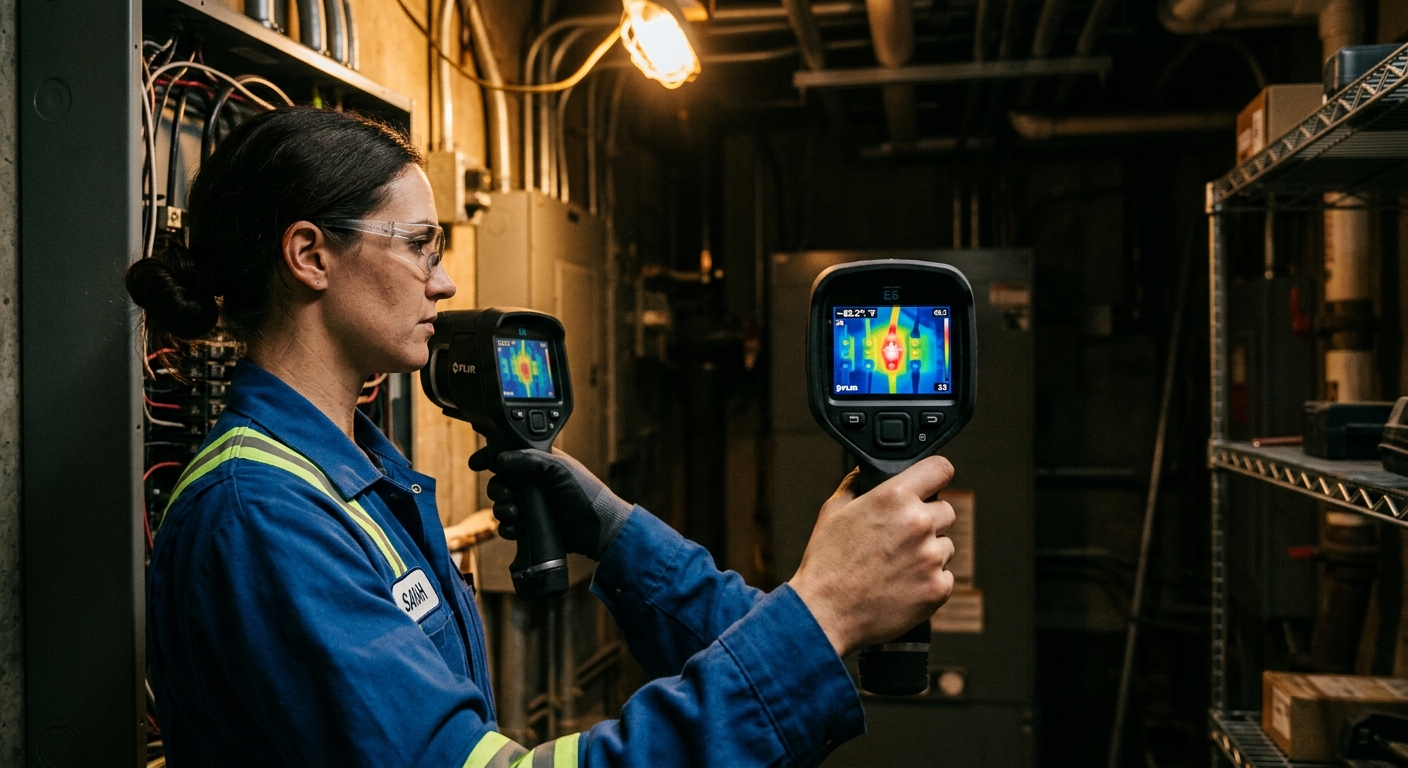
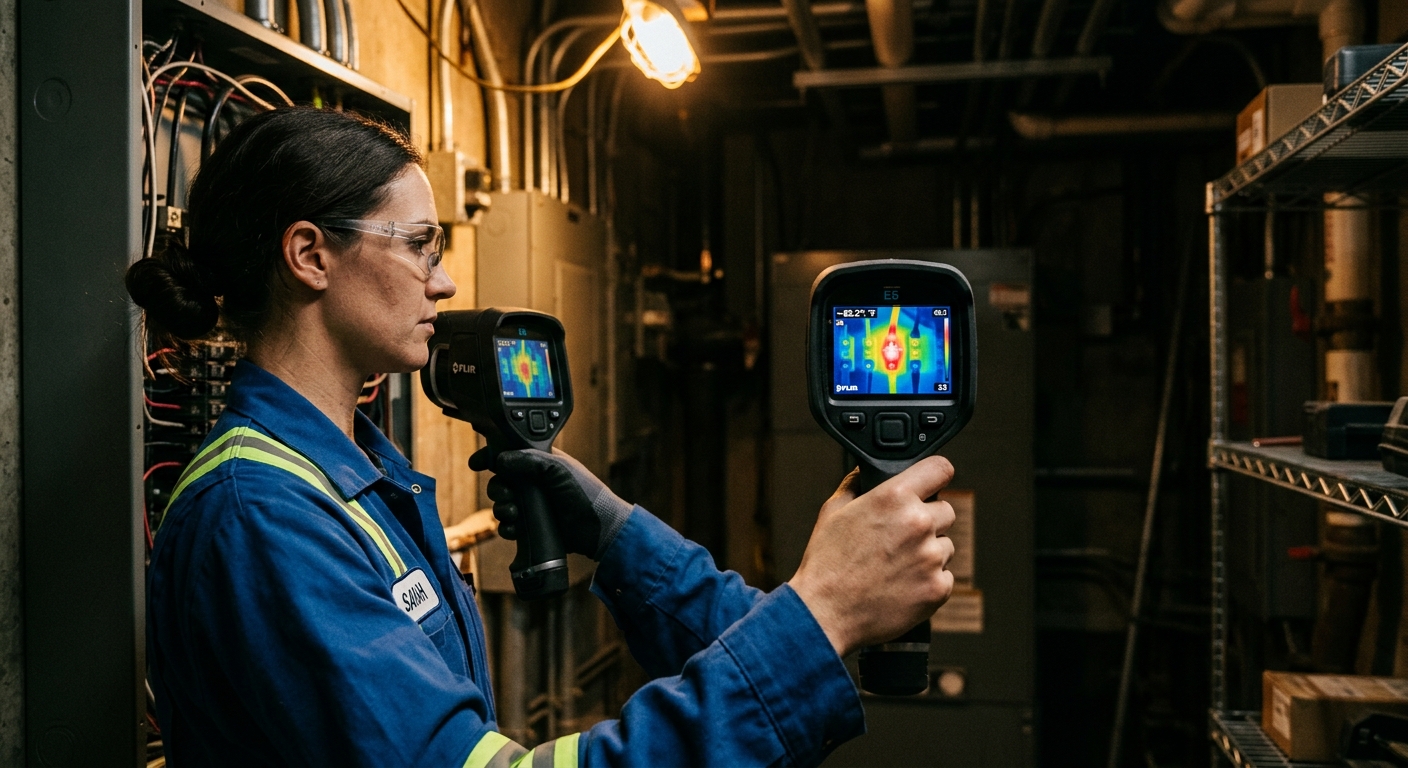
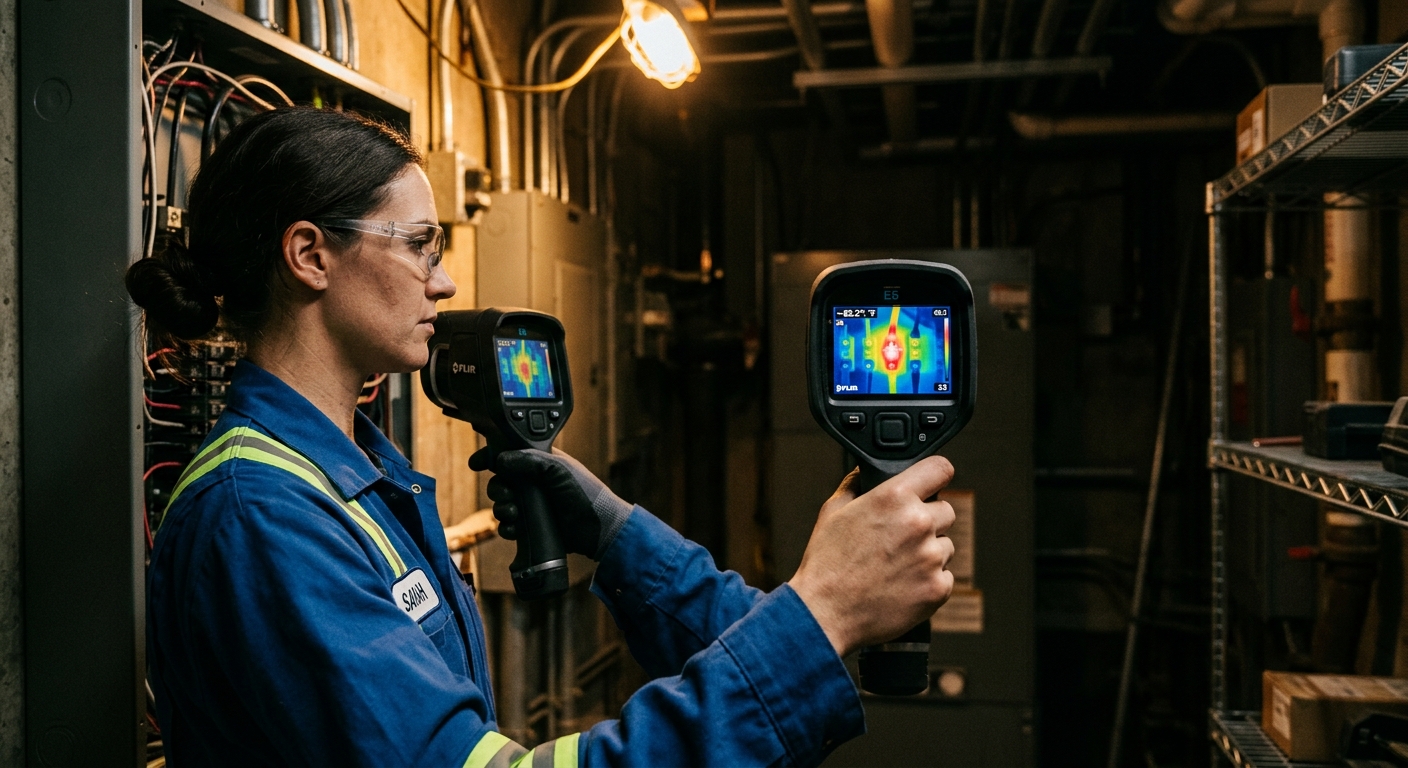
We walk the facility with a calibrated infrared camera while panels and switchgear are energized and loaded. Hot spots that indicate problems only show up when the equipment is carrying its normal operating current — that’s why we don’t shut anything down for the inspection.
The standard scan sequence:
- Pre-inspection walk — identify all panels, switchgear, disconnects, and major equipment
- Confirm load conditions — facility should be running at typical operating load (often we schedule mid-day for warehouses, peak hours for restaurants)
- Open panel covers — one panel at a time in a pre-arranged sequence, with appropriate PPE (arc-flash rated)
- Scan every connection — main lugs, breaker lugs, neutral lugs, ground bonding points, junction boxes, motor disconnects
- Photograph anomalies — IR image + visible-light image of any temperature differential outside normal range
- Document findings — location, temperature differential, severity classification per NFPA standards
- Close panels and seal — replace covers, label any urgent finding for follow-up
- Compile written report — within 5 business days of the inspection
The inspection itself typically takes 4–6 hours for a small-to-mid facility, longer for larger or multi-building sites.
How much does a thermal imaging inspection cost?
A typical small-to-mid commercial facility — about 12 sub-panels and 2 main switchgear sections — is a flat rate of $2,100 for the full inspection and written report.
| Facility size | Typical cost | Notes |
|---|---|---|
| Small commercial (1 main + 4–6 sub-panels) | $1,200–$1,600 | Single building, single tenant |
| Small-to-mid commercial (1–2 mains + 8–14 sub-panels) | $1,800–$2,400 | Most common — $2,100 typical flat |
| Mid-size commercial (2–3 mains + 15–25 panels) | $2,800–$4,000 | Multi-tenant or larger single building |
| Large commercial (3+ mains + 25–40 panels) | $4,000–$6,500 | Mid-size warehouse or office complex |
| Industrial / multi-building | Quote per site | Manufacturing or campus-scale facilities |
We quote every job in advance so your insurance company or facility manager knows exactly what they’re getting. The flat-rate pricing reflects our standard scope — if you need an unusual scope (every receptacle scanned, every motor disconnect, every cord-and-plug connection), we adjust.
Does my insurance company actually require this?
Increasingly, yes — especially for facilities with high-value equipment, multiple tenants, hazardous operations (food service, manufacturing, healthcare), or any building where an electrical fire would be catastrophic. More carriers are requiring an annual thermographic report on main switchgear and key sub-panels as a condition of coverage.
Common insurance triggers:
- High-value contents — manufacturing equipment, IT/data, refrigerated inventory
- Tenant occupancy — multi-tenant buildings increase insurer’s risk profile
- Property age — older facilities (30+ years) with original switchgear
- Recent claim history — facilities with prior electrical fire claims often face annual requirements
- Loss control surveys — insurance loss control may identify thermal imaging as a coverage condition during their site visit
- Lender requirements — commercial mortgage lenders sometimes require periodic thermal imaging on collateral properties
We deliver the report in the format insurance companies expect — annotated infrared and visible-light images side-by-side, location identification, temperature differential measurements, severity classifications aligned with NFPA 70B standards, and recommended corrective actions for each finding.
Do I need to shut down the facility for the inspection?
No — the opposite. Thermal imaging has to be done while equipment is energized and carrying load, because that’s when hot spots actually show up. A panel that’s been off for 2 hours has cooled to ambient temperature and won’t reveal problems on the camera.
The standard workflow:
- Facility stays running during the entire inspection
- One panel cover at a time is opened, scanned, and closed
- Critical loads stay energized — production line, IT, refrigeration all keep operating
- We work around your operations — open panels in a pre-arranged sequence to minimize any disruption
- Arc-flash PPE is worn at all times when panel covers are open
For facilities with critical safety-sensitive operations (clean rooms, controlled-atmosphere storage, certain manufacturing processes), we can schedule scans during scheduled maintenance windows rather than peak operations. The flexibility on scheduling is yours — we work to your schedule.
What happens if you find hot spots during the inspection?
You get a clear list: what we found, where it is, how severe it is, and what the corrective action should be. Severity classifications:
| Severity | Temperature differential | Action timeline |
|---|---|---|
| Critical | 18°F+ above reference | Immediate — schedule shutdown + repair within 24–72 hours |
| Major | 9–18°F above reference | Scheduled repair within 30 days |
| Minor | 3–9°F above reference | Monitor + repair at next planned maintenance window |
| Possible | Less than 3°F above reference | Continue monitoring, may resolve on its own |
For critical findings — an overheating connection that’s close to failure — we tell you immediately on the walk, before the report is written, so you can plan a shutdown before it turns into an unplanned one. We’ve never had a customer ignore a critical finding and have it become a fire.
For all other severity levels, the written report identifies each finding with photo, location, and recommended action. You decide what to fix, and when. Many customers use thermal imaging reports to plan their next round of preventive maintenance — we can perform the corrective work or hand off to your maintenance team or other contractor, your choice.
The differentiator that keeps insurance companies and facility managers calling us back: when the report identifies a problem, we can also fix it. Most commercial property inspectors deliver a thermal imaging report and walk away — leaving you to find an electrician separately to address the findings. We’re already on site as your electrical contractor, so the path from “found a problem” to “fixed the problem” is one phone call.
For ongoing facility electrical work beyond the inspection, see our commercial panels page and our commercial power distribution page.
Last reviewed by a Master Electrician: April 29, 2026.
Need a commercial thermal imaging inspection? Call (970) 460-0014 to schedule. We’ll send a master electrician to walk your facility, scan every panel and switchgear connection, and deliver a written insurance-ready report within 5 business days — typically $2,100 flat for a small-to-mid commercial facility.