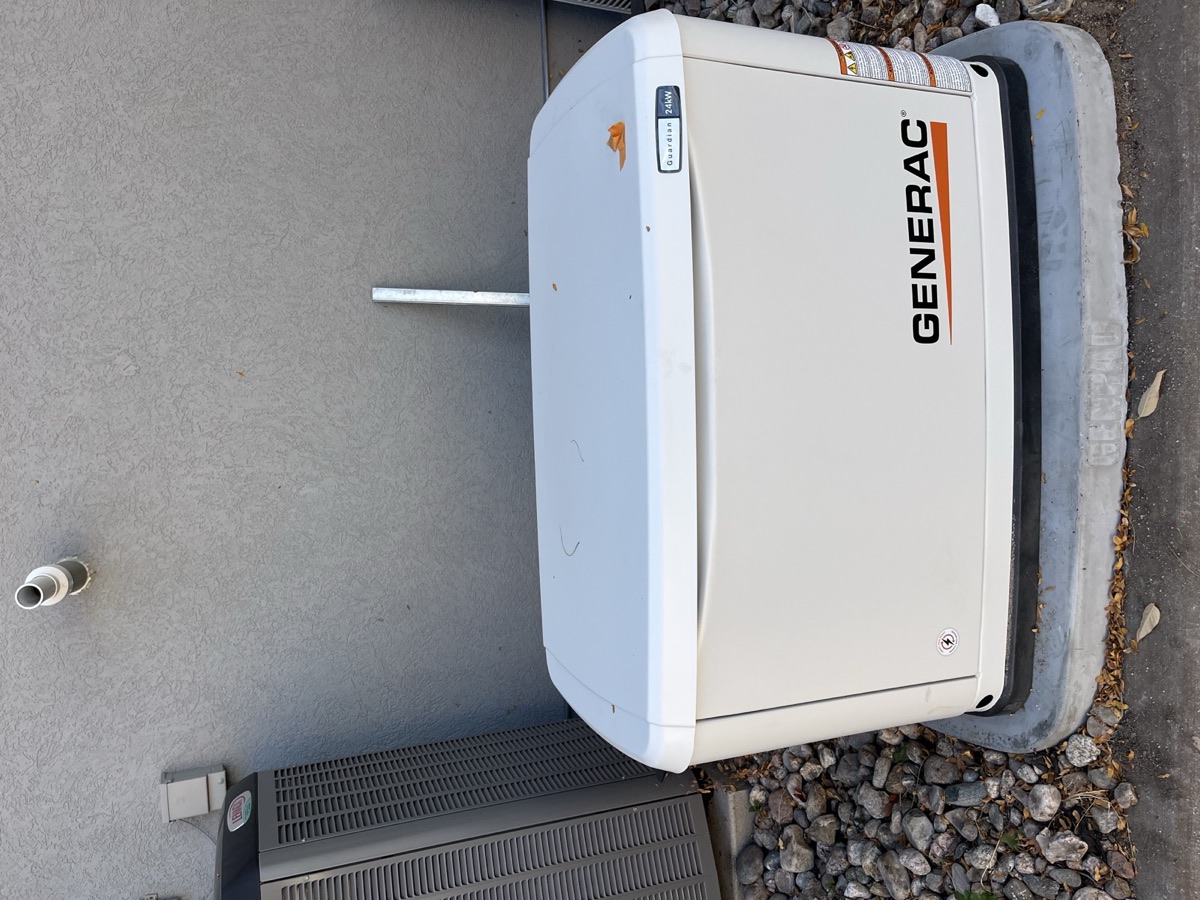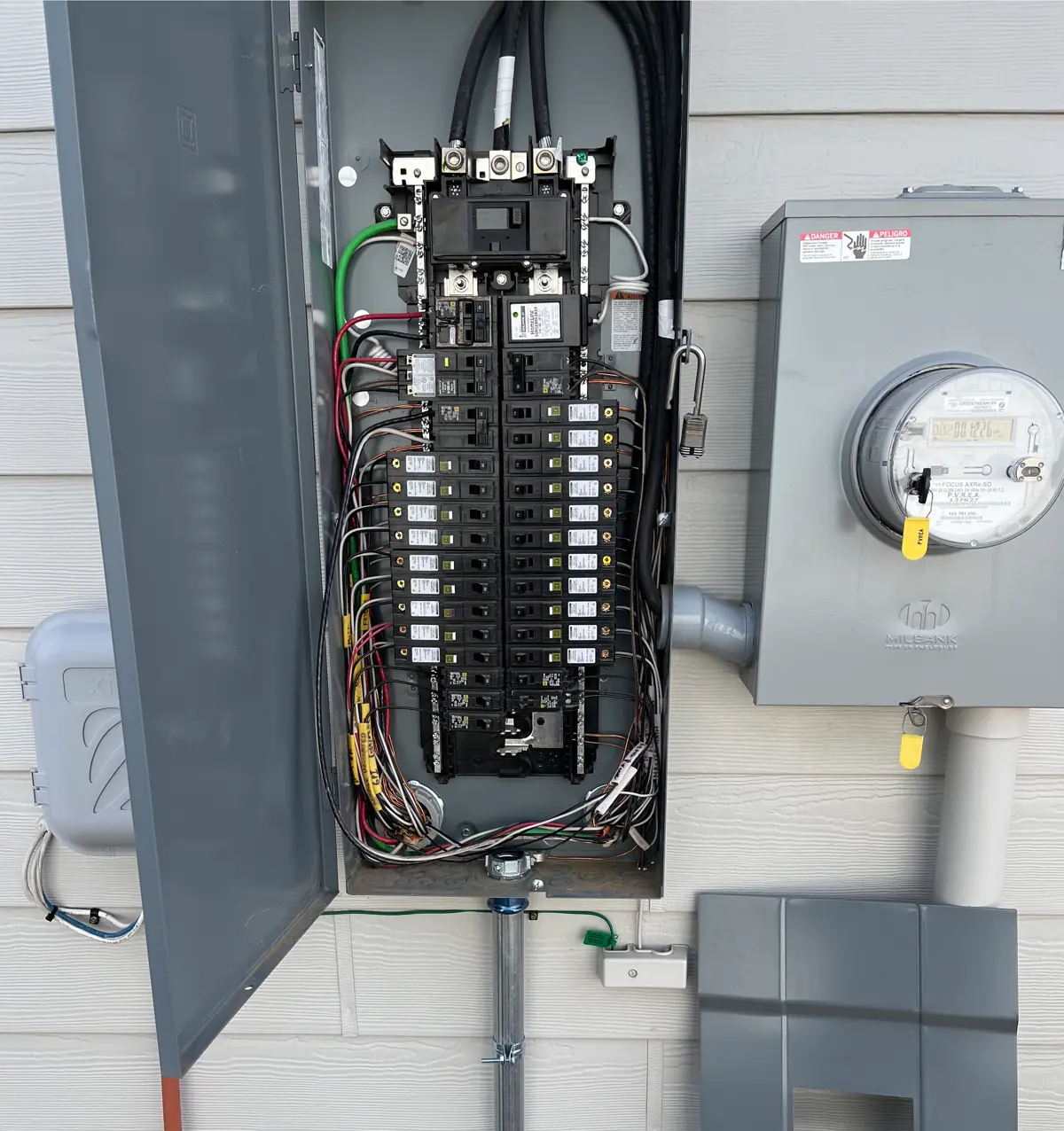
The honest answer: it depends on what you want to run, not how big your house is. A typical 2,000–3,500 sq ft Northern Colorado home with central AC, electric dryer, and gas furnace lands on a 22kW Generac. Smaller all-gas homes work fine on 14kW. All-electric homes (heat pump, electric range, electric water heater) need 24kW or larger. The right way to size one is to add up the wattage of everything you actually want running during an outage — including the 3× starting surge for motors — not to look it up by square footage. We run that load calculation on-site, free, before quoting.
This is one of the questions we get on every generator call. “What size do I need?” And the honest answer is: nobody — including us — can give you a real number until we look at your panel, your appliances, and what you want running during a five-day winter storm.
But that’s not a useful answer to read on a website. So here’s what we actually run through, on every site visit, when we size a generator for a Northern Colorado home.
Why square footage is the wrong starting point
Most online generator sizing guides ask “how many square feet is your house?” and spit back a kilowatt number. That’s a rough proxy. It’s not how a real load calculation works.
A 1,800 sq ft Wellington farmhouse with electric heat, an electric water heater, and a well pump pulls way more power than a 3,200 sq ft Fort Collins home with gas heat, gas water heater, and city water. The smaller home needs the bigger generator. Square footage tells you almost nothing.
“It varies on different homes. So we’d come on site, we’d calculate the wattage of each usage of each equipment… between the calculations of square footage, equipment running in the home, we get different calculations for each home.”
— Jon Trujillo, Master Electrician
What actually drives the sizing is your major loads — the appliances and systems that pull serious wattage. The generator has to handle them all running at once, plus the starting surge from any motor-driven equipment, plus enough headroom that you’re not running it at 100% capacity during a heat wave.
The wattage math we run on every site visit
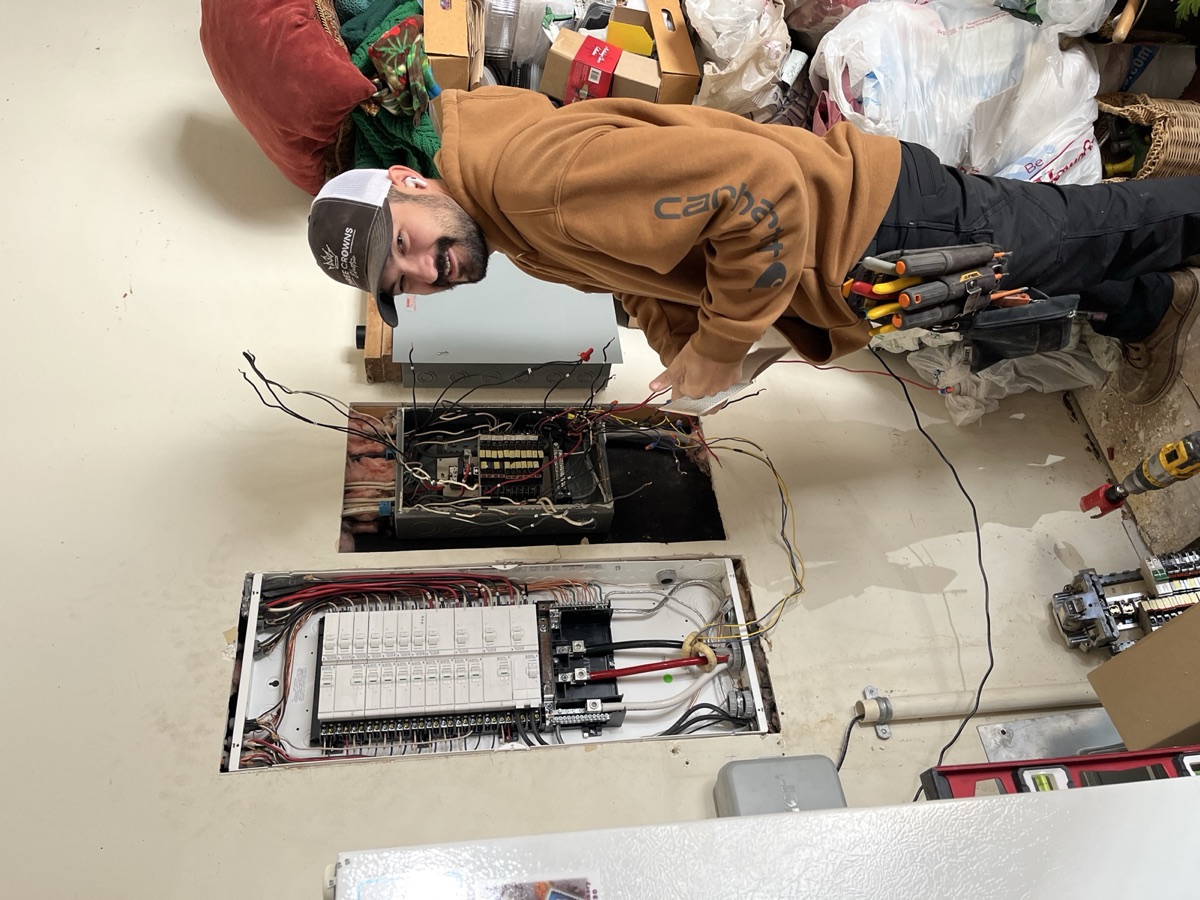
When Jon walks through your house with a load calc sheet, here are the actual numbers he plugs in:
| Appliance / system | Running watts | Notes |
|---|---|---|
| Electric dryer | 5,000 W | Same number for an electric range surface |
| Electric oven (heating) | 4,000 W | Cycles, but plan for full draw |
| Central AC, 3-ton | ~4,000–6,000 W running | Plus 3× starting surge — see below |
| Heat pump (heating mode, cold) | 5,000–9,000 W | Wildly variable; auxiliary strips matter |
| Electric water heater | 4,500 W | Cycles on/off |
| Well pump (1 HP) | 1,500 W running | Critical for rural NoCo — and has a starting surge |
| Furnace fan (gas furnace) | 500–800 W | Small load, but you cannot cook the house without it in January |
| Refrigerator | 600–1,200 W | Plus 3× starting surge on the compressor |
| Stand-alone freezer | 500–800 W | Same |
| Microwave (running) | 1,200–1,800 W | One at a time only |
| Whole-house lighting (LED) | 300–600 W | All on at once |
| Modem + router + small electronics | 50–100 W | The “we still have wifi” bucket |
The load-calc method is to add the running watts for everything you want simultaneously powered, then add the single largest motor’s starting surge (because they don’t all start at the same time), then add 20% headroom.
“We like to come on site, kind of figure out — same thing we do a load calculation — where we figure out what power they are using in the home now. And then we have a calculation chart that we fill out. And at the end of it, by the time we run between your air conditioners, electric dryers running, any electric heaters you have throughout the home running, we get a — after we run the numbers and we complete the calculations, it’ll let us know exactly what size of generator we would need to provide for each home for backup power.”
— Jon Trujillo, Master Electrician
Most NoCo homes land in the 12,000–22,000 running-watts range with everything reasonable on at once. Add the starting surge and the 20% buffer, you’re at 18,000–28,000 watts of generator capacity needed. That maps to a 22kW or 26kW Generac.
Generator sizes by home profile
Here’s the rough breakdown we use to ballpark on the phone — before we come out and run the actual calc:
| Generator size | Best fit | What it runs |
|---|---|---|
| 9–11kW | Small home or condo, gas appliances, no AC | Lights, fridge, furnace fan, modem, well pump, modest kitchen — essentials only |
| 14kW | 1,500–2,500 sq ft home, gas heat, gas water heater | Above + microwave, garage door, partial AC if cycled |
| 18kW | 2,000–3,000 sq ft home, mixed gas/electric | Above + central AC OR electric range, not both at full load |
| 22kW | 2,000–3,500 sq ft home, central AC, electric dryer | The default for most NoCo homes — central AC + range + most circuits |
| 24–26kW | All-electric or larger home, 3,500+ sq ft | AC + electric water heater + electric range concurrent |
| 30–48kW | 5,000–10,000 sq ft home or all-electric estate | Whole house, no compromise |
“We can install them from a 500 square foot house up to a 10,000 square foot house. It’s — that’s when it goes back to the calculation of sizing your generator properly so you do get the proper backup power.”
— Jon Trujillo, Master Electrician
A few specific cases that come up on the phone:
Is a 7,500 watt generator enough to run a house? For a small all-gas home running essentials only — fridge, furnace fan, lights, well pump, modem — yes, a 7.5kW portable generator can keep the lights on through a short outage. It is not enough for a typical 2,000+ sq ft home with central AC or electric appliances. It’s also not a standby generator — it’s a portable that you have to start manually, run outside, and refuel every 8 hours. Different category.
How big a generator for a 2,000 sq ft house? Almost always a 22kW standby on natural gas if the home has central AC and an electric dryer. Jump to 24kW if it’s all-electric.
Will a 10kW generator run a house? It depends entirely on what’s in the house. A 10kW unit will comfortably run a small, gas-heated home’s essentials. It will not simultaneously run central AC, an electric oven, and an electric dryer in a 2,500 sq ft home. The honest answer is “probably the essentials, not the whole house.”
Starting watts vs running watts — the gotcha most homeowners miss
Anything with a motor — refrigerator compressor, AC compressor, well pump, furnace fan, freezer — needs roughly 3× its running wattage to start. That spike lasts for a fraction of a second, but the generator has to deliver it or the motor stalls. (The U.S. Department of Energy publishes typical running wattages if you want a starting reference, though motor-driven loads always need the additional surge.)
A refrigerator running at 700 watts will pull around 2,000 watts during the half-second compressor start. A 3-ton central AC running at 4,000 watts can spike to 12,000 watts during the compressor cycle.
If you size a generator off running watts only, the first time the AC kicks on during a hot day, the generator either trips its breaker or stalls the motor. Neither is a good outcome at 4 AM during an outage.
Standby generators handle this with soft-start technology and load shedding built into the automatic transfer switch — the system stages the loads so they don’t all start at once. That’s part of what you’re paying for in a real install. Portable generators don’t have that, which is why a 7,500W portable that should “theoretically” run a fridge sometimes can’t.
All-electric homes vs gas-appliance homes — why it changes everything
The single biggest variable in sizing is whether your home runs on gas or electric for the four high-draw systems:
- Heat: gas furnace (low draw — just the fan) vs heat pump or electric strips (high draw)
- Water heater: gas (zero electric draw) vs electric (4,500 W)
- Range/oven: gas (zero electric draw on the cooktop) vs electric (5,000–8,000 W)
- Dryer: gas (small electric draw for the drum) vs electric (5,000 W)
A 2,500 sq ft home that’s gas across the board can run a whole-home backup on a 14–18kW generator. The same square footage all-electric needs 24kW minimum, often 26 or 30kW.
This is also why we ask about your appliances on the first phone call. It’s not us being nosy. It’s the difference between an $8,000 generator and a $15,000 one.
What we install most in Northern Colorado
After installing standby generators across Fort Collins, Loveland, Greeley, Boulder, Wellington, Berthoud, Estes Park, and the rest of NoCo for two decades, we have a clear pattern:
The 22kW Generac on natural gas is what we install most. It’s the right answer for most 2,000–3,500 sq ft homes with central AC, electric dryer, and gas furnace + gas water heater. Typical complete-package install runs around $14,000 — generator, automatic transfer switch, gas line, concrete pad, permit, inspection, the whole thing.
“Typical price range, start to finish, is about $14,000. That’s going to get your complete package. Automated transfer switch.”
— Jon Trujillo, Master Electrician
For all-electric or larger homes, we step up to a 24 or 26kW unit. The price difference is real but not huge — typically $1,500–$2,500 more for the larger unit and slightly heavier wiring.
For rural propane setups (Wellington farmhouses, Estes Park cabins, anywhere without natural gas service), we set up a propane tank about 15 feet from the generator. Same sizing logic — just a different fuel source.
One Colorado-specific add-on we recommend on every install: the cold weather kit. It’s a $200–$500 accessory that keeps the engine block and oil pan warmed in sub-zero temperatures. Without it, a generator that should start in 30 seconds at 70°F can take three minutes to crank at -10°F — long enough that the transfer switch times out before the generator comes online. Not the failure mode you want during a January storm. Full breakdown on that here: why every NoCo generator needs a cold weather kit.
What it looks like during an actual outage
The sizing question is really a question about what experience you want during the outage. A right-sized generator on a properly-configured automatic transfer switch is essentially seamless:
“I think the biggest misconception is how much power can people use off the generator. I think a lot of people are thinking it’s just going to turn their lights on and keep the lights turned on while they have no power. But we design our generators to back up the entire house, and it’s all automated, so you’re not doing anything. Within a blink of an eye, the generator’s kicking on and you’re not even noticing you lost utility power.”
— Jon Trujillo, Master Electrician
Switchover time on a properly-sized standby is in the 15–30 second range — fast enough that desktop computers might restart but everything else just hiccups. With higher-end transfer switches it’s milliseconds. The HVAC keeps running. The fridge stays cold. The well pump keeps the toilets flushing.
Then, every two weeks while you’re not even thinking about it, the generator runs a 15-minute self-test — keeping the battery charged, the fluids cycled, and the engine ready for the next outage. (Generac’s Guardian series ships with this configurable from the factory — we set it up at install.) You don’t do anything. It just works.
When you should call us instead of buying online
The math we just walked through is the same math we run on-site. The difference is we look at your actual panel, your actual appliances, your actual gas line location, and we tell you which generator size is right for your house specifically — not based on a web form.
We also tell you when a generator isn’t the right answer. If you only lose power for a few hours a year and you mostly want to keep your fridge cold and run a Tesla, a Powerwall might fit better. We install both — see our honest comparison if you’re weighing the two.
If you’ve decided on a generator and want a brand breakdown, our Generac vs Kohler vs Cummins piece walks through why we install Generac primarily and where the other two make sense. And for the full cost breakdown by install scenario, see the whole-home generator cost guide.
For the install scope, sizing process, fuel options, and warranty — see our home generator service page.
Last reviewed by a Master Electrician: May 8, 2026.
Have a generator sizing question for your specific home in Northern Colorado? Call (970) 460-0014 for a free site visit. We’ll walk through your panel, your appliances, your gas line location, and your typical outage pattern — then put a written quote on paper for the generator size that actually fits your house. No sales pressure, no upselling to a bigger unit than you need.