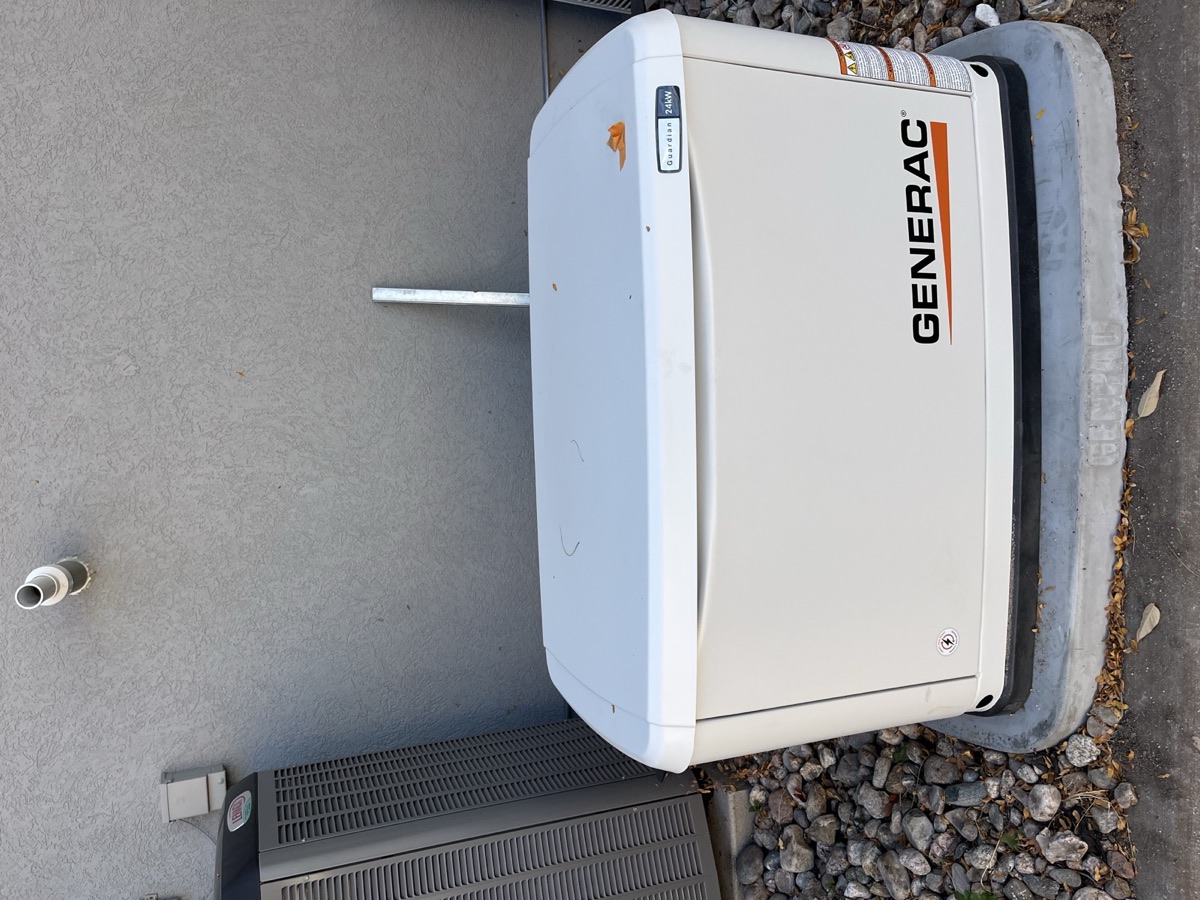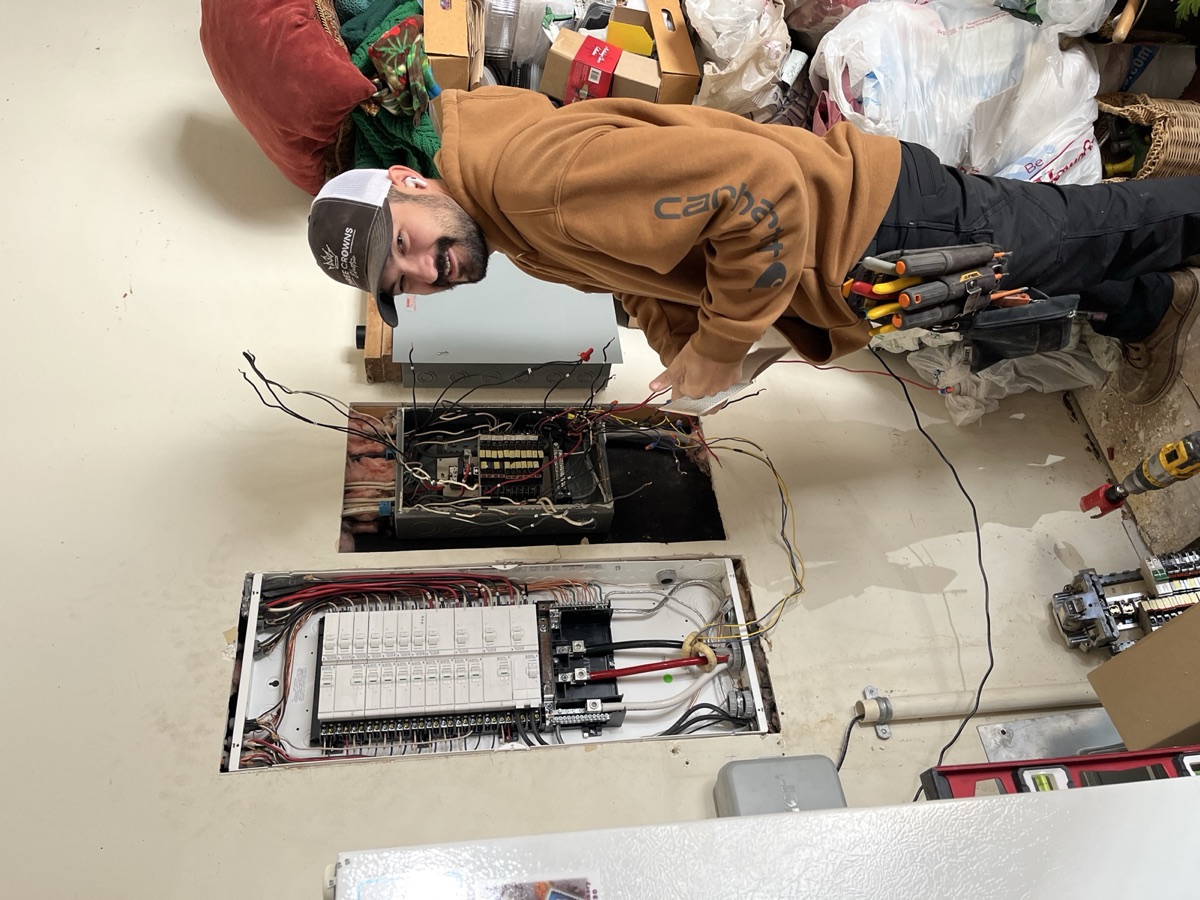
Generac, Kohler, and Cummins all make excellent whole-home standby generators. We install all three. We prefer Generac — not for brand reasons, but because parts are more readily available through certified dealer channels and tech support is more responsive. When a generator throws a code at 2am during an actual outage in January, you want the part on the truck the next morning. Three Crowns Electric is a certified Generac installer for Northern Colorado. The brand decision matters less than the install quality, the load calc, and the cold weather kit.
When homeowners shop standby generators, the brand comparison usually breaks down into “Generac vs Kohler vs Cummins” — and the marketing for each brand is strong enough that it’s hard to find an honest answer about which one to pick. Every brand site says they’re the most reliable, the quietest, the best value.
Here’s the answer from someone who’s installed roughly 100 standby generators across Northern Colorado, including all three brands: all three are great. The decision matters less than people think. The decision that actually matters is who’s installing it and whether they sized the unit correctly.
That said — we install Generac primarily, and the reason is concrete and operational.
Why we install Generac most often
“We particularly installed Generac. Due to the availability of parts, we have great access to parts. If servicing the generator, we can get parts readily available. So that’s why we really push Generac. We’re certified Generac installers.”
— Jon Trujillo, Master Electrician
The reason isn’t brand loyalty or marketing. It’s parts availability and tech support response time:
“We’ve installed Kohler, we’ve installed Cummins generators. All three of them are great generators. But we really like Generac for the technical support reasons and the product availability.”
— Jon Trujillo, Master Electrician
When your generator throws a code at 2am during a January outage, three things matter:
- Can a tech reach the generator’s tech support line at 2am? Generac has 24/7 dealer-only support that gets a real engineer fast.
- Can the parts be on the truck the next morning? Generac parts move through a mature certified dealer distribution network. Most parts are available within 24 hours in the Front Range.
- Has the technician seen this exact failure mode before? Generac is the highest-volume residential standby brand in the US, which means our technicians have seen virtually every failure mode multiple times.
Kohler and Cummins both have these support systems too. They’re just slightly slower in our region. A Kohler part that takes 3 days to ship from a regional warehouse vs a Generac part that’s on a local dealer’s shelf can mean the difference between a 1-day repair and a week-long outage in your generator backup.
For homeowners in Estes Park, Wellington, or other rural NoCo locations where multi-day outages happen and a generator failure is a real problem, parts speed matters more than people realize when they’re shopping the spec sheet.
The honest comparison
| Factor | Generac | Kohler | Cummins |
|---|---|---|---|
| Build quality | Excellent | Excellent (slightly higher) | Excellent (industrial-grade) |
| Operating noise | 65-70 dB | 60-67 dB (typically quieter) | 65-72 dB |
| Parts availability (NoCo) | Excellent — local dealer network | Good — regional warehouse | Good — diesel-focused dealer network |
| Tech support response | Best — 24/7 dealer line, fast | Good — 24/7 line | Good — primarily fleet-focused |
| Annual service cost | $200-$400 | $250-$450 | $300-$500 |
| Typical residential price (22kW) | $5,000-$7,500 | $5,500-$8,500 | $6,000-$9,500 |
| Common in NoCo | Most installed brand | Premium choice | Less common in residential, more in industrial |
| Best fit for | Standard residential, cost-conscious | Premium residential, noise-sensitive sites | Industrial, off-grid, diesel preference |
For a typical residential whole-home install in NoCo: Generac. Best parts/service combo, mature dealer network, tested reliability.
For homeowners who specifically want quieter operation: Kohler. The slightly lower decibel rating matters in tight residential lots near neighbors.
For homeowners with diesel infrastructure already (farm equipment, fleet): Cummins. Diesel is where Cummins shines.
Why we don’t recommend cheaper off-brand generators
Briggs & Stratton, Champion, Westinghouse, and other lower-priced standby generators exist. We don’t install them. Three reasons:
- Parts and tech support quality drops sharply below the top three brands. A failure on an off-brand generator in year 4 can become unrepairable.
- Code compliance issues are more common with off-brand units — wrong neutral bonding, undersized transfer switches, etc.
- Insurance carriers sometimes won’t cover damage from off-brand standby installs, especially if they fail to start during an outage.
The price difference between a Generac and a Briggs & Stratton at similar kW rating is typically $1,000-$2,000. The lifetime serviceability difference is much larger than that. We don’t think the savings justify the risk.
What actually matters more than the brand
The brand is maybe 20% of the decision. The other 80% is the install:
- Right-sized unit — a 22kW generator on a 5,000 sqft home with electric heat is undersized. A 14kW on a 1,800 sqft gas-heated home is oversized. Load calc matters.
- Proper transfer switch sizing — the ATS is the brain of the system. Wrong size = nuisance trips and shortened equipment life.
- Cold weather kit — Colorado winters demand it. We add it on every NoCo install regardless of brand.
- Fuel line sizing — undersized gas lines starve the generator under load.
- Code-compliant installation — proper concrete pad, code-required clearances, fire department review where applicable.
- Annual service — generators are engines. They need annual oil changes, spark plug replacements, battery checks, and self-test verification.
A poorly-installed Generac will fail before a properly-installed Kohler. The brand argument is downstream of these install factors.
The cold weather kit recommendation (Colorado-specific)
“I would say the cold weather kit that’s an accessory to the generator. And with us living in Colorado in the winter time, you know, it’s hard saying what temperatures will be. Luckily it was a mild winter this last winter. But I would highly recommend doing a cold weather kit. And that’s always going to help keep that generator to fire up at the coldest times of the year. That keeps your oil pan heated up, keeps the engine just ready to be fired at all times.”
— Jon Trujillo, Master Electrician
Regardless of which brand you choose, add the cold weather kit. It’s a $200-$500 add-on that warms the oil pan and engine block so the generator starts reliably in sub-zero weather. Without it, January starts can fail or take long enough that the ATS times out before the generator comes online.
This is the kind of regional detail that no national generator brand page will tell you. We add it on every NoCo install because we’ve seen what happens without it.
For more on the cold weather kit specifically, see our Colorado cold weather kit guide.
What generator size do I need?
This is more important than the brand and is something we can only answer on a site visit:
“We like to come on site, kind of figure out — same thing we do a load calculation — where we figure out what power they are using in the home now. And then we have a calculation chart that we fill out. And at the end of it, by the time we run between your air conditioners, electric dryers running, any electric heaters you have throughout the home running, we get a — after we run the numbers and we complete the calculations, it’ll let us know exactly what size of generator we would need to provide for each home for backup power.”
— Jon Trujillo, Master Electrician
Common residential sizes:
| kW size | Typical home profile | Critical loads covered |
|---|---|---|
| 14kW | Small home, gas heat, gas water heater | Lights, fridge, freezer, furnace fan, well pump |
| 18kW | Standard home, gas appliances | Above + microwave, garage door, modem, small loads |
| 22kW | Most NoCo homes, mixed gas/electric | Above + AC OR electric range, not both simultaneously |
| 24-26kW | Larger home or all-electric | Above + AC + electric water heater concurrent |
For full details on generator install pricing, sizing, and what’s included, see our home generators page.
What about a Tesla Powerwall instead?
A natural follow-up question for many NoCo homeowners. The honest answer:
- Power out 1-2 days, no engine maintenance: Powerwall wins
- Power out a week or more: Generator wins (unlimited natural gas runtime)
- Whole-house indefinite backup: Generator
- Silent default + storm backstop: Both (generator + Powerwall stack)
For the full breakdown, see our Powerwall vs generator comparison.
Last reviewed by a Master Electrician: May 5, 2026.
Trying to pick a generator for your home in Northern Colorado? Call (970) 460-0014 for a free site visit. We’ll run the load calc, walk through your fuel options (natural gas, propane, diesel), and recommend the right brand and size for your specific situation — Generac, Kohler, or Cummins, whichever fits your needs.