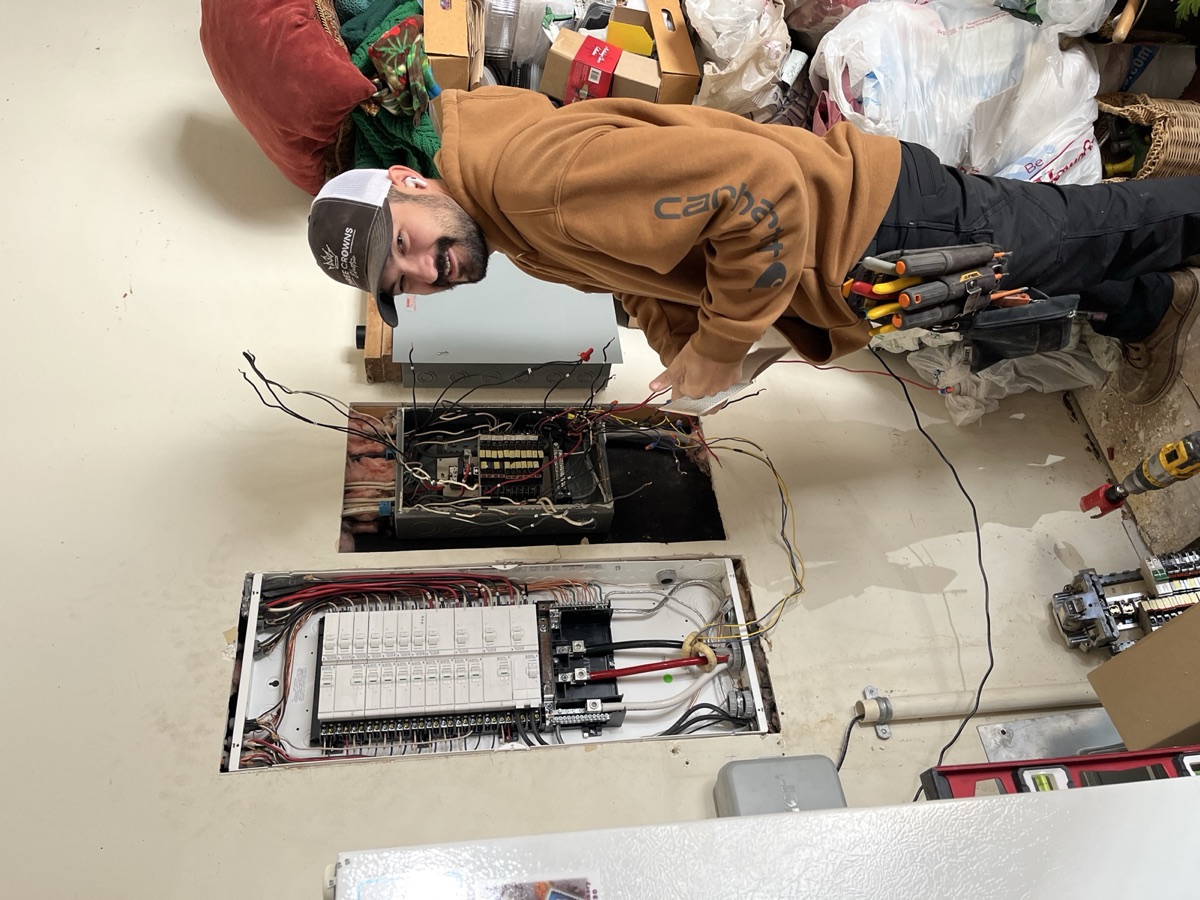
Your electrical panel is a labeled map of every circuit in your home. The main breaker at the top tells you your service size (100A, 200A). The numbered switches below it each protect one circuit — 15A for lights, 20A for outlets, 30A–50A for heavy appliances. A breaker that’s in the middle position between ON and OFF has tripped — something on that circuit exceeded its limit. You can reset it once. If it trips again immediately, stop and call a licensed electrician.
Open your electrical panel door and you’ll see a grid of switches, a few lines of handwritten labels, and a couple of larger switches at the top or bottom. Most homeowners have glanced at this box a dozen times and still aren’t sure what they’re looking at.
Here’s what each part actually means.
What is an electrical panel?
Your electrical panel — also called a breaker box, load center, or service panel — is the distribution point for all the electricity entering your home. Power comes in from the utility line, passes through the meter at the outside of your house, then lands at the panel. From there, individual circuits carry it to every outlet, light, and appliance.
The panel’s job is protection. Each circuit has a breaker that monitors current flow and trips — cuts power — when that circuit carries more than it’s rated for. That’s not a malfunction. That’s the safety mechanism working.
In Northern Colorado, most homes built before 1990 have one of three service sizes: 100A, 125A, or 200A. Homes built in the last 20 years are almost all 200A. We’ll show you how to identify yours.
The parts of your electrical panel
Main breaker
The main breaker is usually the largest switch in the panel — typically at the top, sometimes at the bottom. It controls all the power coming into the panel. If you flip it off, you cut power to the entire house. The number on the main breaker handle (100, 150, 200) is your service amperage.
Branch circuit breakers
These are the smaller switches that make up most of the panel. Each one controls a single circuit — a set of outlets in a room, a lighting circuit, one appliance. They’re rated for 15A or 20A on standard household circuits, and higher for large appliances.
The circuit directory
On the inside of the panel door, there’s a card or sticker with a list of circuits and what they power. This is the circuit directory — or should be. In practice, many panel directories are blank, outdated, or just wrong. If yours is blank, identifying and labeling your circuits is a useful project.
Bus bars
Behind the breakers are two vertical copper or aluminum bars — the hot bus bars — that carry the incoming power. Each breaker clips onto one of these. When a breaker trips, it disconnects from the bar, cutting power to that circuit.
Neutral bar and ground bar
These are the other sets of terminals in the panel, usually along the sides. The neutral bar carries current back to the utility. The ground bar provides a path to earth ground for safety. In modern panels these are separate; in older panels they may be combined.
How to read the circuit directory (labels)
The directory on your panel door maps each breaker number to the circuit it controls. A well-labeled panel looks like this:
1 — Kitchen outlets (south wall)
2 — Kitchen outlets (north wall)
3 — Master bedroom
4 — Master bedroom
5/6 — Dryer (240V)
7 — Living room lighting
...
A few things to know:
Breakers on the left side are odd-numbered, right side even. That’s the standard layout. If your panel’s numbering seems off, check that the directory matches the physical position — sometimes labels were filled in out of order during construction.
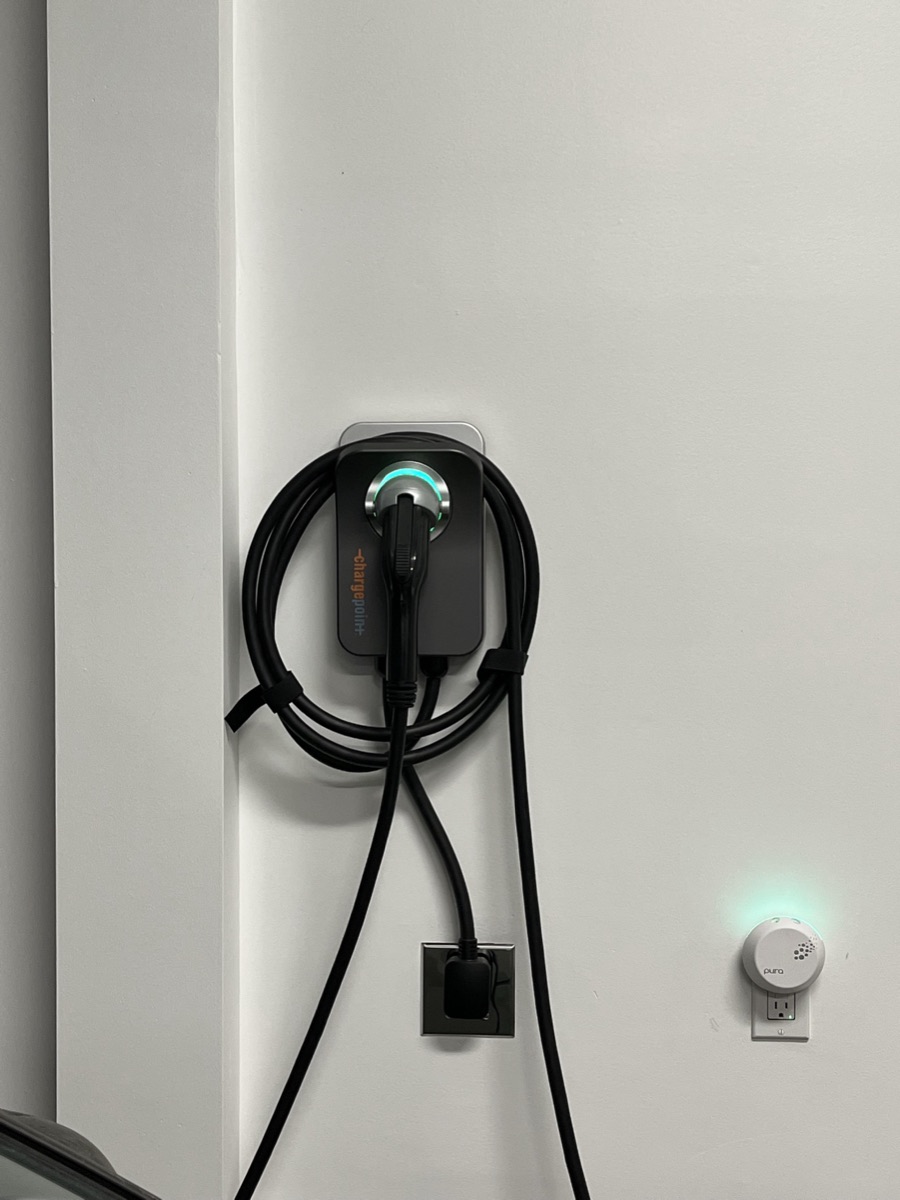
Double-wide breakers control 240-volt circuits. A dryer, electric range, water heater, EV charger, or HVAC system needs 240 volts — twice the standard household voltage. These circuits use a double-pole breaker, which clips onto both bus bars and takes up two slots. The handle is wider and the amperage is higher (30A–50A typical).
A blank directory doesn’t mean the panel is unknown — it means someone didn’t fill it out. You can map it yourself by turning on a light in a room, then flipping breakers one at a time until the light goes out. Mark that number. Takes about 45 minutes with a helper calling out from room to room.
What the numbers on breakers actually mean
Every breaker has a number molded or printed on its handle. That number is the amperage rating — the maximum current the breaker will carry before tripping.
| Breaker rating | What it’s typically for |
|---|---|
| 15A | Lighting circuits, bedroom outlets |
| 20A | Kitchen outlets, bathroom outlets, garage outlets |
| 30A | Electric dryers, some water heaters |
| 40A | Electric ranges, some AC units |
| 50A | Large appliances, EV chargers (Level 2), hot tubs |
| 60A | Large AC units, some sub-panels |
| 100A–200A | Main breaker, sub-panel feeds |
The rating isn’t what the circuit is currently drawing. It’s the ceiling before the breaker trips. A 20A kitchen circuit might only be pulling 4A right now — until you run the microwave, toaster, and coffee maker at the same time.
When Jon’s team does an electrical panel evaluation before an EV charger or hot tub install, one of the first things they check is whether your panel has enough open slots and enough remaining amperage headroom to support the new load without tripping existing circuits.
Understanding ON, OFF, and TRIPPED positions
ON: The switch handle is toward the center of the panel. This means the circuit is live — power is flowing.
OFF: The handle is toward the outside of the panel. Power is cut to that circuit. No current flowing.
TRIPPED: The handle rests in a middle position — not fully ON, not fully OFF. This is the breaker telling you it cut power because the circuit exceeded its limit.
To reset a tripped breaker:
- Find the switch that’s in the middle position
- Push it firmly toward the OFF position first (this is required before it will reset)
- Then push it back to the ON position
“Guide the homeowner to their electrical panel to shut the breakers off. Or they shut their whole main off. They can do that, just shut the whole main off to the house until we get there. Then we can turn breakers one at a time and start isolating the problem.”
— Jon Trujillo, Master Electrician
If the breaker resets and holds, you’re done — identify what caused the overload and either redistribute the load or reduce what’s running on that circuit.
If the breaker trips again immediately after you reset it, stop. Leave it off. A breaker that won’t hold has a persistent fault — a short circuit, a ground fault, or a wiring problem that keeps presenting the same condition. Repeated tripping means something needs diagnosis, not repeated resets.
How to tell if you have 100A or 200A service
Look at the main breaker handle. The number stamped on it is your service amperage.
- 100 or 100A → 100-amp service. Sufficient for a modest home without large electric loads, but undersized for EV chargers, hot tubs, or whole-home generators.
- 150A → 150-amp service. Less common, often found in homes from the 1980s that had a partial upgrade.
- 200 or 200A → 200-amp service. Standard for modern homes. Enough headroom for most EV chargers, generators, and electric appliances without a full upgrade.
If you can’t find a number on the main breaker, count the slots in your panel. A 100A panel typically has 20–24 breaker slots. A 200A panel typically has 40–42. This isn’t a perfect method — some panels are rated for 200A but physically smaller — but it’s a starting point.
If your panel is older and you’re not sure what you have, this is worth knowing before you add any large new loads. We see a lot of homes where the homeowner assumed they had 200A service and didn’t — often after they’ve already bought an EV.
“A lot of them we notice are 100amp or they’re 125 max. And they’ve already have hot tubs running in their homes. They’ve already have AC units running. So now they’re wanting to add either electric cooktop or they’re looking at adding an EV charger.”
— Jon Trujillo, Master Electrician
That combination — 100A panel, multiple large loads, one more big appliance in the queue — is the most common setup we encounter before a panel upgrade conversation. The load calculation at that point is usually straightforward: the math doesn’t leave room.
Electrical panels in Northern Colorado homes — what to watch for
Northern Colorado housing stock runs from 1960s ranch homes in Old Town Fort Collins to newer builds out in Wellington and Severance. Panel age matters.
Federal Pacific, Zinsco, and Challenger panels (1960s–1980s builds): These panel brands were installed across NoCo in large numbers and later flagged for failure modes that standard breakers don’t have. Federal Pacific’s Stab-Lok breakers, in particular, can fail to trip under fault conditions — meaning the protection you think you have isn’t there. The U.S. Consumer Product Safety Commission has documented these failure modes.
Jon has tested FPE breakers firsthand:
“I’ve held wiring trying to short them out before and it’ll literally just start welding. So they are not, they do not trip out like the new design breakers do if there’s a fault in your wiring.”
— Jon Trujillo, Master Electrician
If your panel has the brand name Federal Pacific, Zinsco, or Challenger on the door, read why these panels are a fire hazard before deciding whether to replace.
Old Town Fort Collins — aluminum wiring on 20A breakers: Some 1970s Old Town homes have aluminum branch wiring connected to 20A breakers. Aluminum wiring on 20A circuits runs hotter than the breaker is designed for — it’s undersized for the current the circuit allows. Jon’s team handles this by either rewiring or downsizing the breaker to 15A.
If you’re not sure what brand your panel is: Open the door and look at the top of the panel, on the main breaker, or on the door label. The brand name is usually printed there. If the panel is painted over or the label is missing, the breaker handles themselves often have brand markings.
When to stop reading and call a licensed electrician
Most homeowners can safely do the following themselves: open the panel door, read the labels, identify a tripped breaker, and reset it once.
Stop there and call a licensed electrician when:
- A breaker trips again immediately after reset (persistent fault)
- You smell burning near the panel or in the wall
- You hear buzzing, crackling, or hissing from the panel
- The panel is warm or hot to the touch
- You see burn marks or scorch around any breaker
- Multiple breakers are tripping at the same time
- You need to add a circuit, replace a breaker, or modify anything inside the panel
Everything inside the panel — behind the breaker handles — is energized even with the main breaker off. The service entrance at the top of the panel stays live until the utility pulls the meter. That’s the part that can kill you. The National Fire Protection Association’s NFPA 70 (National Electrical Code) governs electrical panel work in Colorado — and requires a licensed electrician for the work described above.
Jon’s standard advice when a homeowner is dealing with something that feels wrong: know where your main breaker is, shut it off, and wait for us to get there. We’d rather spend 15 minutes diagnosing a false alarm than get a call about a wiring fire.
FAQ
How do I read my electric panel if the labels are blank or wrong?
Map it yourself. Turn on a light in one room, then flip each breaker to OFF until the light goes out. Write down that breaker’s number next to the room. Move to the next room, reset the breaker, repeat. Takes about 45 minutes with a helper. Update the directory on the panel door when you’re done.
What does the number 20 mean on a circuit breaker?
It means the breaker is rated for 20 amps — the maximum current it will allow before tripping. Standard kitchen and bathroom outlet circuits are 20A. Bedroom and lighting circuits are typically 15A.
Is my breaker 15 or 20 amps?
Look at the number on the handle. It’s stamped or printed right there — 15 or 20. If it’s worn off, the handle shape is also a clue: many 20A breakers have a small notch on the switch handle; 15A breakers don’t. But the stamped number is the definitive answer.
How do I tell if my breaker panel is 100A or 200A?
Look at the main breaker — the large switch at the top or bottom. The number on it (100, 150, 200) is your service amperage. If you can’t find it there, check the panel door label or contact your utility. They have your service size on file.
How many amps does a 2,000 sq ft house need?
Square footage alone doesn’t determine it — it depends on what appliances you’re running. A 2,000 sq ft home with gas heat, gas appliances, and no EV charger might run fine on 100A. The same home with electric heat, an EV charger, a hot tub, and an induction range needs 200A and possibly more. Jon’s team does a load calculation that adds up every circuit’s expected draw to give you the real number.
When should I upgrade my electrical panel?
The clearest signs: breakers that trip repeatedly, a panel that’s more than 30–40 years old, a recalled panel brand, or a household adding large new loads (EV charger, hot tub, electric range). See the full list of warning signs here.
Last reviewed by Jon Trujillo, Master Electrician — May 2026. Three Crowns Electric has upgraded approximately 2,000 electrical panels across Northern Colorado.
Customer names changed for privacy.