A circuit breaker that trips once is doing its job. One that trips repeatedly — same circuit, same time of day, nothing obvious changed — is telling you something’s wrong. The three most common causes are a circuit carrying more than it can handle, a short in the wiring or an appliance, and a breaker that’s wearing out. In older Northern Colorado homes, there’s a fourth: a 100-amp panel that was never sized for the life you’re running through it now.
The most common trigger for a call to Three Crowns Electric, in Jon Trujillo’s experience, is this:
“Most homeowners will call us due to if they have breakers tripping. Or if they’re concerned about adding new appliances, EV chargers. They’re concerned that the main breaker is incapable of handling the load of the house.”
— Jon Trujillo, Master Electrician
That covers a wide range of root causes. Some of them you can troubleshoot yourself. Some you shouldn’t. Here’s how to tell the difference.
What a circuit breaker is actually doing when it trips
A circuit breaker is a switch that monitors current flow on a single circuit in your home. When that circuit carries more amperage than its rated limit, the breaker trips — mechanically opening the circuit and cutting power. That’s the protection working as designed.
The problem isn’t that it tripped. The problem is that it keeps tripping. That means whatever triggered it the first time is still there: a persistent overload, a fault in the wiring, a failing breaker, or a panel that no longer has the capacity for the loads you’re running.
Resetting the breaker without diagnosing the cause is like silencing a smoke alarm without checking for smoke. It might be fine. Or it might not be.
The four most common causes
1. Circuit overload (most common)
An overloaded circuit is the most frequent reason a breaker trips repeatedly. It happens when the combined draw of everything plugged into that circuit exceeds what the breaker is rated for — typically 15A or 20A.
Kitchen circuits are the classic example: microwave, toaster, coffee maker, and a space heater all on the same circuit will push past 20A quickly. The breaker trips to prevent the wiring from overheating.
The fix is usually one of two things: redistribute the load (move high-draw appliances to different circuits) or add a circuit. If your home is older and multiple circuits are constantly flirting with their limits, the underlying problem may be the panel itself — see below.
2. Short circuit
A short circuit happens when a hot wire makes direct contact with a neutral wire, either inside an appliance or in the wiring itself. The resistance drops to near zero, current spikes, and the breaker trips immediately.
Signs it’s a short: the breaker trips the moment you turn something on (not gradually as load builds), you hear a pop, or there’s a burning smell near the outlet or appliance. A short circuit is more urgent than an overload — the heat generated can damage wiring or ignite nearby materials fast.
Unplug everything on the circuit, reset the breaker, and plug devices back in one at a time. If it trips when you reconnect a specific device, that device has the fault. If it trips with nothing plugged in, the fault is in the wiring — stop resetting and call a licensed electrician.
3. Ground fault
A ground fault is a specific type of short: a hot wire touches a grounded surface — the metal housing of an appliance, an outlet box, or the ground wire itself. Common in wet areas: kitchen, bathroom, garage, outdoor outlets.
Most of these circuits have GFCI protection (those outlets with the TEST/RESET buttons). Check those first — a tripped GFCI in one room can take out a breaker feeding several circuits. If the GFCI is fine and the breaker keeps tripping on a wet-area circuit, the fault is somewhere in the wiring. That’s a licensed electrician job.
4. The breaker itself is failing
Breakers aren’t designed to last forever, and they degrade over time — especially if they’ve been tripped and reset frequently. A breaker that trips at loads well below its rating, or that trips seemingly at random, may simply be worn out.
Breaker replacement is straightforward work, but it means opening a live panel. Know when to call an electrician for breaker replacement — if you’re not familiar with panel work, this is one to hand off.
A Northern Colorado hazard most guides don’t mention
National content on tripping breakers never mentions this, but Jon’s crew sees it regularly in older Fort Collins homes:
“In Old Town Fort Collins, we ran into some homes that had all aluminum wiring still. They had 14-gauge aluminum wire that would be installed on a 20-amp breaker. And that’s, that becomes an issue as far as rating of the wire… what that can create is a fire hazard.”
— Jon Trujillo, Master Electrician
Aluminum wiring conducts heat differently than copper and expands and contracts more with temperature changes. A 14-gauge aluminum wire on a 20A breaker is undersized — the wire overheats before the breaker trips. The fix is either rewiring the circuit or downsizing the breaker to 15A (within code for aluminum). Either way, this isn’t a DIY assessment — it requires a licensed electrician to evaluate.
If your home was built in the 1960s–1970s and you’re in Old Town or any older neighborhood in NoCo, mention this to whoever you call. It’s worth asking about specifically.
How to troubleshoot a tripping breaker safely
If the breaker isn’t on a wet-area circuit and there’s no burning smell, you can work through this before calling anyone.
- Turn everything off on that circuit. Unplug every device, turn off every switch that feeds from the breaker that tripped.
- Check nearby GFCI outlets. If the tripped breaker covers a bathroom, kitchen, garage, or outdoor area, look for GFCI outlets with TEST/RESET buttons. Press RESET. A tripped GFCI downstream can pull a breaker with it.
- Reset the breaker. Flip it fully to OFF first, then back to ON. Some breakers need to pass through OFF before they’ll reset.
- Plug devices back in one at a time. Wait a minute between each. If the breaker holds, the circuit was overloaded by a specific device. Find it.
- Move high-draw appliances to another circuit. A microwave and a space heater on the same 20A circuit is a reliable way to trip it. Distribute the load.
- If the breaker trips immediately after reset with nothing plugged in: stop. Don’t reset again. There’s a fault in the wiring. Call an electrician.
- If there’s any burning smell, scorch marks, or warmth near the panel: don’t touch the breaker. Call the same day.
When the breaker isn’t the problem — it’s the panel
Here’s the scenario that gets missed most often:
“They just don’t recognize as far as the overloading of their panel of their main breaker until they meet with us.”
— Jon Trujillo, Master Electrician
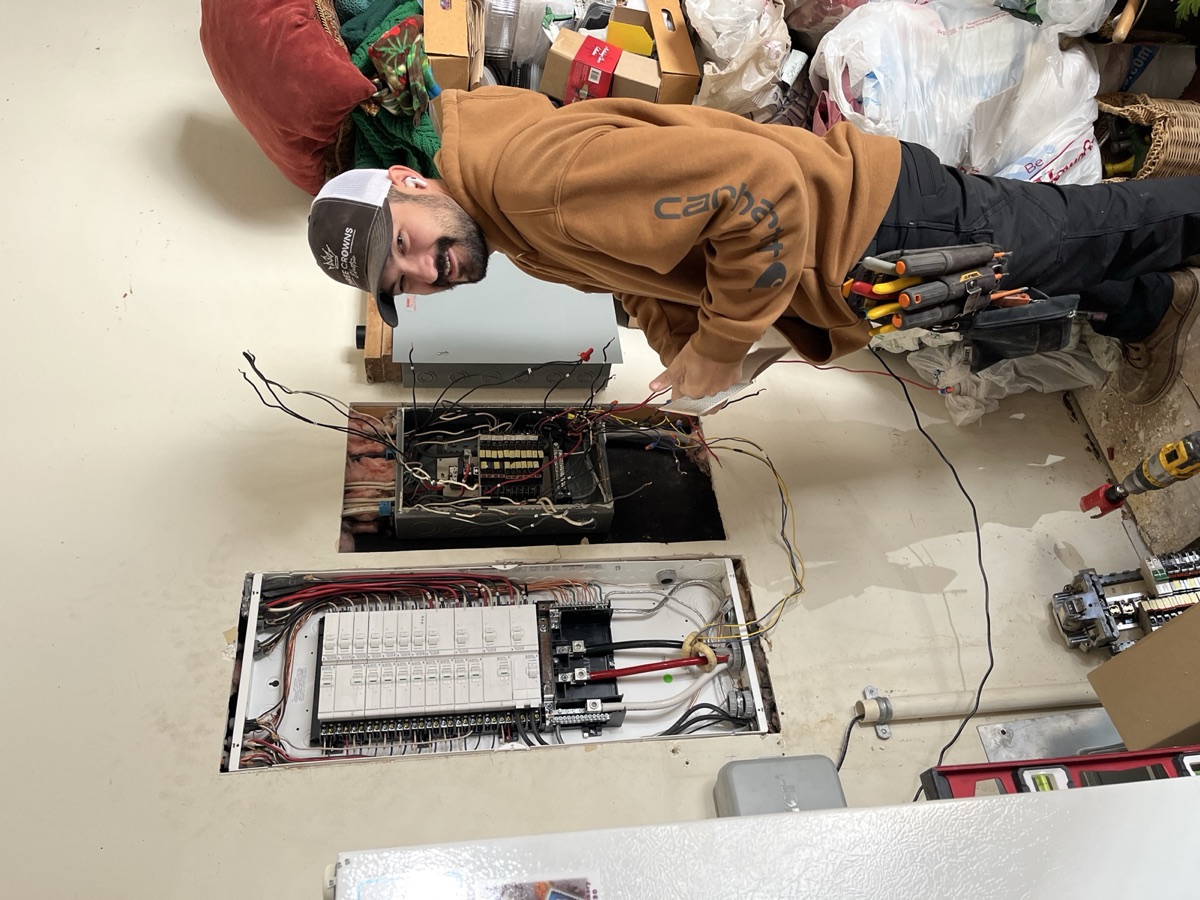
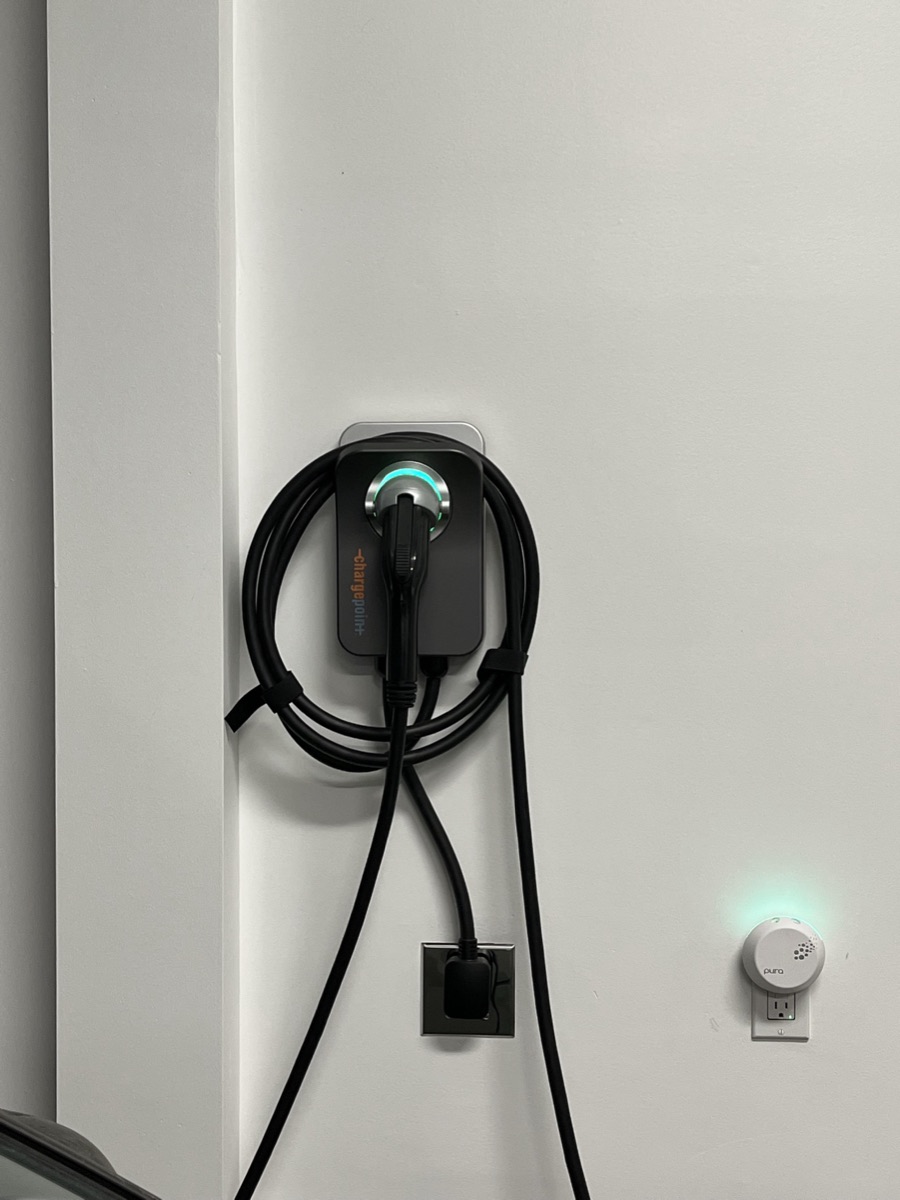
If you’ve got a 100A or 125A panel and you’re running central AC, a hot tub, an electric cooktop, and now you’re adding an EV charger — the panel was at capacity before the new charger. Each of those loads is fine on its own circuit. The panel is the bottleneck.
Signs it’s the panel, not a single circuit:
- Multiple breakers trip at different times
- Lights dim noticeably when a large appliance kicks on
- The panel is crowded with tandem breakers (two breakers in one slot)
- The panel is rated for 100A or 125A
- The panel is a Federal Pacific, Zinsco, or Challenger (these have documented failure modes — the breakers don’t trip reliably, which is the opposite problem, and a worse one)
Check the 9 signs your panel needs to be replaced — and compare your panel against the size guide to understand if your current service is sized for what you’re running.
A 200-amp panel upgrade in Northern Colorado runs $2,800–$4,500 depending on whether the meter base also needs replacement and whether the panel needs to be relocated.
When to call a licensed electrician
Call the same day if:
- There’s a burning smell, scorch marks, or the panel enclosure is warm to the touch
- You hear buzzing, crackling, or arcing from the panel
- The breaker trips immediately after reset with nothing plugged in
Schedule within a few days if:
- The breaker keeps tripping despite redistributing the load
- Multiple breakers on different circuits are tripping
- Your home has a 100A or 125A panel and you’re planning to add an EV charger, heat pump, or hot tub
- You suspect aluminum wiring (older Fort Collins or NoCo home, built 1960s–1970s)
You can troubleshoot it yourself if:
- One breaker trips, one circuit, after a clear overload (microwave + space heater)
- Redistributing the load solves it
- A GFCI reset solves it
Three Crowns Electric’s Master Electrician has been wiring Northern Colorado for 20 years. 518 five-star Google reviews. Salaried technicians, not commission-based — they find what’s wrong and quote the fix, not the largest job.
Frequently asked questions
How many times can a circuit breaker trip before it needs to be replaced?
There’s no hard number, but breakers are mechanical devices and they wear with use. A breaker that’s been tripped and reset dozens of times over the years will have more wear than one that’s rarely tripped. If a breaker trips at loads clearly below its rating, or feels loose when you reset it, it’s worth replacing. A single 15A or 20A breaker swap is typically $100–$200 parts and labor.
My breaker trips when nothing is plugged in. What does that mean?
If the breaker trips immediately after reset with nothing plugged in, the fault is in the wiring — not in any appliance. Possible causes: a damaged wire in the wall, a loose connection in an outlet box, or a fault at a junction. Stop resetting it and call a licensed electrician. Continued resets on a live wiring fault generate heat and increase fire risk.
Can a breaker trip for no reason?
Apparent “no reason” trips usually have a cause you haven’t found yet: an appliance that draws a large startup current (compressors, AC units), an intermittent fault in a device, a breaker that’s beginning to fail, or — in older homes — a wiring issue that only manifests under load. If it happens repeatedly and you can’t identify a pattern, have an electrician run diagnostics.
Is it safe to keep resetting a tripping breaker?
Once is fine — that’s how you restore power. Resetting repeatedly without diagnosing the cause is where it becomes a problem. Every reset on an unresolved fault pushes current through a circuit that’s already shown it can’t handle what’s being asked of it. Find the cause first. If you can’t, call.
Last reviewed by a licensed Master Electrician: May 2026
Customer names changed for privacy where applicable.