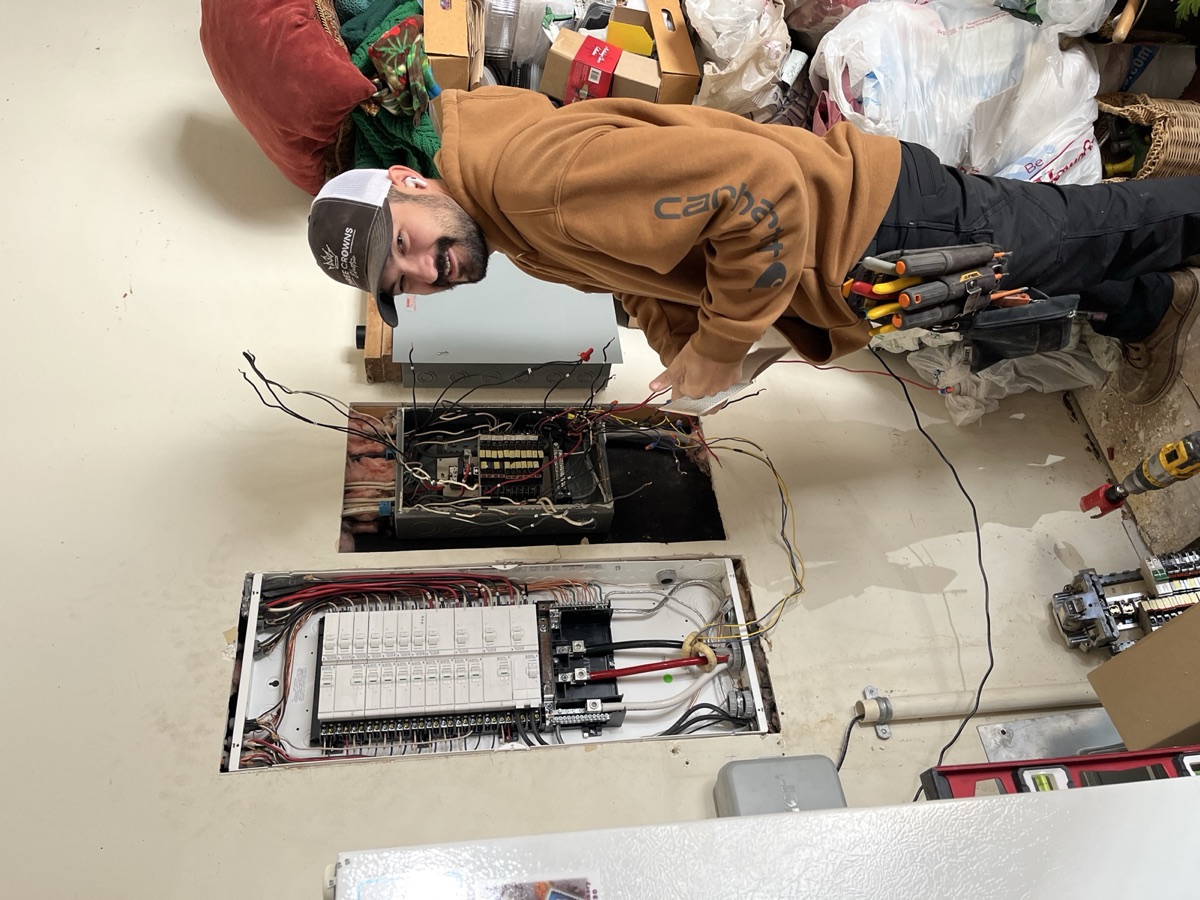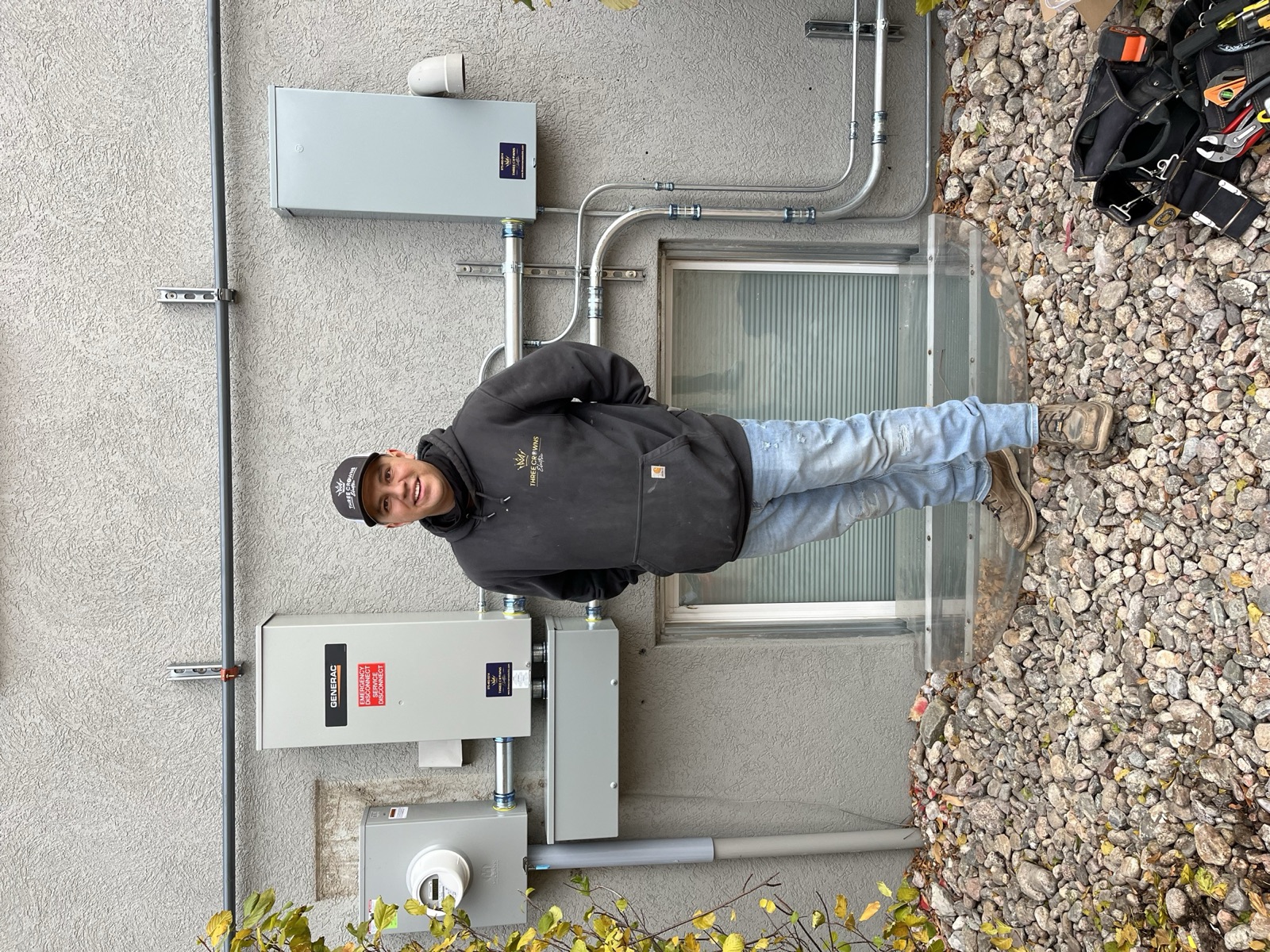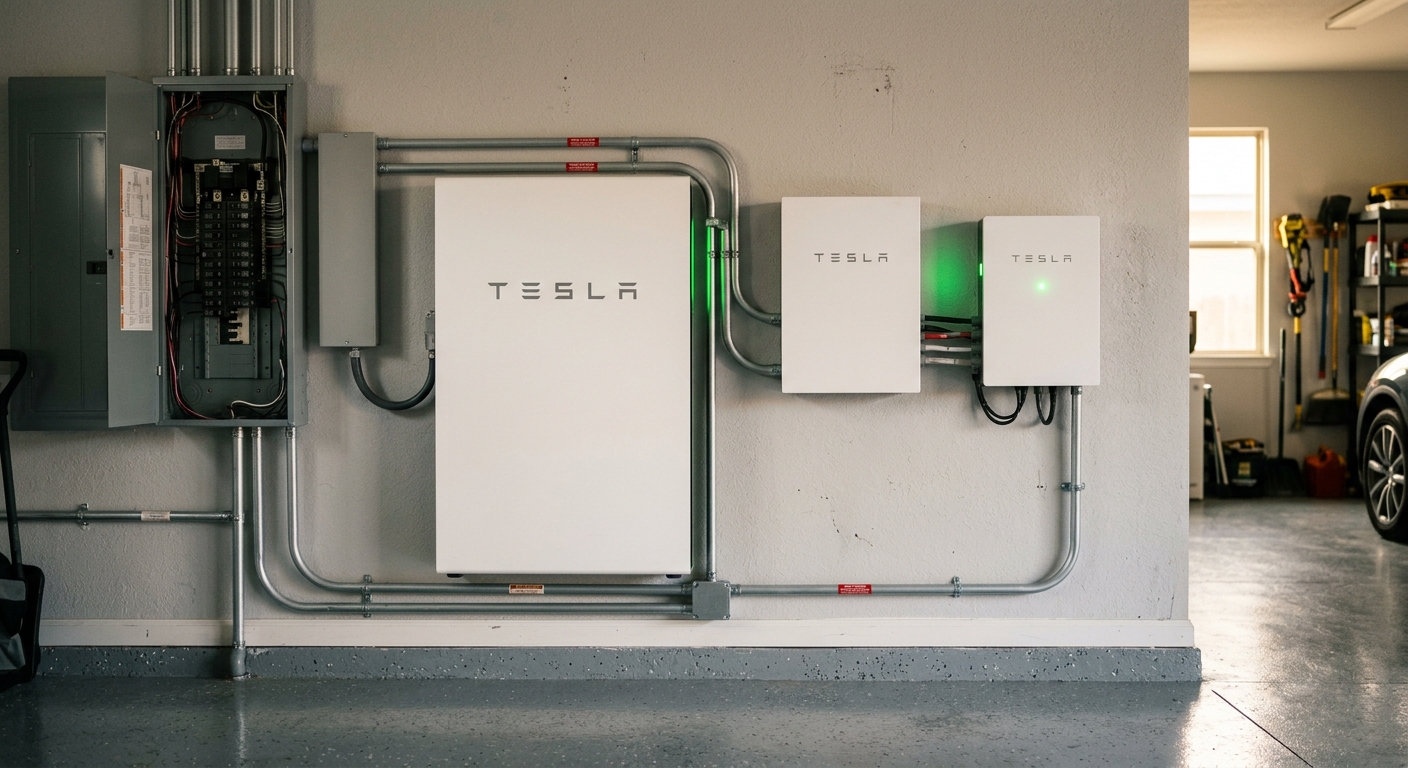
Not every sign means a same-day call. A burning smell or scorch marks near the panel? Call immediately. Breakers tripping once a month? Schedule something soon. A 100-amp panel in a house that’s about to get an EV charger? That needs to happen before the charger goes in — but it’s not an emergency today. Here’s how to tell the difference, from a Master Electrician who’s upgraded nearly 2,000 panels across Northern Colorado.
The most common trigger for a panel call, in Jon Trujillo’s experience, is a straightforward one:
“Most homeowners will call us due to if they have breakers tripping. Or if they’re concerned about adding new appliances, EV chargers. They’re concerned that the main breaker is incapable of handling the load of the house.”
— Jon Trujillo, Master Electrician
But there’s a wide range between “I should probably schedule this sometime” and “I need to call right now.” Here are the nine signs we see most often — organized by how fast you should act, not just a flat list.
Sign 1: Burning smell or scorch marks near the panel
Urgency: Call today.
This is the one that shouldn’t wait. A burning smell near your breaker box — plastic, wood, or electrical — means something is already overheating inside. Scorch marks or discoloration around the breaker face or the panel enclosure tell the same story.
Loose connections, failed bus bars, and melted wire insulation all present this way. Each one is a fire risk before it becomes a house fire. Don’t troubleshoot it yourself. Don’t flip breakers to see what happens. Call a licensed electrician today and leave the affected circuits alone until someone looks at it.
Sign 2: Buzzing, humming, or crackling from the panel
Urgency: Call today.
A healthy electrical panel is silent. If yours hums, buzzes, or crackles — even faintly — something is arcing inside. That’s electricity jumping a gap it shouldn’t be jumping. Arcing is how electrical fires start.
A soft hum that’s clearly coming from the utility transformer outside is different. If you put your ear near the panel box and the noise is coming from inside the enclosure, that’s a different situation. Stop using high-draw circuits and call.
Sign 3: You have a Federal Pacific, Zinsco, or Challenger panel
Urgency: Schedule replacement — don’t let this sit on the list for years.
These three panel brands were installed in millions of American homes from the 1950s through the 1980s. All three share the same fundamental defect: the breakers don’t trip reliably during a fault.
Jon’s experience with them is direct:
“The breakers do not trip like they should. I’ve held wiring trying to short them out before and it’ll literally just start welding.”
— Jon Trujillo, Master Electrician
If your home was built in Northern Colorado between the early 1960s and early 1980s — from Boulder up through Wellington — there’s a real chance you have one of these panels. Jon sees them constantly:
“Colorado from Boulder all the way back to Wellington, we’ve came across the Federal Pacific panels. It’s more off of the year of your home. If you have a home from the 70s, early 80s, you’re going to have these Federal Pacific panels that were installed in your home.”
— Jon Trujillo, Master Electrician
Check the label on your panel door. If it says “Federal Pacific Electric,” “Stab-Lok,” “Zinsco,” “GTE-Sylvania,” or “Challenger,” schedule the replacement. It doesn’t have to happen this week, but it shouldn’t sit for another two years. We’ve got full breakdowns of why Federal Pacific panels are a fire hazard and whether Challenger panels need replacement.
Sign 4: Breakers trip more than once a month on normal use
Urgency: Schedule within a few weeks.
An occasional trip when you accidentally run too many things at once — that’s the breaker doing what it’s supposed to do. A breaker that trips every other week on normal household use is a different problem.
It means the panel is running close to capacity. The breaker is working too hard, too often. And a breaker that trips constantly eventually stops tripping as reliably — which is the more dangerous condition. When the safety mechanism wears out, the panel stops protecting you.
If you’re resetting the same breaker regularly, have an electrician come out and do an amperage reading. As Jon puts it:
“We do an amperage reading and check out what their home is drawing for power. And then we kind of let them know where they’re at with their power usage now.”
— Jon Trujillo, Master Electrician
Sign 5: Lights dim when large appliances kick on
Urgency: Schedule within a few weeks.
When the refrigerator compressor starts and the lights in the next room dip, the circuit is handling more load than it was designed for. When the AC kicks on in July and you see a visible dim across multiple rooms, the panel’s capacity is the issue — not the individual circuit.
Some dimming is technically normal — motors pull a starting surge that’s 3–5× their running wattage. But if the dip is visible across multiple rooms, or happens regularly with normal-sized appliances, the panel can’t keep up with what the house is drawing.
Older homes in Fort Collins and Loveland see this a lot. Many still have the original wiring from the 1970s — aluminum wire on 20-amp breakers — and the load math doesn’t work for the appliances people are running today:
“Old Town Fort Collins — we ran into some homes that had all aluminum wiring still. So they had a 14 gauge aluminum wire that would be installed on a 20amp breaker. And that becomes an issue as far as the rating of the wire… You cause some potential of overloading the wiring itself.”
— Jon Trujillo, Master Electrician
Sign 6: Your home runs on fuses instead of circuit breakers
Urgency: Schedule within a few weeks.
Fuse boxes were standard before about 1960. If your panel has glass fuses instead of circuit breakers, you’re running a system designed for a home with a few lights and a radio.
The practical problem isn’t just age — it’s incentive. When a fuse blows, the temptation is to replace it with a larger-rated fuse to stop the interruptions. A 30-amp fuse where a 15-amp should be doesn’t protect the circuit; it just lets the wiring overheat without consequence. Most homeowner’s insurance policies charge a surcharge — or decline to cover — homes that still have fuse boxes. A 200-amp service upgrade is the right path forward.
Sign 7: You’re adding an EV charger, hot tub, generator, or new HVAC
Urgency: Check before you buy the equipment.
Level 2 EV chargers pull 50 amps of dedicated capacity. Hot tubs run on 50–60 amps. Whole-home generators and heat pumps draw similar loads. None of these can be safely added to a 100-amp panel that’s already running a modern home without first verifying what’s left in the budget.
“They’re concerned that the main breaker is incapable of handling the load of the house. So we’ll go in and give them an estimate to upgrade their complete system — so the meter base, the electrical panel, all rated for 200 amps.”
— Jon Trujillo, Master Electrician
The typical pattern: 100-amp or 125-amp panel, already running central AC and a hot tub, and now the homeowner wants to add an EV charger. The load calculation determines whether an upgrade is necessary. See our full EV charger installation cost guide for what to budget — but in most cases the panel upgrade happens first.
Sign 8: Your panel is 25–40+ years old
Urgency: Plan for it — not an emergency, but don’t ignore it.
Electrical panels last 25 to 40 years depending on make, load history, and environment. A panel from 1985 is at the end of its designed service life even if it hasn’t shown visible symptoms yet.
At that age, the components are worn, the breakers may not trip as cleanly as designed, and the panel wasn’t built for the electrical loads a modern household puts on it. If the panel is showing no symptoms, age alone isn’t a reason to call this week. But if you’re selling the house, doing a renovation, or already noticing any of the signs above — age is the context that makes upgrading the obvious call. The electrical panel upgrade cost guide has a full breakdown of what a 200-amp upgrade runs in Northern Colorado.
Sign 9: Every breaker slot is taken — no room for new circuits
Urgency: Plan for it when you need new circuits.
Some panels run out of physical breaker slots before they run out of capacity. If every slot is full and you want to add a circuit for a workshop, a dedicated outlet, a bathroom addition, or anything else — the panel box itself is the bottleneck, independent of overall amperage.
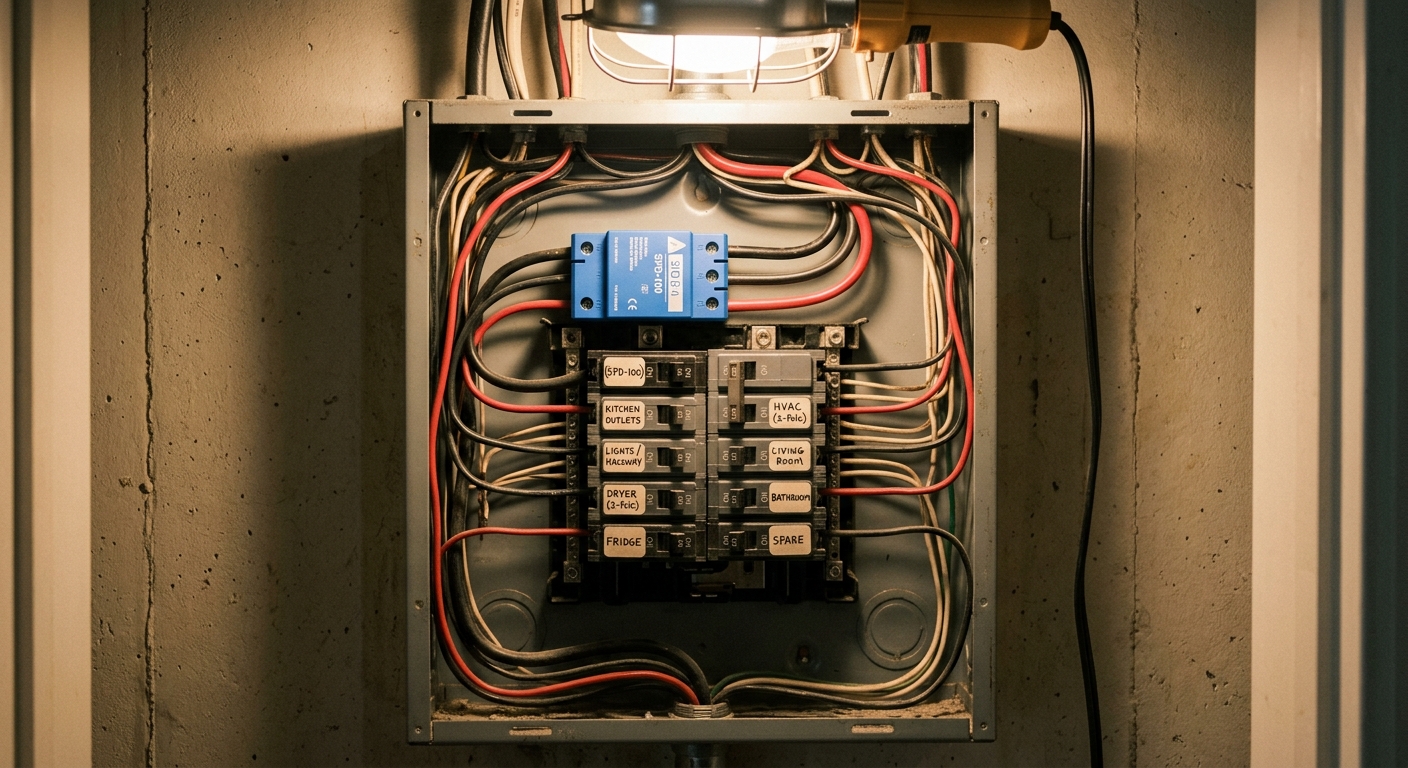
When we do a full service upgrade, we replace the main distribution panel and any sub-panels — all updated to 2026 code with arc-fault and GFCI breakers where required. We also install a whole-home surge protector, which is now required under Colorado’s current electrical code and protects every appliance and device in the house from lightning and grid surges.
Frequently asked questions
How long does a panel upgrade take?
A full 200-amp service upgrade is typically a one-day job. We coordinate with the utility company — they de-energize the meter while we work, then re-energize once the new service passes the required inspection. Power is off for most of the day.
Will my homeowner’s insurance go up or down after the upgrade?
Most insurers treat a 200-amp upgrade as a positive — especially if you’re replacing an older fuse box or a Federal Pacific/Zinsco panel. Carriers that were adding a surcharge for an outdated panel will often remove it after the upgrade. It’s worth calling your agent before and after to document the change.
Does a panel upgrade require a permit in Colorado?
Yes. Every service upgrade requires a permit and inspection by the local jurisdiction. The utility company won’t re-energize the service until the inspection passes — that’s a hard requirement, not optional. Pulling the permit and coordinating the inspection is part of how we run every upgrade.
What’s included in a Three Crowns panel upgrade?
We replace the meter base, main distribution panel, and any sub-panels — all updated to 2026 code. That includes arc-fault and GFCI breakers where required and a whole-home surge protector. If your sub-panel is in the basement or a separate utility room, it’s part of the job, not an add-on.
Last reviewed by Jon Trujillo, Master Electrician — May 2026. Three Crowns Electric has upgraded nearly 2,000 electrical panels across Northern Colorado over 20 years in the trade. 518 five-star Google reviews.