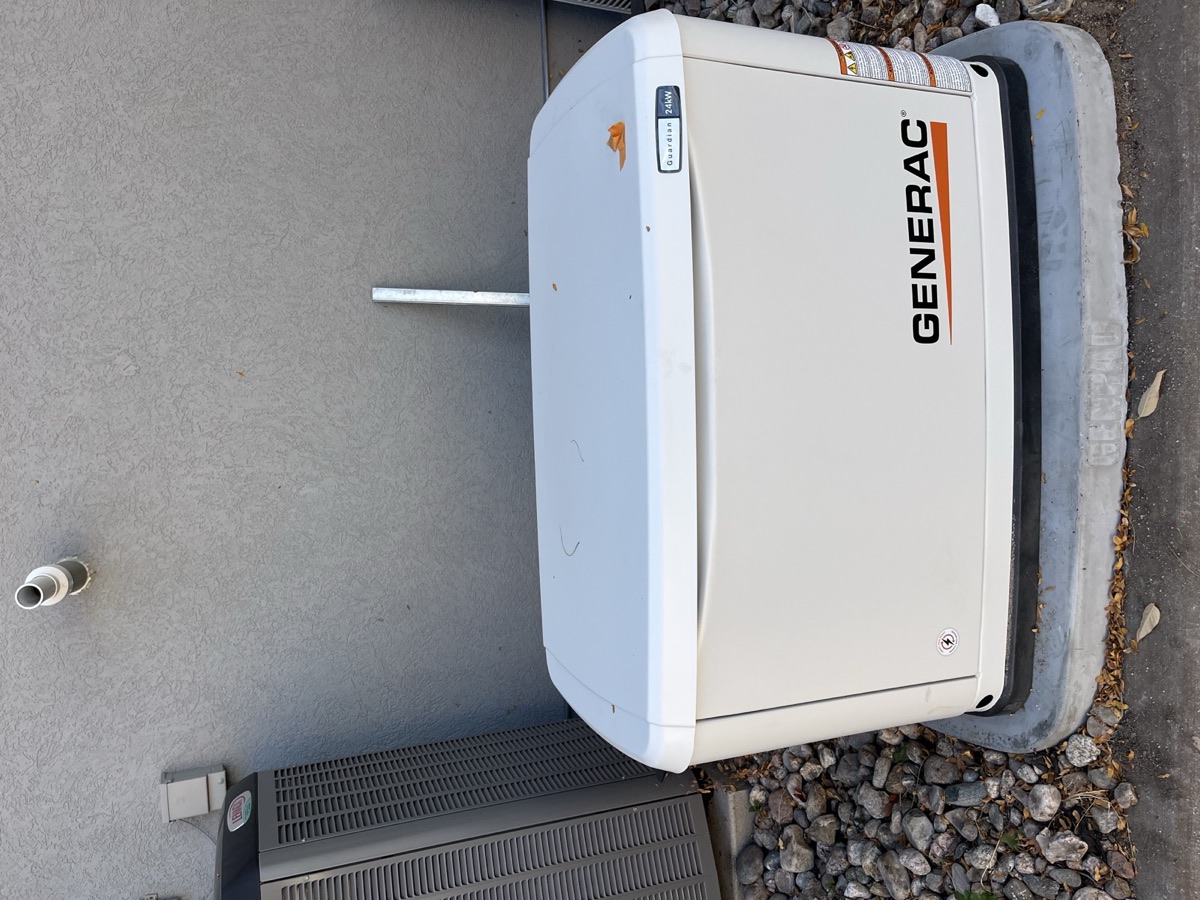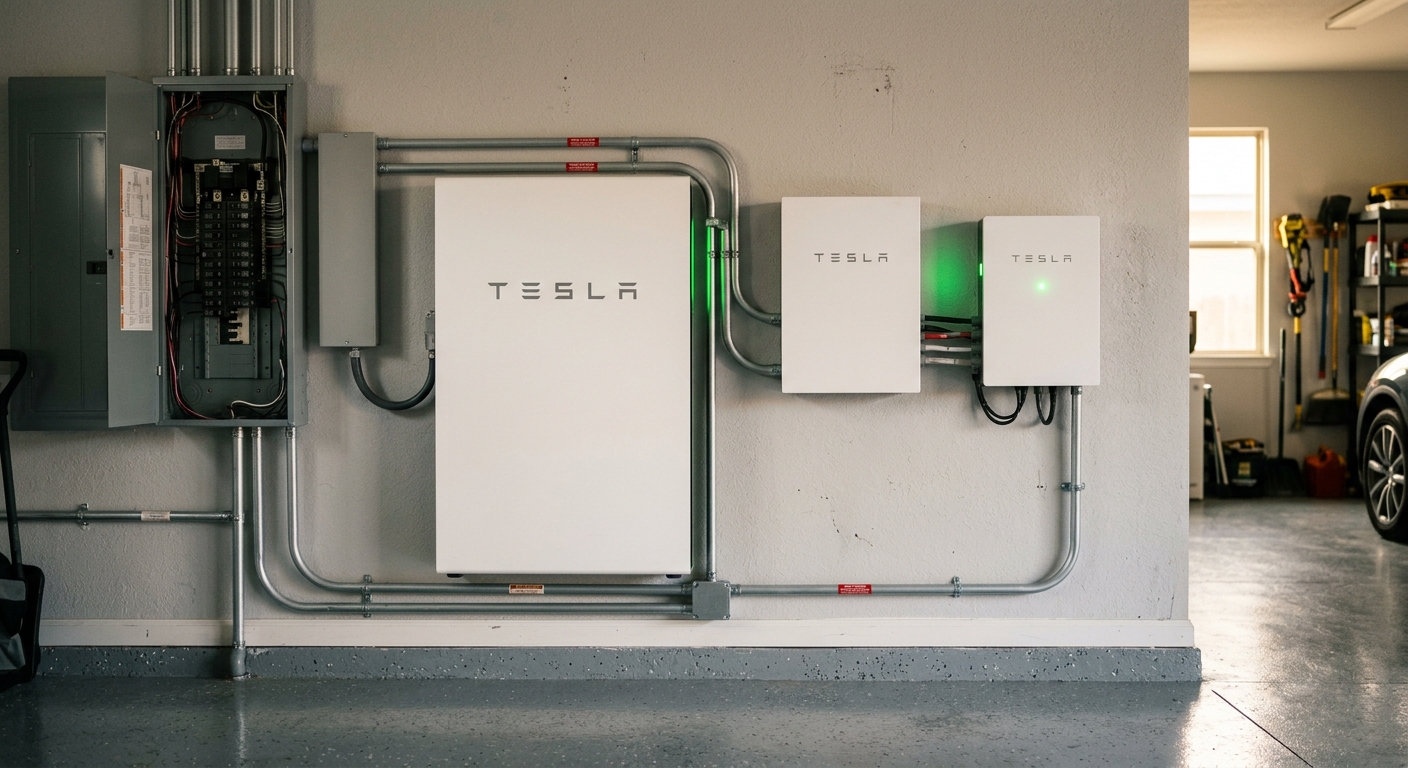
The honest answer depends on how long your power is out. Powerwall wins for outages of 1–2 days — silent, automatic, no engine maintenance. Natural gas generator wins for outages of a week or more — unlimited runtime as long as gas keeps flowing. A single Powerwall provides about 3 days of whole-house backup before depletion. A natural gas Generac runs indefinitely. We install both — the right answer comes down to your specific outage profile in Northern Colorado, not which technology is “better” overall.
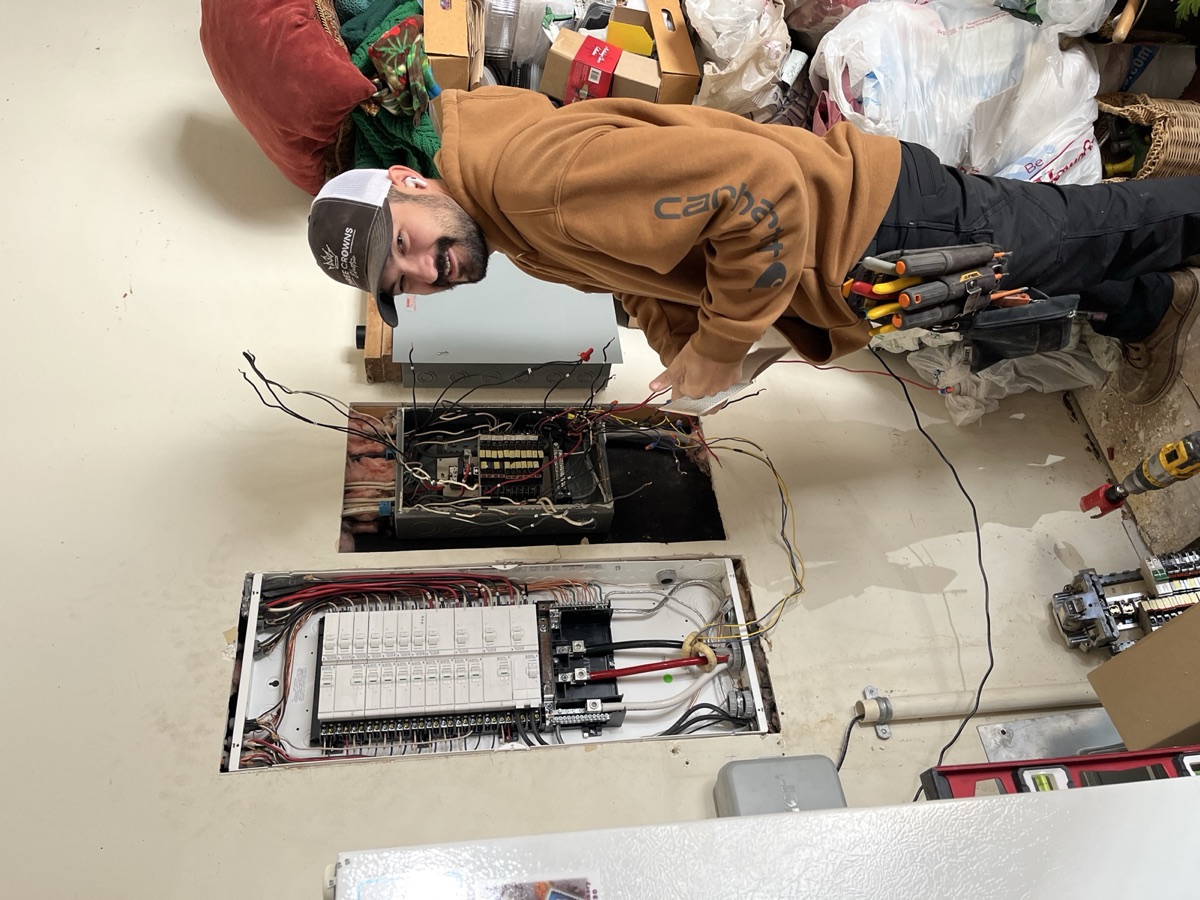
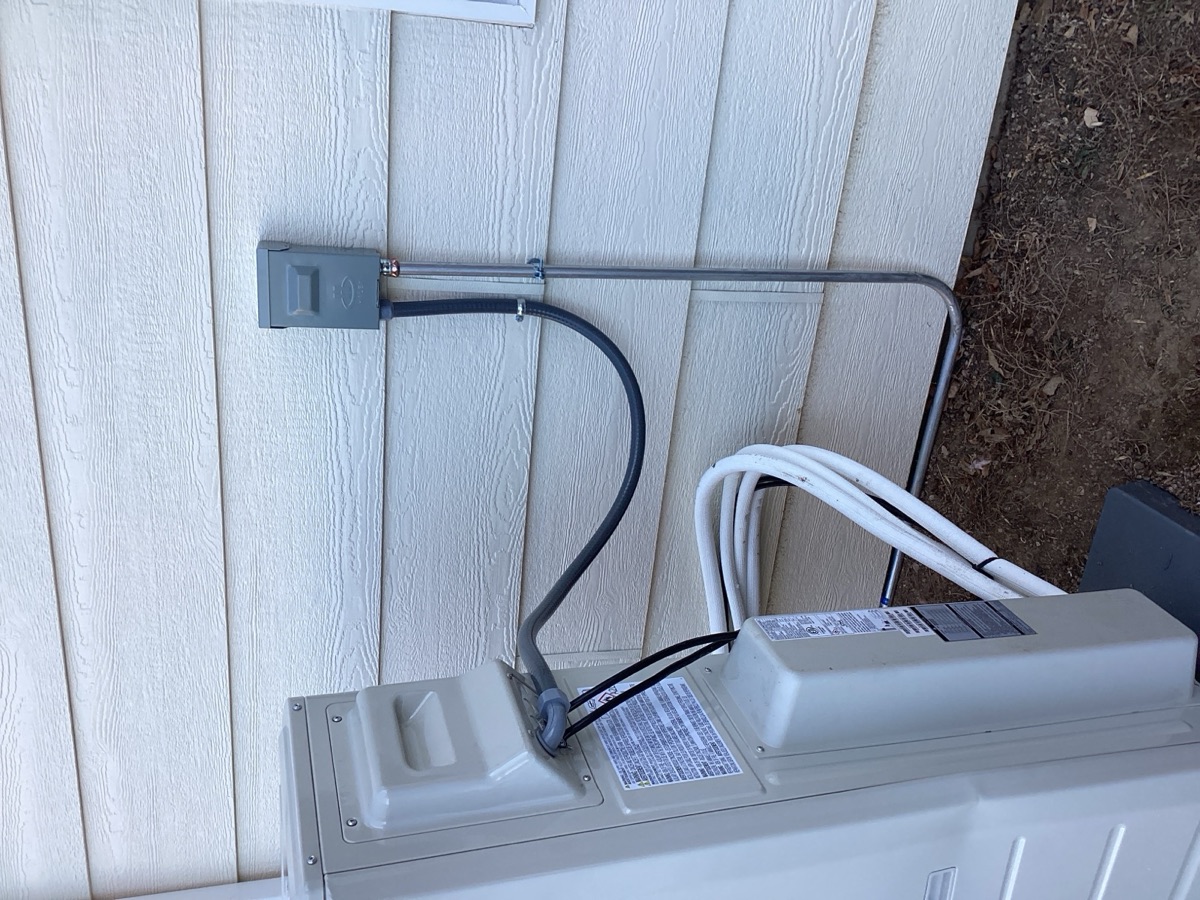
We install both Tesla Powerwalls and natural gas generators across Northern Colorado. We’re a certified Tesla Powerwall installer and a certified Generac installer. So when a homeowner asks “which one should I get?” we don’t have a brand axe to grind — the answer comes down to the actual outage profile of their home, not which technology is universally better.
Here’s the rule of thumb we’ve developed over installing dozens of Powerwalls and 70+ standby generators in NoCo, and the actual cost and runtime math behind it.
The rule of thumb
“I would personally go with a natural gas generator due to — if you’re without power for a week, two weeks — well, that generator is going to stay running the full time. If you use battery power, then it’s like, hey, you might have three days of backup power. Once the batteries are dead, you’re done.”
— Jon Trujillo, Master Electrician
The decision matrix in plain language:
| Outage you’re planning for | Recommended | Why |
|---|---|---|
| Less than 1 day | Either works | Both handle short outages cleanly |
| 1-2 days | Powerwall | Silent, automatic, no engine |
| 3 days | Either, but Powerwall just barely | At Powerwall’s runtime ceiling |
| 4-7 days | Generator | Powerwall runs out, generator keeps going |
| A week or more | Generator | Unlimited runtime, no question |
| Multiple weeks (rare but real) | Generator | Only natural gas can sustain this |
| Brief power flickers / quality issues | Powerwall | Battery is silent and instant |
| You want both | Stack — generator + Powerwall | Best of both worlds |
For most NoCo homeowners, the realistic outage profile is 1-3 days. That’s the sweet spot where Powerwall just barely covers it and a generator is overkill. For Estes Park, mountain cabins, and rural farmhouses where 3+ day outages happen, the generator is the right answer.
Why Powerwall maintenance is zero (and why that matters)
“Yes. Yep. If they’re just thinking a couple days that they’ll be dealing without power. And they don’t want to mess with any kind of engine — because with the Generac engine, you got to maintain that engine. So it’s just like a vehicle. You got to go in and service the engine, which would be an oil change, spark plug replacement, air filter replacement. We do that on a yearly basis with our gas engines.”
— Jon Trujillo, Master Electrician
A Generac generator is a small engine sitting in your yard. Like any engine, it needs:
- Annual oil + filter change
- Annual air filter replacement
- Annual spark plug replacement (every 200 hours or annually, whichever comes first)
- Annual battery check + replacement when needed
- Quarterly visual inspection
- Self-test cycle every 2 weeks (programmed automatically)
Total annual service cost: $200-$400 typically. Skipping it shortens generator life and risks the generator failing during an actual outage.
A Powerwall has none of that. No engine, no fluids, no maintenance schedule. The only “service” is occasional firmware updates (handled remotely by Tesla over WiFi). The unit is rated for 15+ years of typical residential cycling.
For homeowners who just don’t want another piece of equipment to maintain, this is the deciding factor. The Powerwall is genuinely set-and-forget.
The cost math
| Setup | Total install cost | Annual upkeep | 10-year total |
|---|---|---|---|
| Single Powerwall 3 (essentials backup) | $12,000-$15,000 | $0 | $12K-$15K |
| Single Powerwall 3 (whole-home backup) | $14,000-$18,000 | $0 | $14K-$18K |
| Two Powerwall 3 stack | $24,000-$30,000 | $0 | $24K-$30K |
| Generac whole-home generator (22kW) | $14,000 typical | $300/yr | $17,000 |
| Generac + 1 Powerwall stack | $26,000-$32,000 | $300/yr | $29K-$35K |
After applying the 30% federal tax credit on Powerwall installs, net out-of-pocket on a single Powerwall drops to roughly $8,400-$12,600. The federal tax credit doesn’t apply to generators — they’re more expensive on a net basis once you factor in the credit.
The 10-year total includes annual service for the generator. The Powerwall has zero recurring cost.
The runtime math
How long each backs up a typical NoCo home:
Single Powerwall 3 (13.5 kWh usable):
| Use profile | Approx runtime |
|---|---|
| Essentials only (lights, fridge, modem, furnace fan) | 4-5 days |
| Standard whole-home (above + small kitchen, TV, etc.) | 3 days |
| Whole-home with HVAC running | 1.5-2 days |
| Whole-home with electric heat or A/C heavy use | 1 day or less |
Two Powerwall 3 stack (27 kWh usable):
| Use profile | Approx runtime |
|---|---|
| Essentials only | 8-10 days |
| Standard whole-home | 6 days |
| Whole-home with HVAC | 3-4 days |
| Whole-home with electric heat or A/C heavy use | 2-3 days |
Natural gas Generac (22kW):
| Use profile | Runtime |
|---|---|
| Whole-home, all loads | Indefinite (as long as gas flows) |
The Powerwall numbers assume no solar. If you have rooftop solar, the Powerwall recharges during the day and effectively runs indefinitely as long as the sun keeps coming up — that changes the equation dramatically in favor of Powerwall + solar.
When to choose each — concrete scenarios
Choose Powerwall if:
- You live in a Front Range suburb (Fort Collins, Loveland, Boulder, Longmont) where outages are typically less than 24 hours
- You have rooftop solar already (or plan to add it within 5 years)
- You want absolute silence during outages (no engine running)
- You don’t want to deal with annual service appointments
- You want to capture the federal Investment Tax Credit (30%)
- You want to time-arbitrage variable utility rates (charge cheap, discharge expensive)
- You’re already invested in the Tesla ecosystem (vehicle, solar)
Choose generator if:
- You live in Estes Park, the foothills, Wellington, Berthoud, or rural NoCo where multi-day outages happen
- You have well water (well pump needs continuous power)
- You have medical equipment that can’t tolerate any interruption longer than the Powerwall’s runtime
- You have a home office or business where week-long outages would be catastrophic
- You’re building or have a large home (5,000+ sqft) with high baseline draw
- You want indefinite backup at a lower upfront cost
Choose both (stack) if:
- You want silent default operation but need the generator as a long-runtime backstop
- Budget allows ($30K+ combined)
- You’re building a forever home and want maximum resilience
- You have critical infrastructure (server room, refrigerated medications, etc.)
What about solar?
Solar changes the math significantly for Powerwall.
“What you can do now, what Tesla came up with, it’s called Powershare. You can actually use the vehicle to charge to backup power on your home through your actual vehicle. And then if you install the Powerwall with it, now you’re just creating more battery pack for your house to run off of.”
— Jon Trujillo, Master Electrician
A Powerwall paired with rooftop solar can run a typical home indefinitely as long as the sun keeps coming up. The battery handles overnight, solar refills during the day. Even on cloudy NoCo winter days, partial solar production extends Powerwall runtime substantially.
For homeowners with existing solar (or planning to add it), the Powerwall becomes a long-runtime solution that competes directly with generators on actual capability.
For homeowners without solar (and no plans for it), Powerwall is fundamentally a 3-day backup ceiling. Generator is the better long-runtime option.
The Cybertruck angle
For Tesla owners specifically, the Cybertruck adds a third option to the mix — Powershare. The Cybertruck can back up part of your home (~48 amps worth) without any Powerwalls installed.
The catch: 48 amps is essentials-only backup, not whole-house. For details on what Powershare actually covers and when it makes sense to add Powerwalls on top, see our Cybertruck Powershare guide.
Cross-link details
For full details on each option:
- Home generators page — what’s included, sizing, fuel options, install timeline
- Tesla Powerwall page — install scope, cost breakdown, certified installer status
- Generac vs Kohler vs Cummins comparison — if you’ve decided generator
- Cold weather kit guide — Colorado-specific generator essential
Last reviewed by a Master Electrician: May 5, 2026.
Trying to decide between Powerwall and a generator for your Northern Colorado home? Call (970) 460-0014 for a free site visit. We’ll walk through your typical outage profile, your home’s load characteristics, and your specific goals — then recommend Powerwall, generator, or both based on what actually fits your situation. We install both and we’re not committed to either.