Short answer: Standby if you want automatic whole-house protection and outages in your area run longer than a day. Portable if you want lower upfront cost and you’re okay managing fuel and manual startup for a few circuits. For most Northern Colorado homes — especially if you have a well pump or anyone in your house can’t operate equipment manually — the standby pays for itself after one bad outage. Here’s how to tell which one you need.
Every time a big windstorm rolls through Northern Colorado — and after December 2025 took out power across parts of Loveland, Berthoud, and Wellington for two straight days — the question Jon Trujillo gets most isn’t “Generac or Kohler?” It’s the one before that: standby generator vs. portable generator — which one do I actually need?
This is the honest comparison, from someone who installs both.
What a portable generator is (and what the YouTube math leaves out)
A portable generator is a gasoline-powered engine you roll out of the garage, start manually, and run through extension cords or a manual transfer switch. They range from $500 for a 2,000-watt model that’ll keep a fridge and some lights going, up to $5,000 for a 12,000-watt dual-fuel unit that can handle most essentials.
The appeal is real. The $5,400 Generac from Costco is a real generator. The YouTube videos showing a DIY interlock kit for $1,500 are describing a real option.
Here’s what those comparisons usually skip:
The interlock kit or transfer switch still needs a licensed electrician to install it correctly — in NoCo, that’s required for anything permanently connected to your home’s wiring. You’ll also need a permit. You need to keep gas cans filled and treated before storm season (gasoline goes stale in about 30 days untreated). When the outage hits, someone has to go outside, start the unit, and manage the fuel — including at 2am in a February blizzard.
And if the temperature drops below about 10°F, the portable may not start at all.
“If you want the DIY path, we’ll also tell you what to look for so you don’t backfeed and kill the lineman three streets over. Most buyers we see have considered DIY and decided the complete install is worth not having that conversation with their wife at 2am during the outage.”
— Jon Trujillo, Master Electrician
Portables do well for:
- Short outages in mild weather (a few hours, not sub-zero)
- Lower upfront budget
- Portable use — campsites, job sites, cabins
- Rental properties or apartments where a permanent install isn’t possible
Where portables fall short:
- You have to start and connect them every single time, manually
- Fuel runs out — 8–18 hours at full load is typical
- Running your whole house at once (especially with AC or heat) is often more than they’re rated for
- They don’t start reliably in sub-zero temperatures on gasoline
- Improper placement creates a real CO risk
What a standby generator actually is
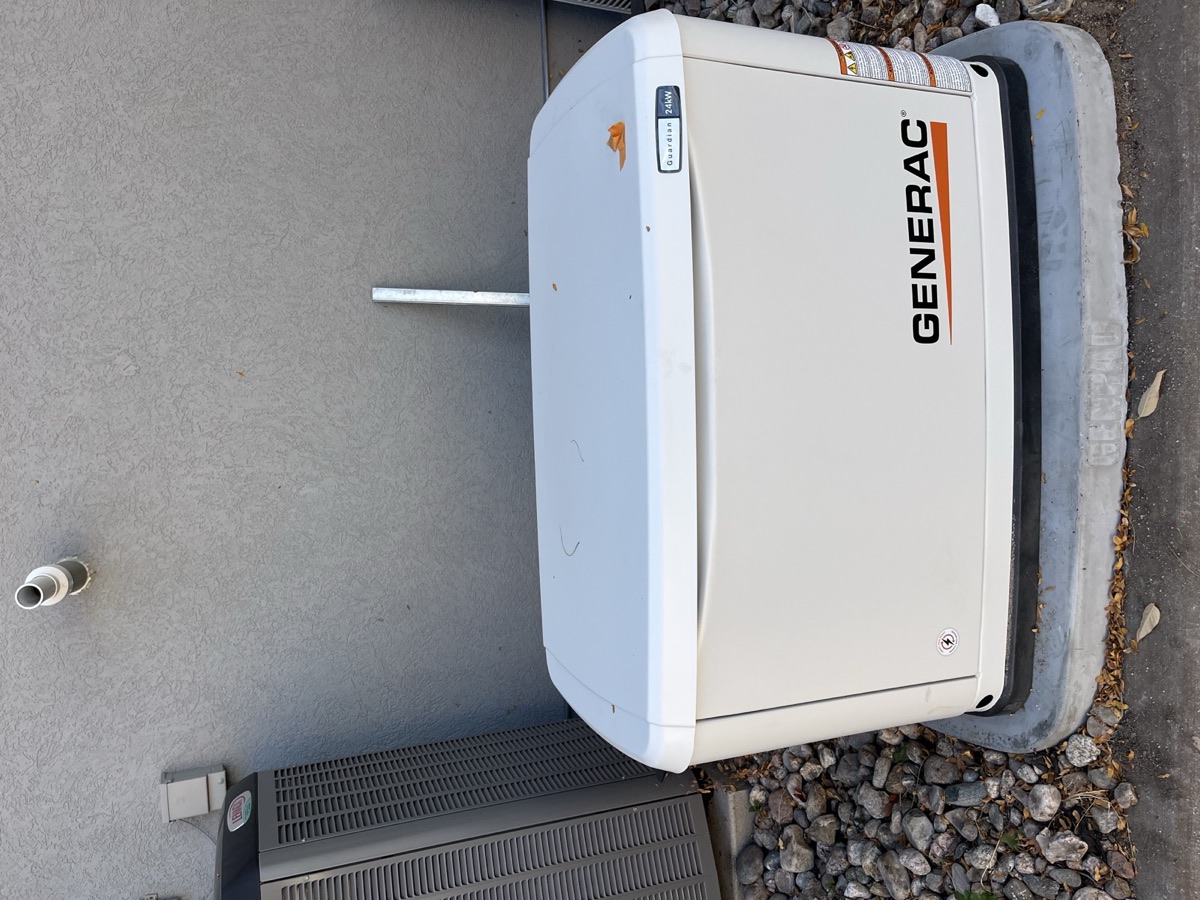
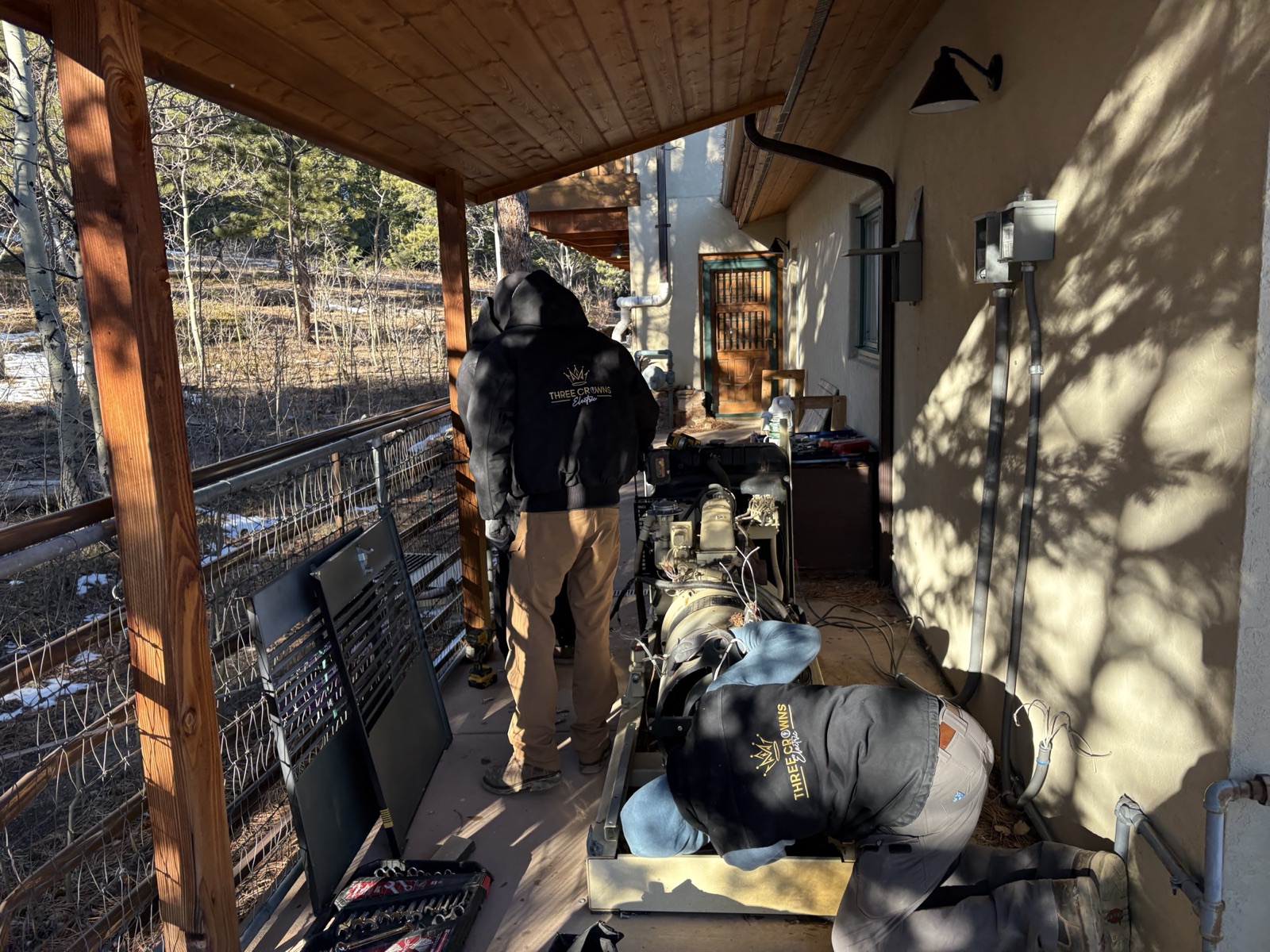
A standby generator is a permanently installed unit on a concrete pad next to your house, connected to your natural gas or propane line, and wired to an automatic transfer switch (ATS) next to your main electrical panel.
When the power goes out, the ATS senses the loss and starts the generator. The whole process takes 10 to 30 seconds. You don’t do anything — you may barely notice.
“I think the biggest misconception is how much power people can use off the generator. A lot of people think it’s just going to turn their lights on. But we design our generators to back up the entire house, and it’s all automated — within a blink of an eye, the generator’s kicking on and you’re not even noticing you lost utility power.”
— Jon Trujillo, Master Electrician
Standby generators run on natural gas or propane. Natural gas gives you unlimited runtime — the gas main doesn’t go down when the electric grid does, so the generator runs as long as the storm lasts. Propane from a dedicated tank gives you days to weeks depending on tank size (a 500-gallon tank runs a 22kW unit for about 10–14 days at moderate load).
Jon programs every install with an automatic bi-weekly self-test: every two weeks, the generator starts itself and runs for 15 minutes. It keeps the battery charged, cycles the fluids, and keeps the engine ready to start when you actually need it. You don’t schedule it. You don’t think about it.
Standby vs. portable: the side-by-side
| Feature | Standby Generator | Portable Generator |
|---|---|---|
| Complete upfront cost | $12,000–$18,000 installed | $1,000–$6,500 (unit + transfer switch install) |
| Operation | Automatic — you do nothing | Manual — go outside, start it, connect it |
| Transfer time | 10–30 seconds | 5–30 minutes |
| Runtime | Indefinite on natural gas | 8–18 hours per tank |
| Whole-house coverage | Yes, sized to your load calc | Usually no — limited circuits |
| Fuel | Natural gas or propane | Gasoline or propane (or dual-fuel) |
| Cold-start at −10°F | Yes, with cold-weather kit | Unreliable on gas; propane loses pressure |
| Well pump backup | Yes, part of the load calc | Depends on sizing — often not |
| NoCo permit | Required | Often required (permanent install) |
| Annual maintenance | $375/yr (every 2 yrs per spec) | Oil changes + fuel treatment |
| Home value increase | +$5,000–$7,000 at appraisal | None |
| Insurance discount | 5–10% with most carriers | None |
The 3 questions that decide it for most NoCo homeowners
Jon asks every caller the same three questions before recommending a direction.
1. Do you have a well pump?
If your water comes from a well, a power outage cuts your water supply completely — no running water, no flushing toilets. The well pump needs electricity, and most portable generators struggle to start one reliably while also running a fridge, lights, and heat (well pump starting surges typically run 1,000–3,500 watts above the running load).
Standby generators are load-calc’d to handle the whole house, well pump included. If you have a well, the math almost always points to standby.
2. How long do outages in your area typically run?
“If you’re planning for outages of a week or more — especially a Colorado winter — a natural gas generator runs indefinitely. Solar plus battery gives you maybe three days of backup, then it’s done. Same math applies to portables.”
— Jon Trujillo, Master Electrician
Loveland neighborhoods with underground utilities? A few hours is typical. Wellington, Berthoud, Estes Park, Glen Haven, or anywhere on the rural co-op grid? Multi-day outages are common. The longer your local outages run, the clearer the standby case gets.
3. Who else has to operate it if you’re not home?
The portable’s biggest hidden liability: it requires someone who’s home, physically capable, and willing to go outside in whatever weather caused the outage.
“My wife cannot operate a portable, and I need her to be able to do this if I’m traveling for work, or not home when she needs it to go on.”
— NoCo homeowner researching backup generators
If your spouse, an elderly parent, a caretaker, or anyone else will be home alone during an outage, automatic operation stops being a convenience and becomes the whole point.
Why cold weather changes the math in Northern Colorado specifically
The Generac website doesn’t emphasize this. Honda doesn’t either. Neither does Consumer Reports. They sell nationally.
Here’s what’s local: portable generators running on gasoline are unreliable below about 10°F. The oil thickens, the carburetor struggles, and at the temperatures Fort Collins, Wellington, and Estes Park hit every few winters — we’re talking −5°F to −15°F — a portable may simply not start.
Standby generators aren’t immune either. There’s a documented failure mode called PCV breather icing, where the engine’s crankcase ventilation tube freezes at −11°F and prevents startup. Verbatim, from a homeowner in Nova Scotia who documented it in real time:
“I have a Generac 14kW and this happened to me today… From Nova Scotia Canada, −24C / −11F with high winds and blowing snow and a power outage… not a nice day to be working on a generator!”
Jon’s answer to this is the cold-weather kit, installed standard on every Three Crowns generator job:
“I would highly recommend doing a cold weather kit. With us living in Colorado in the wintertime, you know, it’s hard saying what temperatures will be. That’s always going to help keep that generator to fire up at the coldest times of the year. It keeps your oil pan heated up, keeps the engine ready to be fired at all times.”
— Jon Trujillo, Master Electrician
The cold-weather kit isn’t an upsell at Three Crowns — it’s in every quote, because the one day you need the generator is the coldest day of the year.
Propane portables have a separate cold-weather issue: propane loses tank pressure in single-digit temperatures, which makes starting unreliable. If you’re in Wellington or Berthoud with a propane tank and counting on a portable for a February cold snap, that’s worth knowing before the outage.
What each option actually costs — full math, not just the unit
The online comparisons almost always show the generator sticker price and nothing else. Here’s the complete picture.
Portable — total cost:
- Generator unit: $500–$5,000
- Transfer switch or interlock kit + electrician labor: $500–$1,500
- Annual fuel treatment and storage supplies: $50–$100/yr
- Total out of pocket: $1,000–$6,500
Standby — total cost (Three Crowns complete package):
- Covers: generator unit (22–26kW), automatic transfer switch, concrete pad, gas line (no separate plumber bill — Jon coordinates it), permit, inspection, cold-weather kit, 2-year warranty
- Typical NoCo install: $12,000–$18,000 complete
The gap is real. So is the offset math: most home insurance carriers give a 5–10% discount for standby generators — Jon will write the spec letter for your agent. Appraisers typically add $5,000–$7,000 to home value at the next sale. And for most NoCo homes, one bad multi-day winter outage costs $2,000–$8,000 in spoiled food, frozen pipe repairs, and hotel stays.
For a complete breakdown of what drives costs up or down on a standby install, see the whole-home generator cost guide. For sizing — 14kW vs. 22kW vs. 24kW — see the generator sizing post.
Frequently asked questions
Can a portable generator power a well pump?
Some can. A 12,000-watt dual-fuel portable with a properly installed transfer switch can often handle a well pump plus essentials — but you’re at the $4,000–$5,000 end of the portable range, plus $500–$1,500 for the transfer switch install. At that combined cost, the gap to a standby installation gets a lot smaller, and the standby is automatic and cold-weather-ready.
Do you need a permit for a portable generator in Northern Colorado?
If you’re running extension cords out the door: no permit. If you’re wiring it to your home’s electrical system through a transfer switch or interlock kit — which is the right way to do it — most NoCo jurisdictions (Fort Collins, Loveland, Greeley) require a permit. Running a generator into your panel without a permit and proper transfer switch creates a backfeed hazard for utility linemen working nearby. Don’t skip the permit.
How long does a standby generator last?
Typically 10–15 years with proper maintenance. The failures Jon sees are almost always on units that sat unmaintained. Jon programs every install with a bi-weekly 15-minute self-test to keep the unit ready.
Can a standby generator run the whole house including central AC?
Yes — that’s the point of the on-site load calculation. Jon sizes every generator to cover the actual loads in the house, including air conditioning. Most 2,000–3,500 sq ft NoCo homes land on a 22kW unit for full whole-house coverage. See the load-calc guide for specifics.
How often does a standby generator need maintenance?
Per industry pro voice (a technician servicing 318 generators): Generac units need service every 2 years or 200 run hours, whichever comes first — not necessarily every year. Some dealers push annual contracts to keep the margin. Jon’s annual service visit is $375 and includes oil change, battery check, terminal torque, exerciser settings verified, and a winter pre-check. He’ll tell you if your unit doesn’t need it yet.
What happens when Xcel restores power after an outage?
The automatic transfer switch senses utility power coming back, switches the house back to grid power, and shuts the generator down. Automatic. You get a notification through the Generac app — it sends a text and email when the unit runs or detects a power change.
Does natural gas keep flowing during a power outage?
Yes. Losing utility power only cuts the electricity to your home — the gas main keeps flowing because it operates on a separate system. That’s why natural gas is the preferred fuel for standby generators: when the grid goes down, the gas doesn’t. Jon’s preference is natural gas wherever you have service at the house. For rural properties without gas service, propane is the play — Jon coordinates the tank and fuel connection as part of the install.
Ready to figure out which option fits your house? Jon does free on-site assessments — he’ll run the load calculation, look at your fuel options, and give you one number that covers everything. He’ll also tell you honestly if a portable makes more sense for your situation.
Schedule a free generator assessment →
Last reviewed by Jon Trujillo, Master Electrician — May 15, 2026. Three Crowns Electric has installed 70+ generators across Northern Colorado.