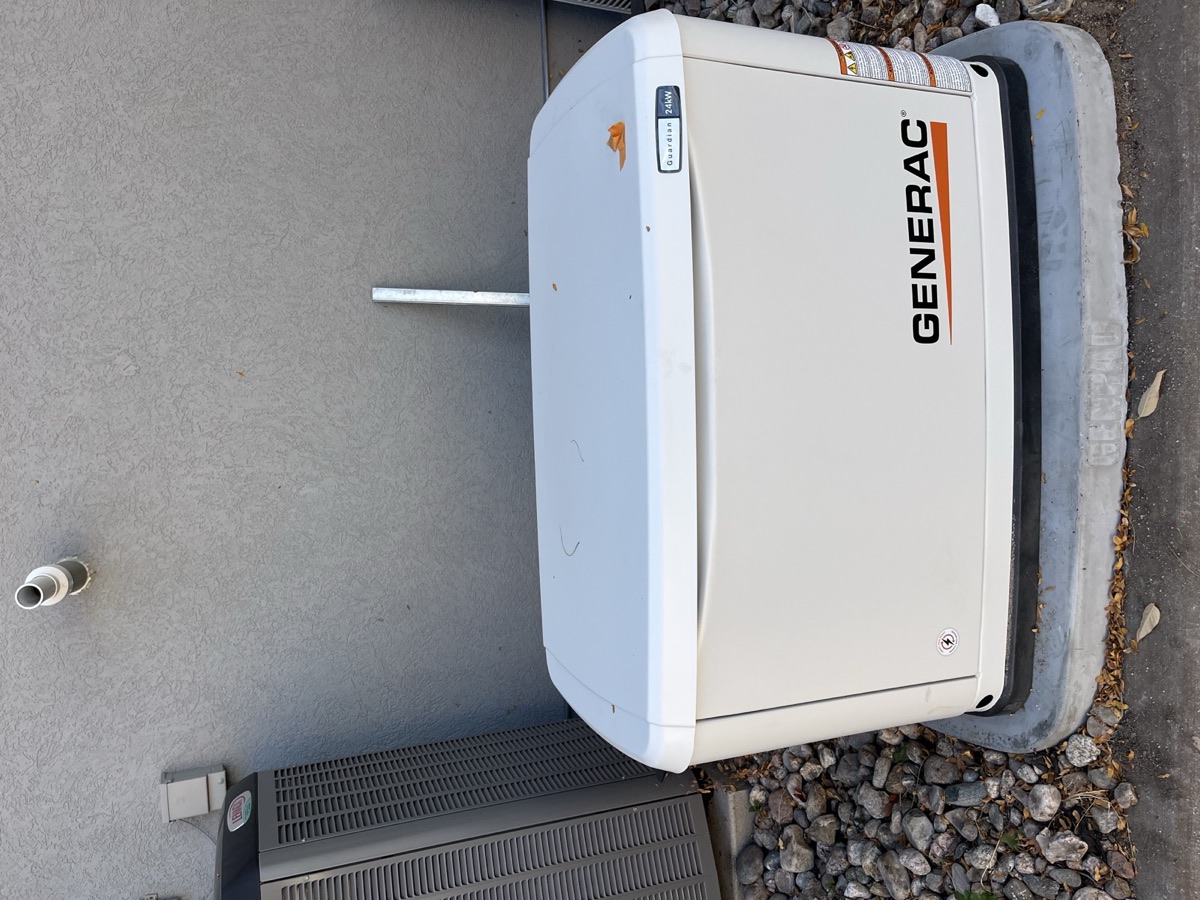
If you’re asking “how often should I service my generator,” here’s the short answer: your standby generator already runs a self-test every two weeks on its own, you should walk out and look at it once a month, and it needs a full service — oil, filters, spark plugs, battery, valve check — once a year. The self-test keeps the engine exercised, but it doesn’t change the oil or catch a dying battery. In Northern Colorado the annual service matters more than in milder climates, because the most common generator failure is a unit that won’t start in January cold — exactly the moment you bought it for.
A standby generator is a car engine bolted to the side of your house. Treat it like one. Nobody expects their truck to start every morning for ten years without an oil change, but plenty of homeowners expect exactly that from the generator — because it sits there quietly and mostly takes care of itself.
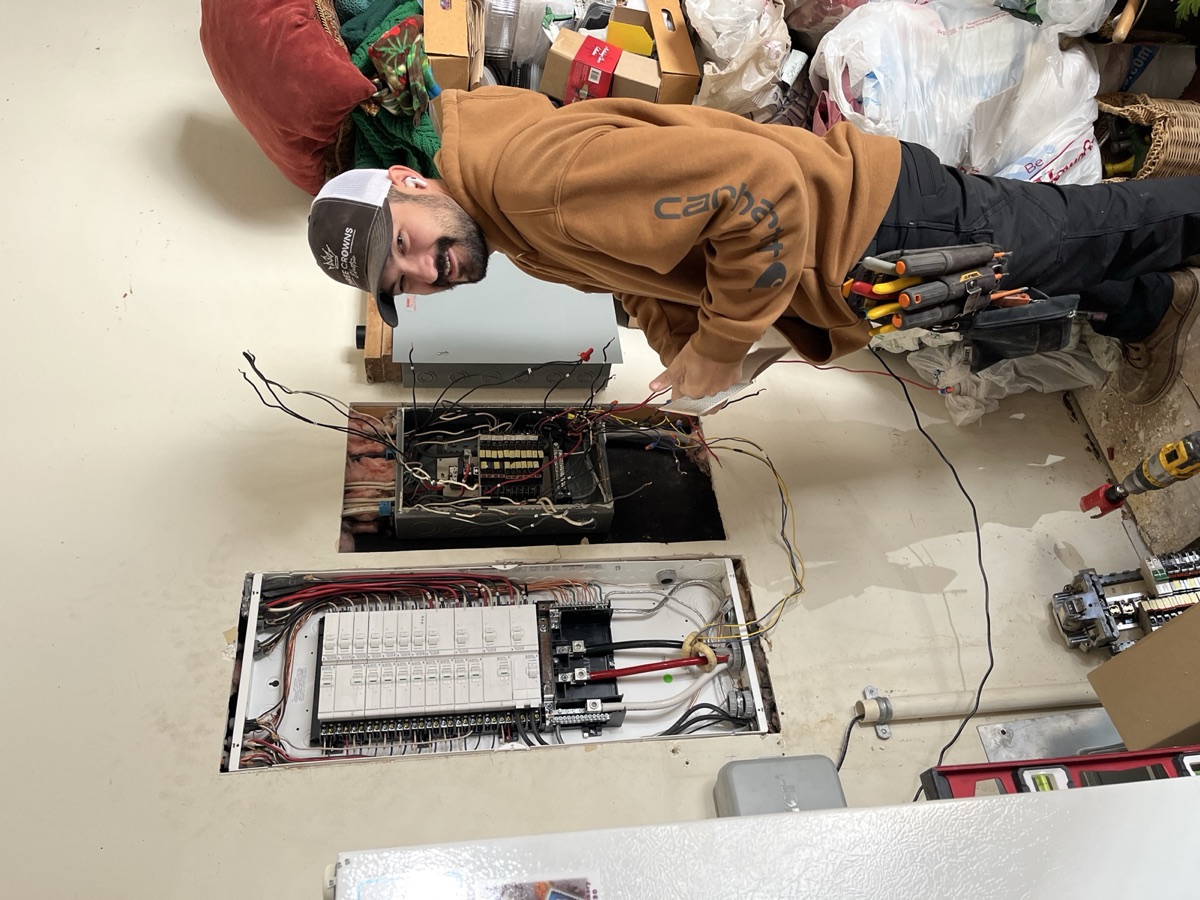
Three Crowns Electric has installed 70+ standby generators across Northern Colorado, from Fort Collins subdivisions to propane setups outside Wellington and Berthoud. Jon Trujillo, a Master Electrician with 20 years in the trade, designs every one of those installs around a single outcome:
“We design our generators to back up the entire house, and it’s all automated, so you’re not doing anything. Within a blink of an eye, the generator’s kicking on and you’re not even noticing you lost utility power.”
— Jon Trujillo, Master Electrician
That’s the promise. Maintenance is what keeps the promise true in year five. Here’s the schedule we set up on our own installs, what each interval actually covers, and which parts you can handle yourself.
What does the two-week self-test actually do?
Every standby generator we install is programmed to start itself every two weeks and run for about 15 minutes. You’ll hear it fire up, run at speed, and shut back down. That cycle keeps the battery charged, circulates the oil and fluids, and keeps the engine in running condition instead of letting it sit cold for months.
The self-test is also your earliest warning system. If two cycles go by and you never heard it run, something’s wrong — most often a dead battery or a fault code — and you want to find that out in October, not during the outage. Most Generac and Kohler units will send a text or email when a self-test runs or fails, if the Wi-Fi module is set up. We turn that on at install.
What the self-test does NOT check
This is where homeowners get burned. The self-test exercises the engine. It does not:
- Change the oil. Oil degrades with run time and with age, self-test or not.
- Test the battery under a real cranking load. A battery can pass a warm 15-minute cycle in September and still fail a cold start at -10°F in January.
- Run the house. Most self-test cycles run the engine without transferring your home’s load, so the transfer switch itself isn’t being tested.
- Check spark plugs, air filter, or valve clearance. Those only get looked at when someone opens the enclosure.
- Clear snow off the intake. More on that below.
The self-test tells you the engine can run. It doesn’t tell you the whole system will perform when the grid drops during a week of sub-zero weather. That’s what the annual service is for.
The full maintenance schedule, by interval
| Interval | What happens | Who does it |
|---|---|---|
| Every 2 weeks | Automatic self-test — engine runs ~15 minutes | The generator itself |
| Monthly | Visual check: controller status lights, oil level on the dipstick, no leaks, no rodent nests, clear space around the unit | You (5 minutes) |
| After every snowstorm | Clear snow away from air intake, exhaust, and louvers | You |
| Every fall | Battery test before winter; confirm cold weather kit is working | You or your electrician |
| Annually (or every 200 run hours) | Full service: oil + oil filter, air filter, spark plugs, battery load test and terminal check, valve clearance check, exerciser settings re-verified | Licensed technician |
| Every ~3 years | Battery replacement | You or your electrician |
| After any extended run (multi-day outage) | Oil check immediately, service visit soon after — a 3-day outage puts more hours on the engine than a year of self-tests | You + technician |
That last row matters more than people expect. A generator that ran four days straight during a December outage just did the equivalent of a road trip. Check the oil when the grid comes back, and get it serviced — don’t wait for the calendar.
What’s in an annual generator service?
Jon explains it to homeowners the same way every time:
“With the Generac engine, you got to maintain that engine. So it’s just like a vehicle. You got to go in and service the engine, which would be an oil change, spark plug replacement, air filter replacement. We do that on a yearly basis with our gas engines.”
— Jon Trujillo, Master Electrician
A real annual service on a standby generator covers:
- Oil and oil filter change. Fresh oil is the cheapest engine insurance there is.
- Air filter replacement. Dust, cottonwood fluff, and grass clippings clog filters faster than you’d think, especially on rural properties.
- Spark plug replacement. Cheap parts, and worn plugs are a common cause of hard starts.
- Battery load test, terminal cleaning, and charging system check. The battery is the most common reason a standby generator fails to start. Not the engine — the battery.
- Valve clearance check. Air-cooled engines need valve lash checked periodically. Out-of-spec valves cause hard starting and, left long enough, engine damage.
- Exerciser settings re-verified. We confirm the self-test schedule is still programmed and the cycle runs long enough for the engine to fully warm up — a short cycle that never gets hot leaves condensation inside the engine, a known cold-weather failure path.
- Controller fault history review. The controller logs every fault and start attempt. Reading the history catches problems the homeowner never noticed.
You’ll hear some techs say a lightly used Generac can stretch to service every two years or 200 hours. On paper, sometimes true. In Colorado, we don’t recommend stretching it — and the reason is the next section.
Why Colorado winters change the maintenance math
A generator in Georgia that skips a service year will probably get away with it. A generator in Northern Colorado is being asked to cold-start an engine at -10°F, at altitude, possibly under a snowdrift. Four local factors change the schedule:
Cold starts are the hardest thing you can ask of the engine. Oil thickens, batteries weaken, and metal contracts in extreme cold. This is why we put a cold weather kit on every Colorado generator install — it keeps the oil pan and engine warm enough to fire reliably. But the kit doesn’t exempt you from service; it assumes the oil, plugs, and battery underneath it are healthy.
Batteries lose cranking power in the cold. A battery at 0°F delivers a fraction of the cranking amps it delivers at 70°F. A battery that’s three winters old and marginal in the fall is the one that fails during the January outage. Test it every fall; replace on roughly a 3-year cycle rather than running it to failure.
Snow blocks the intake. A standby generator needs airflow to run. After a big storm — especially with drifting wind — clear the snow away from the unit’s intake, exhaust, and louvers. A generator buried in a drift can fail to start or shut down mid-run. In Estes Park and the foothills, where multi-day outages are a fact of life, this is the top winter failure mode we see.
Altitude works against the engine. Northern Colorado homes sit between roughly 4,900 and 7,500 feet, and air-cooled engines lose a few percent of output per thousand feet of elevation. That’s one reason sizing the generator correctly matters more here than at sea level — and one more reason a tired engine with old plugs and a dirty filter has less margin than the spec sheet suggests.
What can you do yourself, and what needs a technician?
Honest answer: a fair amount of this is homeowner-doable, the same way car maintenance is.
DIY-friendly:
- The monthly visual check — status lights, oil level, leaks, clearance around the unit
- Snow clearance after storms
- Keeping shrubs, fences, and stored items away from the enclosure
- Watching for the bi-weekly self-test (or setting up the app notifications)
- Oil and air filter changes, if you’re comfortable doing them on a mower or a truck — the engine side of a standby generator is familiar territory
Leave to a licensed technician:
- Anything inside the transfer switch. The ATS is live electrical equipment connected to your utility service — electrician work, full stop.
- Battery load testing and charging system diagnosis
- Valve clearance adjustment
- Exerciser and controller programming
- Warranty-related service. Generac and Kohler warranty claims go smoother with a documented service history from a licensed installer.
One more note: if your unit throws a fault code you don’t recognize, look it up in Generac’s owner resources or call whoever installed it before clearing the code and hoping. The code history is diagnostic gold, and clearing it erases the trail.
What does annual service cost vs. what a failed start costs?
Our annual generator service is $375. That covers the oil and filter change, air filter, plugs, battery test, valve check, exerciser verification, and a winter pre-check. We drive up to Estes Park and Glen Haven for it without a trip charge. Over a typical 12-year generator lifespan, that’s about $4,500 in total service cost.
Now the other column. A standby generator that fails to start during a multi-day January outage typically costs the homeowner $2,000–$8,000 in one event: a freezer and fridge full of spoiled food, frozen pipe repairs, hotel nights, and — for rural homes on a well — no water the entire time. That’s before you count the part that stings most: you already paid roughly $14,000 for the install, and it didn’t work the one week it mattered.
| Annual service | One failed start in a winter outage | |
|---|---|---|
| Typical cost | $375/year | $2,000–$8,000 in one event |
| 12-year total | ~$4,500 | Can exceed the service total in a single outage |
| What you get | A unit that starts at -10°F | A $14,000 lawn ornament |
The generator was the big purchase; the service schedule is what protects it. Skipping maintenance isn’t saving $375 a year — it’s betting $14,000 plus a week of winter misery that the engine won’t mind.
And this isn’t a commission pitch. Our technicians are salaried, not commission-based, so nobody’s pay depends on selling you a service visit. If your unit is healthy and low-hours, we’ll tell you that too.
When to call a licensed electrician
Call soon if:
- The generator missed a self-test cycle, or you can’t remember the last time you heard it run
- The controller shows a fault code, a red light, or a low-battery warning
- The unit started during an outage but shut down before the power came back
- It’s been more than a year since the last full service
- The unit ran through a multi-day outage and hasn’t been looked at since
Call the same day if:
- The generator failed to start during an actual outage
- You smell fuel or exhaust near the unit
- The transfer switch is making buzzing or clicking noises, or the house is flickering between power sources
Still in the research phase — no generator yet, just tired of watching the neighbor’s lights stay on? Start with our home generator installation service page or the Generac vs. Kohler vs. Cummins comparison. Three Crowns Electric installs, services, and maintains standby generators across Northern Colorado — 518+ five-star Google reviews. Call (970) 645-3114 for a free quote, or to get an existing unit on a service schedule before winter.
Frequently asked questions
How often should I service my Generac generator?
Once a year, or every 200 run hours, whichever comes first. The annual visit covers oil and filter, air filter, spark plugs, battery test, and valve check. If the unit ran through an extended outage, service it after that run regardless of the calendar. Some techs stretch lightly used units to two years; in Colorado we recommend keeping it annual, because cold starts punish marginal oil and weak batteries.
Does the two-week self-test count as maintenance?
No. The self-test keeps the battery charged and the fluids moving, which is valuable, but it never changes the oil, replaces a filter, or load-tests the battery. Think of it as the difference between starting your truck in the driveway every two weeks and actually taking it in for an oil change. You need both.
Why won’t my standby generator start when the power goes out?
The most common cause, by a wide margin, is a dead or weak battery — often one that still passed warm-weather self-tests. Other frequent causes: low oil pressure shutdown, a fault code that was never cleared or diagnosed, snow blocking the air intake, and cold-thickened oil on units without a cold weather kit. Nearly all of these are caught by an annual service and a fall battery test.
How long does a standby generator last?
A well-maintained standby generator typically lasts around 12 years or more in residential service. Maintenance is the biggest variable — an engine that gets annual oil changes and valve checks ages very differently from one that sits ignored between outages. On the safety side, standby units are installed outdoors with proper clearances for carbon monoxide reasons; the CPSC’s carbon monoxide guidance is worth a read for any home with fuel-burning equipment.
Can I do generator maintenance myself?
Partly. Monthly visual checks, snow clearance, and even oil and air filter changes are homeowner-doable if you’re comfortable with small-engine work. Battery diagnosis, valve adjustment, controller programming, and anything involving the transfer switch belong with a licensed electrician — the ATS is live equipment tied to your utility service. If the unit is under warranty, documented professional service also protects the claim.
Do you service generators you didn’t install?
Yes. If the house came with a generator, or your original installer isn’t returning calls, we’ll do the annual service, read the fault history, and tell you honestly what condition the unit is in.
Last reviewed by a licensed Master Electrician: August 2026