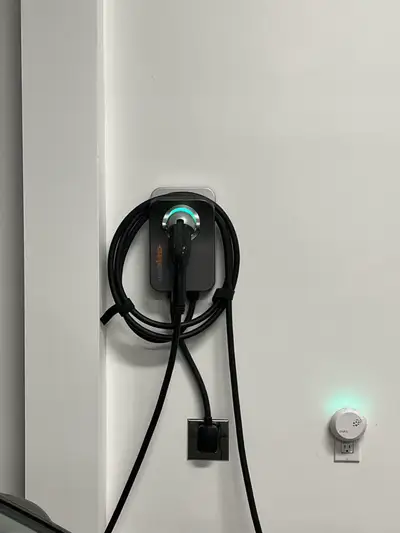
Colorado moved to the 2026 National Electrical Code this year, so a new EV charger install is now generally held to a newer rulebook than one done last year. A new 240-volt circuit still needs a permit and an inspection, and your town still runs its own process. The state code is a minimum, so a city can ask for more. The federal charger tax credit also ended for chargers placed in service after June 30, 2026, which changes how you should budget.
Most people find out about code changes from a quote that went up. So here’s what actually moved this year, and what didn’t.
What changed in 2026?
The State Electrical Board’s rule took effect July 15, 2026, and set the 2026 NEC as the minimum across Colorado. Before that, the baseline was the 2023 NEC.
The date that matters for your project depends on your town. Denver, for example, set August 1, 2026 as its line: new submittals use the 2026 code, and projects submitted earlier can stay on the 2023 code. Fort Collins, Loveland, Greeley, Windsor, Longmont, and Boulder each run their own permitting, so don’t assume Denver’s date applies to your house. If you got a quote or a permit before the switch, ask whether your town will honor the earlier submittal.
Colorado also required counties and cities over 20,000 people to settle their EV charger permitting process by the end of 2025. That’s about how permits get reviewed. It doesn’t get you out of pulling one.
What stayed the same?
An EV charger is still a continuous load. It pulls high current for hours while you sleep, and that drives the math on every install. It’s why a 50-amp breaker doesn’t mean 50 amps of charging.
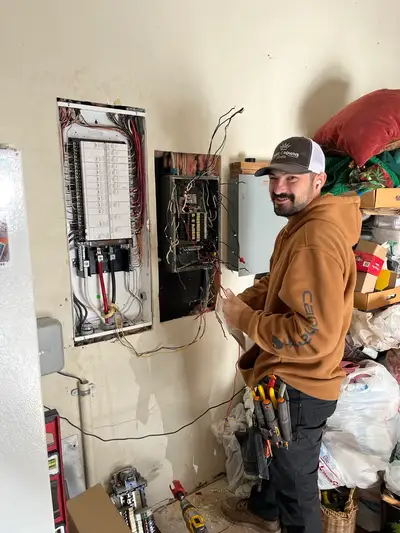
The load calculation still decides what your house can take. Older homes with 100- or 125-amp service, plus electric heat, a hot tub, or a shop, may not have room for another 50 amps. The answer could be a lower charging rate, load management, a subpanel, or a service upgrade. Jon Trujillo, our Master Electrician, sees this most in older neighborhoods:
“They definitely go hand in hand at certain times, especially when you get into those older neighborhoods from homes 70s or earlier. A lot of those homes only have 100amps of power running the entire home.”
— Jon Trujillo, Master Electrician
If you’re in that group, read whether you need a panel upgrade for an EV charger before you approve a bigger job. When a panel or service upgrade is truly needed, one 2026 Colorado guide puts it at $1,500–$5,000 or more on top of the charger work.
Local add-ons still apply, too. Fort Collins and Longmont are named in published guidance for a garage heat detector requirement, which isn’t part of the national code. Have your electrician confirm the current rule with your building department before work starts.
Where homeowners get tripped up
Most of the trouble we hear about comes from a few assumptions:
- “The last guy said no permit.” A new 240-volt circuit or hardwired charger generally needs one. Greeley, for instance, runs it through the city’s building inspection process. Our EV charger permit guide covers who issues what.
- “Every town works the same.” They don’t. Longmont requires its own contractor licensing, so ask whether your electrician can pull a permit at your address.
- “I’ll get the tax credit.” Don’t budget on the federal 30C credit for an install placed in service now. The one local rebate we could verify was Longmont Power’s, up to $500 for a residential Level 2 charger, and its 2026 round closed November 1. We couldn’t verify a current charger rebate from Xcel, Poudre Valley REA, Fort Collins Utilities, or Loveland Water and Power. That doesn’t prove none exists, so check with your utility.
- “That quote is just an outlet.” A one-line quote that says “install EV outlet” tells you nothing. Get the amperage, breaker size, wire, permit, inspection, and load calculation in writing.
Frequently asked questions
Do I need a permit and inspection in my city?
Yes, for a new 240-volt charger circuit. Each Northern Colorado city handles this through its own process, and addresses outside city limits may fall under a county or state authority. Your electrician should be able to name the agency before starting.
Can my HOA stop me from installing an EV charger?
Generally not outright. Colorado law protects Level 1 and Level 2 installs, while still letting an HOA set reasonable safety and design requirements. Ask for those rules in writing before you schedule the work.
Is a regular 120-volt outlet good enough, or do I really need Level 2?
It depends on how far you drive. If overnight charging on a 120-volt outlet keeps up with your daily miles, you may not need a new circuit yet. If it doesn’t, Level 2 is the fix.
Three Crowns runs the load calculation first and shows you the numbers before recommending anything. We pull the permit, handle the inspection, and back the work with a 2-year warranty. Our technicians are salaried, so nobody earns more by selling you a bigger panel. See our EV charger installation service or call (970) 460-0014.