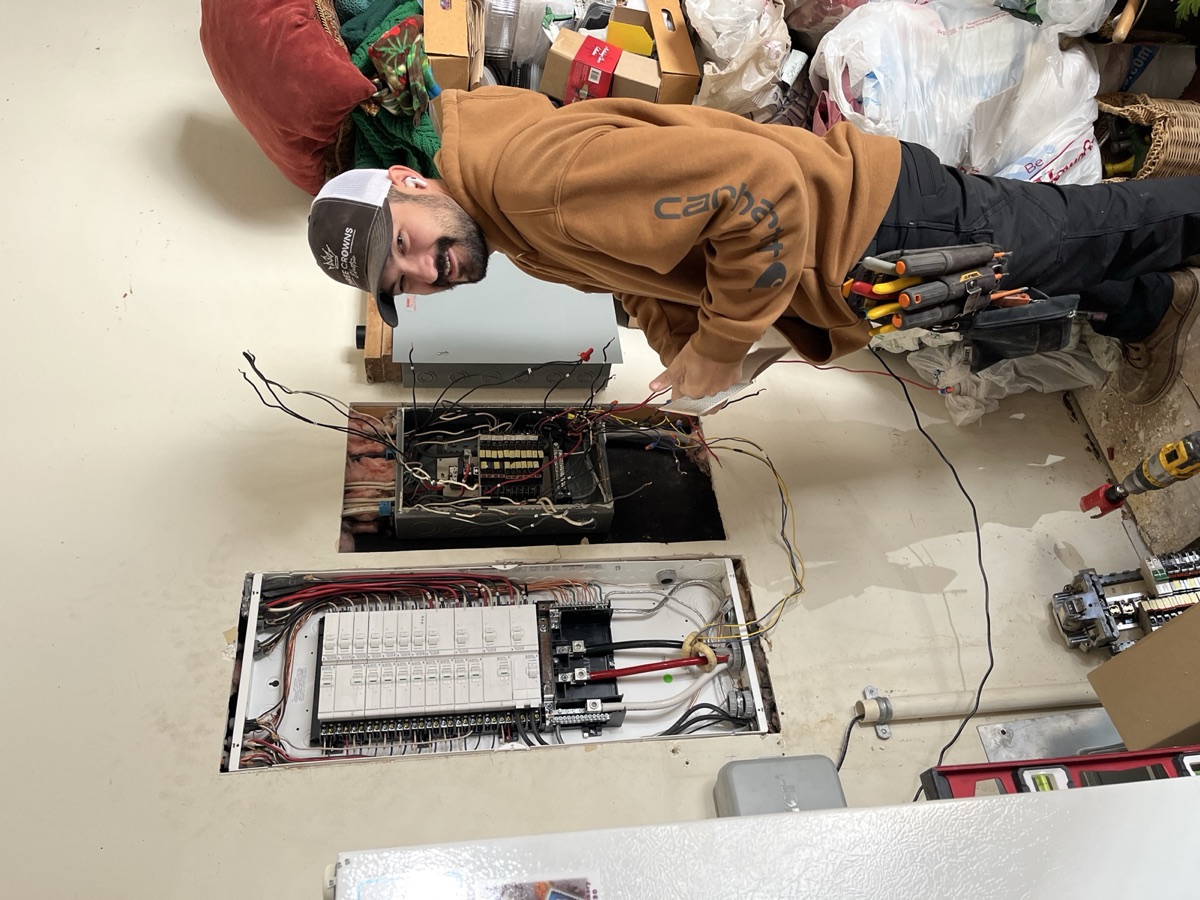
How long does an electrical panel last? Most panels are good for 25 to 40 years. Where yours lands in that range depends on the brand, the load it has carried, and where it’s mounted — a panel in a Colorado garage that swings from below zero to 90 degrees ages faster than one in a dry basement. The exception: Federal Pacific, Zinsco, and Challenger panels are unsafe at any age and should be replaced regardless of condition. For everything else, age is a reason to pay attention, not always a reason to replace.
Three Crowns Electric has upgraded close to 2,000 electrical panels across Northern Colorado — just about every age, brand, and condition of breaker box between Boulder and Cheyenne. Some were 45 years old and still in honest working shape. Some were 30 years old and half-rusted from a garage roof leak nobody noticed. The install date matters less than most homeowners think; the conditions around the panel matter more.
Here’s how panel aging actually works, what speeds it up in Colorado, and how to tell whether yours has years left or is living on borrowed time.
How long does an electrical panel last?
The working answer: 25 to 40 years.
That range covers the enclosure, the bus bars (the metal strips the breakers snap onto), and the breakers themselves. Breakers are mechanical devices with springs and contacts, and they wear — especially ones that have tripped and reset many times. Bus bars and lugs degrade more slowly, but every heat cycle, overload, and bit of moisture works on them.
A panel doesn’t hit a birthday and quit. What actually happens as one ages:
- Breakers trip less reliably. The mechanism stiffens or weakens. Some start nuisance-tripping below their rating; the worse failure is not tripping when they should.
- Connections loosen. Copper and aluminum expand and contract with every heat cycle. Over decades, lugs and terminations loosen, which creates resistance, which creates more heat. It feeds itself.
- The bus bar oxidizes or pits. A breaker sitting on a corroded bus makes a poor connection, runs hot, and can arc.
- The panel falls behind your life. A 100-amp panel from 1978 wasn’t built for central AC, a hot tub, and an EV charger. It isn’t broken. It’s too small for the house you live in now.
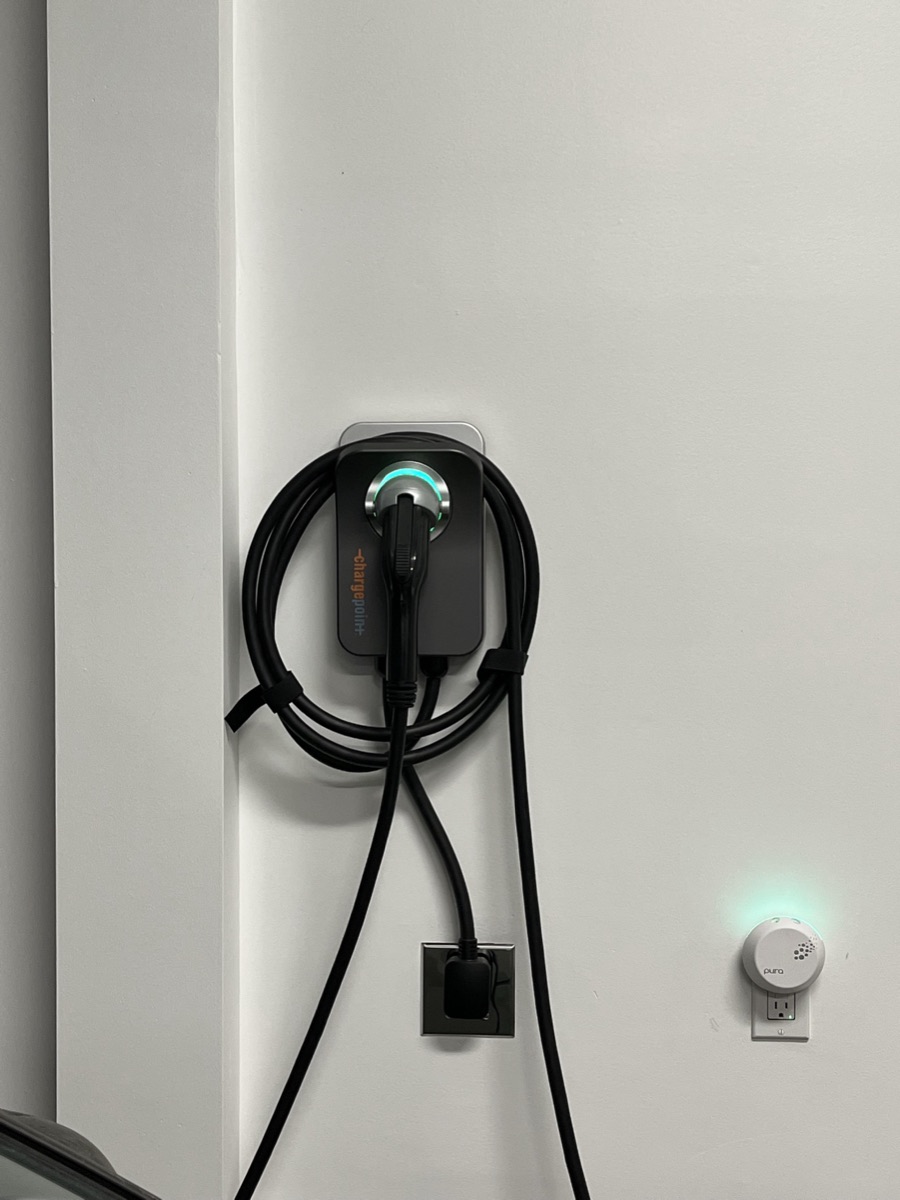
That last one is why age and capacity get tangled together. Plenty of the panels Jon’s crew replaces didn’t fail — the homeowner is adding a load the old service was never sized for. About half of the EV charger installs Three Crowns does end up needing a panel upgrade alongside them.
What wears a panel out faster than the calendar
Two panels installed the same year can be in completely different shape 30 years later. These are the variables that separate them:
Moisture. The single biggest panel killer. Water gets in through a weathered meter base, a poorly sealed conduit, a roof drip above a garage panel, or decades of condensation. It corrodes the bus bar, rusts breaker contacts, and turns a serviceable panel into a hazard. Rust streaks, white mineral crust, or water staining inside the panel aren’t cosmetic — water in an electrical panel is its own category of problem, and it shortens the life of everything in the box.
Load history. A panel that has spent 25 years running near capacity — breakers warm, lights dimming when the AC kicks on — has aged harder than one that loafed along at half load. Heat is the wear mechanism. More load, more heat, shorter life.
Tandem-breaker crowding. Tandem breakers put two circuits in one slot. A few of them, in a panel rated to accept them, are fine. A panel where half the slots are doubled up ran out of room years ago and has been absorbing load it wasn’t laid out for. The crowding concentrates heat, and it usually signals the real issue: the service is undersized for the house.
Load growth. EV chargers, heat pumps, hot tubs, induction ranges. Each is a large new draw on a panel sized for a 1970s or 1980s household. An old panel plus modern loads is the combination behind most of the upgrade calls Three Crowns runs.
The brand. Some panels were built to last and did. Others were defective from the factory. More on those next.
The Colorado factors: garages, hail, and lightning season
National articles about panel lifespan mostly assume a panel in a conditioned basement in a mild climate. Northern Colorado doesn’t cooperate.
Temperature swings in garages and on exterior walls. A lot of NoCo panels — especially in Loveland, Greeley, and Windsor subdivisions from the 1970s and 80s — live in unheated garages or on exterior walls. A Front Range winter day can start below zero and end in the 50s; summer garage temps push past 100. Every swing expands and contracts every connection in the box. A panel that would coast through 40 years in a basement in a mild climate works harder here.
Hail and moisture intrusion. The Front Range sits in one of the most hail-prone corridors in the country. Hail damages meter bases, mast weatherheads, and conduit seals — and every compromised seal is a water path into the panel. After a big hail year, the damage often shows up the following spring as corrosion inside the box.
Lightning and surges. Jon’s crew sees lightning-strike damage every year, concentrated from June through September. A strike doesn’t have to hit the panel to age it — surges travel through the service and stress every breaker in the house. It’s why Three Crowns includes a whole-home surge protector with every panel upgrade instead of selling it as an add-on.
None of this means a Colorado panel can’t reach 40. It means the low end of the range belongs to panels in garages and on weather-exposed walls, and the high end mostly belongs to panels in dry interior spaces.
Three brands where age isn’t the question
For most panels, condition decides. For three brands, the label decides: Federal Pacific (Stab-Lok), Zinsco, and Challenger. These were recalled because the breakers can fail to trip during a short or fault — the one job a breaker exists to do.
Jon has tested this failure mode personally:
“I’ve held wiring trying to short them out before and it’ll literally just start welding. So they are not, they do not trip out like the new design breakers do if there’s a fault in your wiring.”
— Jon Trujillo, Master Electrician
A breaker that welds instead of tripping means a fault keeps cooking until something catches fire. That’s why “it’s worked fine for 40 years” isn’t the reassurance it sounds like — the defect shows up under fault conditions, not normal use. Nothing happening yet means nothing has gone wrong enough to test it.
These panels track with the era of the home, not the town — Jon finds them from Boulder to Wellington in houses built from the 1970s through the early 1980s. Insurance carriers know the history too: many now require replacement before they’ll renew a policy, and 30-day letters naming the panel brand are a regular reason homeowners call.
If you have one of these, the lifespan conversation is over. Read why Federal Pacific panels are fire hazards — the same logic applies to Zinsco and Challenger.
How to figure out how old your panel is
You don’t need an electrician for this part.
- Open the panel door (just the door) and read the label. Manufacturer, model, and amperage rating are printed inside; some labels carry a date code. If it says Federal Pacific, Stab-Lok, Zinsco, or Challenger, you have your answer already.
- Check the breaker brand. Square D, Eaton/Cutler-Hammer, Siemens, and GE are the mainstream brands still made today.
- Look for permit or inspection stickers. Panels replaced under permit often have a dated sticker inside the door.
- Use the age of your home. With no record of a panel replacement, the panel is usually as old as the house. Jon’s shorthand for the recalled brands works the same way:
“It’s more off of the year of your home.”
— Jon Trujillo, Master Electrician
A NoCo home built in the mid-70s with no panel-upgrade paperwork is almost certainly running a 45-to-50-year-old panel — and there’s a real chance it’s one of the recalled brands. While you’re in there, here’s how to read your electrical panel — the label, the main breaker, and what the numbers mean.
When age alone justifies replacement — and when it doesn’t
Here’s the honest version, which is not what every electrician will tell you: an old panel is not automatically a bad panel.
A 35-year-old Square D or Cutler-Hammer panel in a dry basement, lightly loaded, with no rust, no heat discoloration, and breakers that hold — that panel can keep working. If nothing about your electrical use is changing, replacing it today buys you less than the invoice suggests. We’d rather say that on your front porch than sell you a box you didn’t need.
The calculation changes when age combines with anything else:
| Your panel situation | What we’d tell you | Why |
|---|---|---|
| Quality brand, 25–35 years old, dry indoor location, light load | Keep it, watch it | Age alone isn’t a defect |
| Quality brand, 40+ years old, no symptoms | Plan the replacement, no panic | End of design life — replace on your schedule, not an emergency’s |
| Federal Pacific, Zinsco, or Challenger — any age | Replace it | Breakers can fail to trip on a fault; insurers increasingly require it |
| Rust, water staining, or corrosion inside | Replace or repair now | Moisture damage compounds; remaining life is unknowable |
| Buzzing, burning smell, or warm enclosure | Call the same day | Active fault indicators, not aging |
| 100A or 125A panel + planned EV charger, heat pump, or hot tub | Upgrade when you add the load | Not failing — undersized for what’s coming |
| Most slots doubled up on tandem breakers | Upgrade soon | The service ran out of room years ago; crowding adds heat |
If your panel is showing actual symptoms — frequent tripping, dimming lights, scorch marks, crackling — that’s a different conversation than aging. Check the 9 signs your panel needs to be replaced rather than diagnosing from age alone.
On cost: a 200-amp panel upgrade in Northern Colorado runs $2,800–$4,500. Meter base replacement adds $600–$1,200 if yours is also at end of life (they usually age together — they’re outside in the same weather). Panel relocation adds $800–$1,500, code-required AFCI/GFCI breakers add roughly $200–$400, and permit plus utility coordination runs $150–$300. Three Crowns puts the number on paper before the work starts, and surge protection is included rather than quoted as an extra.
When to call a licensed electrician
Panel work is one of the few areas of the house where the DIY line is bright. Opening the door and reading the label is fine. Anything past the dead front — the metal cover over the breakers — is live-service territory. The lugs at the top of the panel stay energized even with the main off.
Call the same day if:
- There’s a burning smell, scorch marks, or the panel is warm to the touch
- You hear buzzing, crackling, or arcing from the box
- You see water inside the panel or active rust streaks
Schedule an evaluation soon if:
- Your panel is a Federal Pacific, Zinsco, or Challenger
- Your home was built before 1985 with no record of a panel replacement
- You’re adding an EV charger, heat pump, or hot tub to a 100A or 125A service
- Your insurance carrier has asked about the panel
Three Crowns Electric is led by a Master Electrician with 20 years in the trade, backed by 518+ five-star Google reviews. The technicians are salaried, not commission-based — nobody’s paycheck depends on telling you a serviceable panel is dying. A free on-site evaluation includes an amperage reading and a load calculation, so the keep-or-replace answer comes from your home’s actual numbers. Call (970) 460-0014 for a free quote.
For general home electrical safety, the Electrical Safety Foundation International is a solid homeowner resource, and Colorado’s State Electrical Board handles licensing and permit requirements statewide.
Frequently asked questions
Do circuit breakers wear out even if they rarely trip?
Yes, slowly. The springs and contacts inside degrade with heat cycles and time even without trip events, and a breaker that has tripped and reset many times wears faster. Past the 30-to-40-year mark, breaker reliability is a fair question even in a panel that looks clean — one reason a panel replacement includes all-new breakers rather than reusing old ones.
Should I replace a 40-year-old panel that works fine?
Not necessarily this month — but get it evaluated and start planning. At 40 years the panel is at or past its design life, and the real question is whether you replace it on your schedule or a failure’s schedule. What pushes it to “now”: a recalled brand, moisture or corrosion inside, or a big new load like an EV charger on the way.
What’s the lifespan of a breaker box versus the breakers in it?
Similar clocks. The enclosure and bus bar can last 40+ years in a dry location; individual breakers tend to drift out of spec first, sometimes at 25 to 30 years. Replacing a failed breaker in a healthy, modern-brand panel is routine. When the bus bar itself is corroded or heat-damaged, breaker swaps stop making sense and the panel gets replaced.
Does homeowners insurance care how old my panel is?
Increasingly, yes. Carriers ask about panel brand and service size at renewal, and many will not renew a policy with a Federal Pacific, Zinsco, or Challenger panel until it’s replaced. Some also flag 60-amp services and fuse boxes. If a renewal letter names your panel, treat the deadline as real — that letter is one of the most common reasons homeowners call us.
Does replacing an old panel mean rewiring the house?
No. A panel replacement swaps the enclosure, bus, main breaker, and branch breakers, then reconnects your existing circuits. The house wiring stays put unless something specific is wrong with it — like the undersized aluminum branch wiring we occasionally find in Old Town Fort Collins homes, which is a separate conversation before anyone quotes anything.
Last reviewed by a licensed Master Electrician: August 2026