The fastest way to screen a Northern Colorado home for electrical problems is to check the year it was built, then look at the panel. Pre-1960s homes can carry knob-and-tube wiring and 60-amp service. Homes wired 1965–1975 may have aluminum branch wiring. Homes from 1968–1985 often have recalled Federal Pacific, Zinsco, or Challenger panels whose breakers can fail to trip. A home inspector will flag these findings; a licensed electrician tells you what the fix costs — roughly $185 for a dead outlet, $2,800–$4,500 for a panel replacement — so you can negotiate with real numbers before your inspection objection deadline.
If you’re under contract on a house in Fort Collins, Loveland, Greeley, or anywhere else in Northern Colorado, this is the electrical inspection checklist for buying a home that we’d hand you before your inspection window closes. Electrical repairs are 56% of all the work Three Crowns Electric does, and a lot of those calls start the same way: a buyer’s inspector flagged something, nobody attached a price to it, and the new owner inherited the bill. The goal here is to walk into your inspection objection with repair numbers instead of vague worry.
What does a home inspector check — and what does an electrician check?
A general home inspector does a visual, non-invasive review: panel brand and amperage, visible wiring type, a sample of outlets with a plug-in tester, GFCI function in wet areas, and obvious hazards like double-tapped breakers or scorch marks. They’re good at spotting red flags. They don’t trace circuits, diagnose causes, or quote repairs — and your inspection objection is only as strong as the number attached to it.
A licensed electrician closes that gap: opens the panel, checks the wiring at the terminations, runs an amperage reading, and puts the fix on paper. That written quote is what your agent attaches to the objection. If the report says “recommend further evaluation” anywhere in the electrical section, take it literally.
Electrical red flags by decade in Northern Colorado homes
Northern Colorado’s housing stock is layered by era — pre-war homes in Old Town Fort Collins and downtown Loveland, mid-century ranches through Midtown, East Loveland, and Greeley, 1970s subdivisions nearly everywhere, newer builds spreading through Windsor, Severance, and Wellington. Each layer has its signature problems.
| Home era | What to look for | Why it matters | Typical fix |
|---|---|---|---|
| Pre-1960 | Knob-and-tube, 60-amp service, fuse box, two-prong outlets | No ground, brittle insulation; many insurers won’t write the policy | Rewire and/or service upgrade |
| 1965–1975 | Aluminum branch wiring on 15/20A circuits | Connections loosen and overheat — documented fire risk | Pigtail or rewire; downsize oversized breakers |
| 1968–1985 | Federal Pacific, Zinsco, or Challenger panel | Recalled — breakers can fail to trip on a fault | Panel replacement, $2,800–$4,500 |
| 1980s–2000s | Missing GFCIs in kitchens, baths, garage, exterior | Shock-protection standards tightened later | GFCI outlets, $175–$225 per location |
| Late 1990s–today | Unpermitted basements, additions, hot tub or EV circuits | DIY wiring hides behind new drywall | Permit history check + evaluation |
The checklist, by era of home
Pre-1960s: knob-and-tube, fuse boxes, and 60-amp service
Old Town Fort Collins, downtown Loveland, older blocks of Greeley. If the house predates 1960, check for:
- ☐ Knob-and-tube wiring — ceramic knobs and tubes visible in the attic or basement. No ground wire, brittle insulation. Many carriers won’t insure it without remediation.
- ☐ A fuse box instead of breakers — the service was never modernized.
- ☐ 60-amp service — enough for a 1950s house, not for central air, a modern kitchen, or anything you plan to add. Upgrading means permits, inspection, and coordinating with the utility (Xcel or Poudre Valley REA depending on the address).
- ☐ Two-prong (ungrounded) outlets throughout the house.
None of these mean walk away automatically. They mean get a rewire and service-upgrade quote before your objection deadline — the numbers are large enough to negotiate with.
1965–1975: aluminum branch wiring
For about a decade, copper prices pushed builders to aluminum wire for ordinary 15- and 20-amp circuits. Aluminum expands and contracts more than copper, so connections at outlets and switches loosen over time, overheat, and can start fires. The U.S. Consumer Product Safety Commission has published guidance on repairing aluminum-wired homes — this is a documented national problem, not an electrician scare story. It’s also a local one:
“We ran into some homes that had all aluminum wiring still. So they had a 14 gauge aluminum wire that would be installed on a 20amp breaker.”
— Jon Trujillo, Master Electrician
That combination — undersized aluminum wire on an oversized breaker — means the wire can overheat before the breaker ever trips. During your walkthrough:
- ☐ Ask your inspector to confirm the branch wiring material, not just the service entrance.
- ☐ Look for “AL” or “ALUMINUM” printed on cable jacket in the attic, basement, or garage.
- ☐ Check the seller’s disclosure for prior aluminum remediation, and whether it was permitted.
- ☐ Tell your insurance agent before closing — some carriers decline aluminum-wired homes.
The fix is usually not a full rewire. Pigtailing aluminum-to-copper at the connections runs about $1,500–$3,000 for multiple outlets, and downsizing oversized breakers brings circuits back within the wire’s rating.
1968–1985: the recalled panel brands
This is the era of Federal Pacific, Zinsco, and Challenger — recalled panel brands whose breakers have documented failure modes. A breaker that doesn’t trip during a fault isn’t protecting anything. Jon has tested this himself:
“I’ve held wiring trying to short them out before and it’ll literally just start welding. So they are not, they do not trip out like the new design breakers do if there’s a fault in your wiring.”
— Jon Trujillo, Master Electrician
We’ve seen these panels from Boulder to Wellington — it tracks the home’s build year, not the town. Your checklist:
- ☐ Open the panel door (just the door — not the cover) and read the brand. Federal Pacific often says “Stab-Lok” inside.
- ☐ Photograph the label and breaker layout for your electrician.
- ☐ If it’s FPE, Zinsco, or Challenger, get a replacement quote before the objection deadline. Read why Federal Pacific panels are fire hazards if the inspector’s note was vague.
- ☐ Ask your insurance agent whether they’ll write the policy with that panel in place. Carriers increasingly send non-renewal letters over these brands.
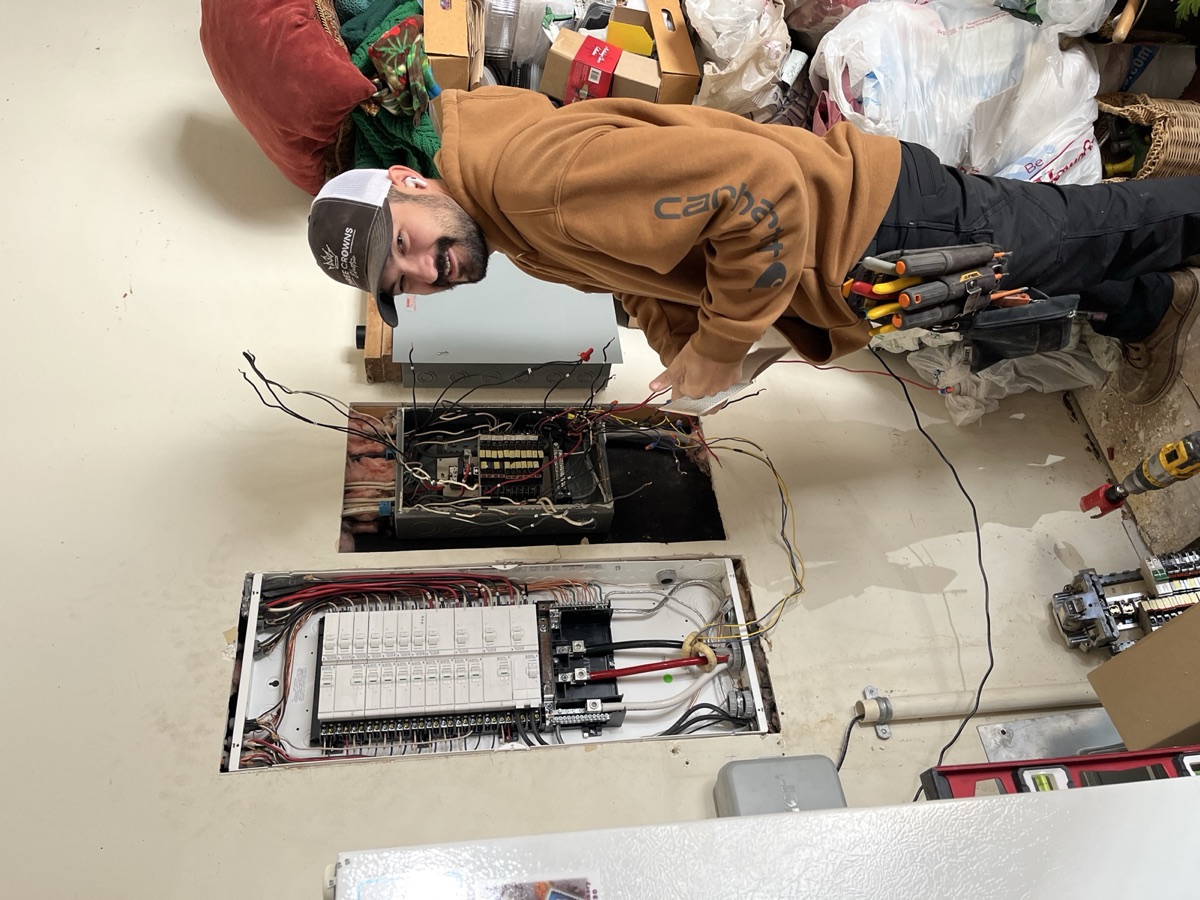
A 200-amp panel replacement in Northern Colorado runs $2,800–$4,500. Add $600–$1,200 if the meter base needs replacing, $800–$1,500 for relocation, and $150–$300 for permit and utility coordination. Three Crowns has done close to 2,000 panel upgrades — this is the most routine major repair on the list.
1980s–2000s: the GFCI gaps
Homes from this era are usually wired well, but shock-protection requirements expanded after they were built. Early homes might have GFCI protection at one bathroom and nowhere else. Check for missing GFCIs at:
- ☐ Kitchen counter outlets
- ☐ Bathrooms
- ☐ Garage and unfinished basement outlets
- ☐ Exterior outlets
- ☐ Laundry areas
This is the cheapest line on the checklist — about $175–$225 installed per location — so it rarely drives a negotiation. Still worth listing, because it’s a same-visit fix when an electrician is already there for something bigger.
Newer builds: usually fine — check the permits instead
Homes built in the last 25 years in Windsor, Severance, Wellington, and newer Loveland and Greeley subdivisions rarely have era problems. The risk moves to what the previous owner added:
- ☐ Finished basement — was it permitted and inspected? An unpermitted basement finish is the most common place we find DIY wiring behind drywall.
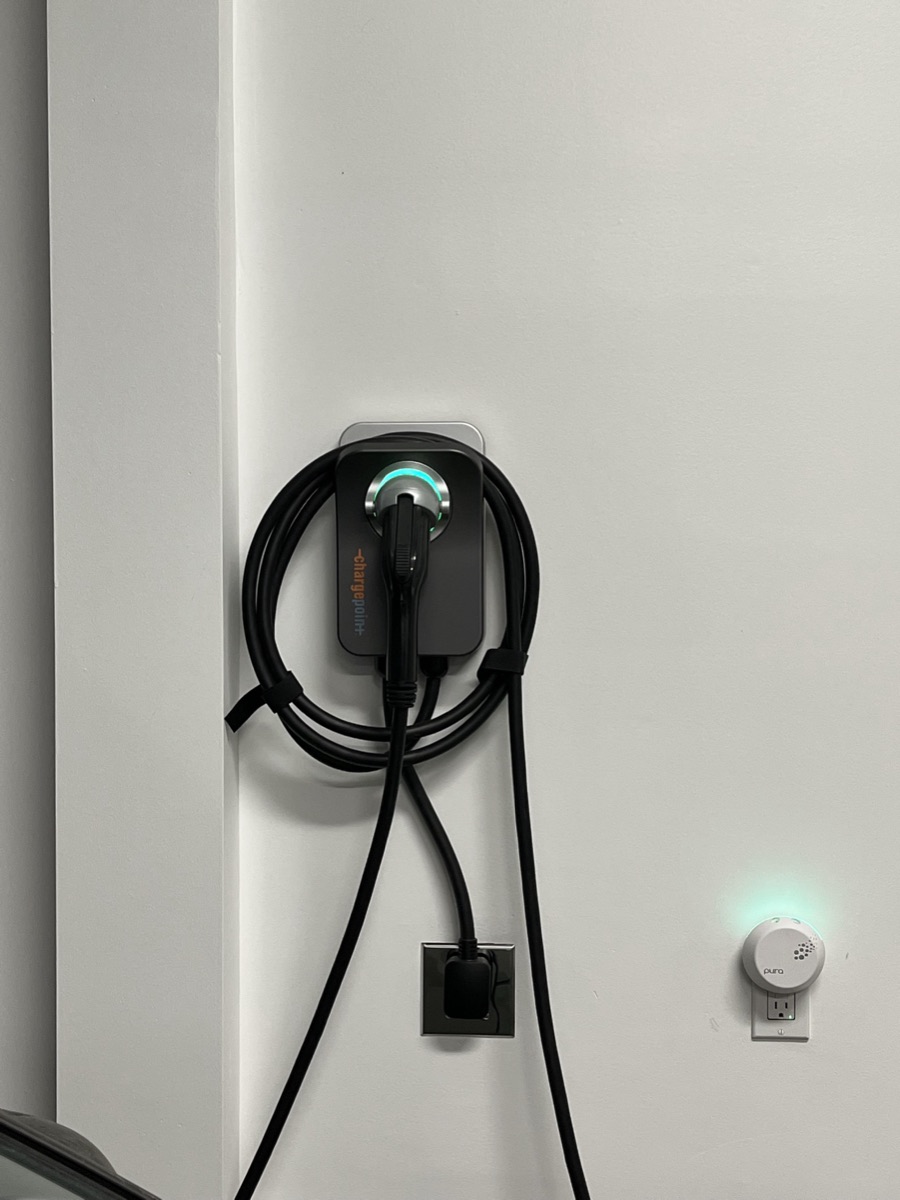
- ☐ Hot tub, EV charger, or shop circuits — ask for the permit record. In Fort Collins, a garage EV charger now also involves a heat detector requirement, so an unpermitted install may be missing more than paperwork.
- ☐ Solar or battery systems — confirm the interconnection was inspected and the panel labeling matches what’s installed.
Permit history is public. Larimer County and most NoCo cities can pull the record for an address during your inspection period.
How do I check the electrical panel during a showing?
You don’t need tools, and you shouldn’t remove anything but the outer door. Ninety seconds tells you a lot:
- ☐ Brand — Federal Pacific, Zinsco, or Challenger goes straight on the objection list.
- ☐ Main breaker rating — the big number on the top breaker. 100A is common in older homes, but it’s a bottleneck for an EV charger, hot tub, or electric range.
- ☐ Double-taps — two wires under one breaker screw. Usually an easy fix, but it signals amateur work that may continue elsewhere.
- ☐ Rust or water staining — streaks below the panel or mineral tracks at the top mean water has been getting in, usually down the service mast. Bigger deal than it looks: water in an electrical panel corrodes the bus bar and breaker connections from the inside.
- ☐ Scorch marks or a burnt smell — stop there and get an electrician out before the objection deadline. Not after.
- ☐ Panel labeling — a blank or scribbled directory often travels with other shortcuts.
Outlet and GFCI checks you can do in a walkthrough
A $10 outlet tester from any hardware store makes you a more informed buyer in about ten minutes:
- ☐ Plug the tester into a sample of outlets in every room. Anything other than “correct” — open ground, reversed polarity — goes on the list.
- ☐ Press TEST on every GFCI. It should click and kill the outlet; RESET should bring it back.
- ☐ Flip switches and watch for flicker. Lights that dim when the furnace or AC kicks on can point at a loose neutral or an overloaded service.
- ☐ Note any outlet that’s warm, loose in the wall, or has browned faceplates.
- ☐ Count outlets per room in older homes. One outlet per bedroom means extension cords carry the load, even if nothing is “broken.”
None of this replaces the inspection. It tells you which houses deserve a deeper look before you spend the inspection money.
What repair estimates should go in your inspection objection?
Colorado’s standard purchase contract gives you an inspection objection deadline, and the objection works best when each finding carries a number. Real Northern Colorado ranges we quote every week:
| Finding | Typical NoCo cost |
|---|---|
| Dead outlet / single outlet replacement | ~$185 |
| GFCI outlet added | $175–$225 |
| Breaker replacement | $100–$200 standard; AFCI/GFCI breakers run more |
| General repair visit (diagnosis + simple fix) | $150–$500 |
| Aluminum wiring pigtail remediation (multiple outlets) | $1,500–$3,000 |
| 200-amp panel replacement | $2,800–$4,500 |
| Meter base replacement (added to panel job) | $600–$1,200 |
| Partial rewire, older home | $3,000–$8,000 |
Two ways to use these numbers: ask the seller to complete the repair with a licensed, permitted contractor before closing, or take a concession and control the work yourself after closing. On big items — a recalled panel, aluminum remediation — most buyers are better off with the concession. You pick the electrician, you see the work, and the permit is pulled in your name.
Mid-inspection-period and need a written number fast? Call (970) 460-0014. Panel evaluations start with a free on-site visit, and the written quote is the document your agent needs before the deadline.
Should you walk away or negotiate?
Almost every finding on this checklist is fixable for a knowable price, which makes almost every finding a negotiation, not a deal-breaker.
Negotiate — these are routine:
- A recalled panel brand. One-day replacement, fixed price range.
- Aluminum branch wiring. Pigtailing is a solved problem.
- Missing GFCIs, double-taps, scattered dead outlets in an otherwise sound house.
- An undersized service, if the price reflects the upgrade you’ll pay for.
Slow down and get real numbers first:
- Knob-and-tube throughout, plus 60-amp service, plus deferred maintenance everywhere else. Each item is fixable; stacked together they can outrun the discount you’ll get.
- Long-term water intrusion at the panel or service mast.
- An unpermitted addition or basement where nobody can say what’s behind the drywall.
The caveat: the scary-sounding finding is sometimes the cheap one. A “fire hazard panel” is a $3,400 fix with a clear scope. “Minor moisture noted at service entrance” can be the start of a much bigger repair. The quote matters more than the adjective.
When to call a licensed electrician
Bring in an electrician before your objection deadline if any of these are true:
- The report flags a Federal Pacific, Zinsco, or Challenger panel
- The report says “aluminum branch wiring” or you saw AL-marked cable
- The home is pre-1960 with original wiring or a fuse box
- There’s rust, water staining, or scorching at the panel
- There’s an unpermitted finished basement, addition, or hot tub/EV circuit
- The report says “recommend further evaluation by a licensed electrician” — anywhere
Home electrical fires are a real, measurable risk — the Electrical Safety Foundation tracks thousands of them annually, and older wiring is heavily represented. But the point of this checklist isn’t fear. It’s leverage. Sellers respond to a written quote from a licensed contractor in a way they never respond to inspector boilerplate.
Three Crowns Electric is a family-owned Northern Colorado contractor led by a Master Electrician with 20 years on the tools. We’ve completed 3,252+ jobs — electrical repairs are 56% of them — with 518+ five-star Google reviews. Our technicians are salaried, not commission-based, so the person evaluating your future home has no incentive to pad the list. If the $200 fix is the right fix, that’s what goes on the quote. (970) 460-0014 — quotes are free, and so is telling you the panel is fine.
Frequently asked questions
Do I need a separate electrical inspection when buying a house?
Not always. If the home was built after the mid-1980s, has a name-brand panel, and the general inspection comes back clean, the inspector’s review is usually enough. Order the electrician evaluation when the report flags a recalled panel, aluminum wiring, knob-and-tube, water at the panel, or unpermitted work.
Can I ask the seller to replace a Federal Pacific panel?
Yes — it’s one of the most common inspection objection items in older NoCo neighborhoods. Request the replacement before closing, or take a concession and handle it yourself. If the seller does the work, require a licensed contractor and a permit. Costs are covered in our panel upgrade cost guide.
Will insurance cover a house with knob-and-tube wiring or a recalled panel?
Increasingly, no — or only with conditions. Many carriers now decline or non-renew policies over Federal Pacific and Zinsco panels and unremediated knob-and-tube. Call your insurance agent with the findings before closing. If the answer is “not until it’s replaced,” that belongs in your negotiation, priced.
Is aluminum wiring a deal breaker?
Usually not. Pigtailing the connections with approved connectors — typically $1,500–$3,000 across multiple outlets — resolves most of the risk without opening walls. A full rewire is only necessary when the wiring itself is damaged or undersized for its breakers.
Last reviewed by a licensed Master Electrician: August 2026