An infrared inspection finds the heat a failing connection gives off before it trips a breaker, shuts down a line, or starts a fire. Loose lugs, overloaded circuits, corroded terminations, and failing breakers all run hotter than the equipment around them. The scan happens with the building running, because problems only show up under normal load. You get a written report that ranks each finding by severity, so repairs can go into one planned shutdown instead of an emergency.
Why a breaker that “keeps tripping” is worth a scan
Facility managers in Fort Collins, Loveland, and Greeley usually call about a symptom: a breaker that trips when equipment starts, a panel cover that feels warm, a burning smell in the electrical room. Resetting the breaker isn’t a repair. Repeated trips can point to overload, a failing breaker, a loose termination, or damaged insulation.
A walkthrough won’t find most of that. Heat damage and loose connections often aren’t visible with the cover on. An infrared camera shows the temperature of every lug and breaker at once, so a connection running hot stands out before it turns into melted insulation.
How the inspection runs without closing the business
The scan is done while panels and switchgear carry their normal operating current, so the timing follows your load. Warehouses are often scanned mid-day and restaurants during service.
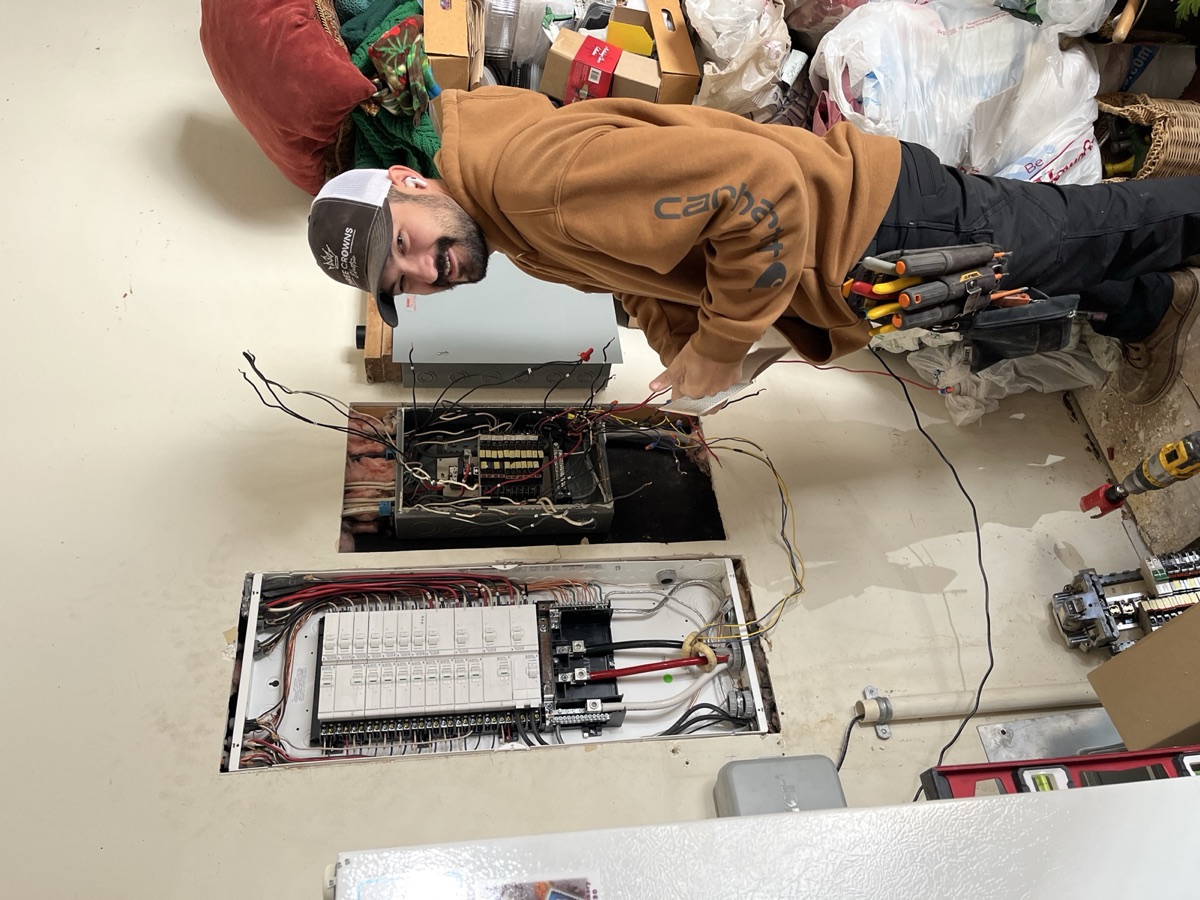
We identify every panel, switchgear section, and major disconnect first, then open covers one at a time in a planned sequence with arc-flash rated PPE. Every main lug, breaker lug, neutral, and bonding point gets scanned. Any anomaly gets an infrared and a visible-light photo plus a temperature differential and a severity rating. A small-to-mid facility typically takes 4 to 6 hours, and the written report follows within 5 business days.
What changed for repairs this year
The scan itself doesn’t change with the code, but the repairs it leads to might. Colorado’s 2026 National Electrical Code took effect August 1, 2026. If a finding turns into a panel replacement or service upgrade submitted for permit now, expect it to be designed and inspected under the new edition.
Permitting also isn’t uniform across Northern Colorado. Fort Collins, Loveland, Greeley, Windsor, Longmont, and Boulder each handle their own permits, and a building outside city limits may fall under the county instead. If the report calls for a replacement, confirm which authority permits the job before you order equipment.
Mistakes we see after the report comes back
Filing the report and not scheduling the fixes. The value is in the corrective action list. Group the urgent items into one planned shutdown and handle the rest at the next maintenance window.
Upsizing a breaker to stop a hot circuit. A larger breaker doesn’t fix undersized wire. It removes the protection and leaves the heat.
Treating a hot old panel as a breaker swap. Heat damage, corrosion, or obsolete equipment such as Zinsco or Federal Pacific panels may call for a panelboard replacement, not new breakers in an old enclosure.
Not updating the panel directory. After repairs, the circuit schedule should match what’s in the panel. A wrong directory costs time in an emergency.
Frequently asked questions
Is this old panel or switchgear still safe?
Age alone doesn’t answer it. An infrared scan under load shows whether connections are overheating, and a visual check covers corrosion, discoloration, and mismatched breakers. Together they tell you whether to repair now or plan a replacement.
Do we have to shut the business down for the inspection?
No. The scan needs the equipment running. A shutdown only comes later, if the report finds something that has to be repaired with the power off, and that can be scheduled after hours.
Should we repair this now or wait until the next remodel?
The severity ratings decide that. Findings rated urgent shouldn’t wait. Lower-priority items can often be folded into a planned remodel or tenant improvement.
What we do about it
Three Crowns Electric runs infrared inspections on commercial panels and switchgear across Northern Colorado, and because we’re the electrical contractor, we can fix what the scan finds. Inspections are about $2,100 flat for a small-to-mid facility and scale with panel count. If the report leads to a panel upgrade, commercial panel work typically runs $3,000–$15,000+ depending on amperage and complexity. Work is done by salaried technicians under Master Electrician Jon Trujillo, carries a 2-year warranty, and sits behind 518 five-star Google reviews. See our commercial panel service or call (970) 645-3114.