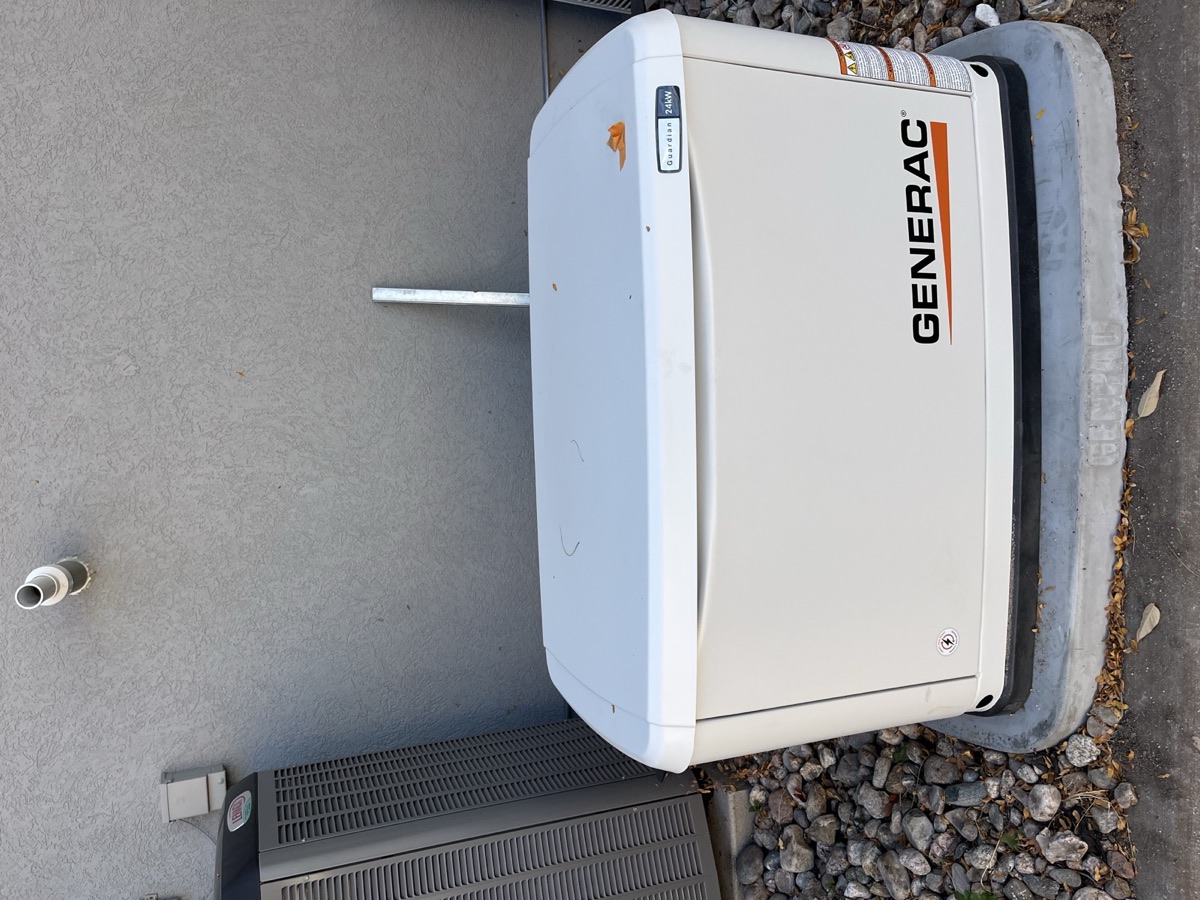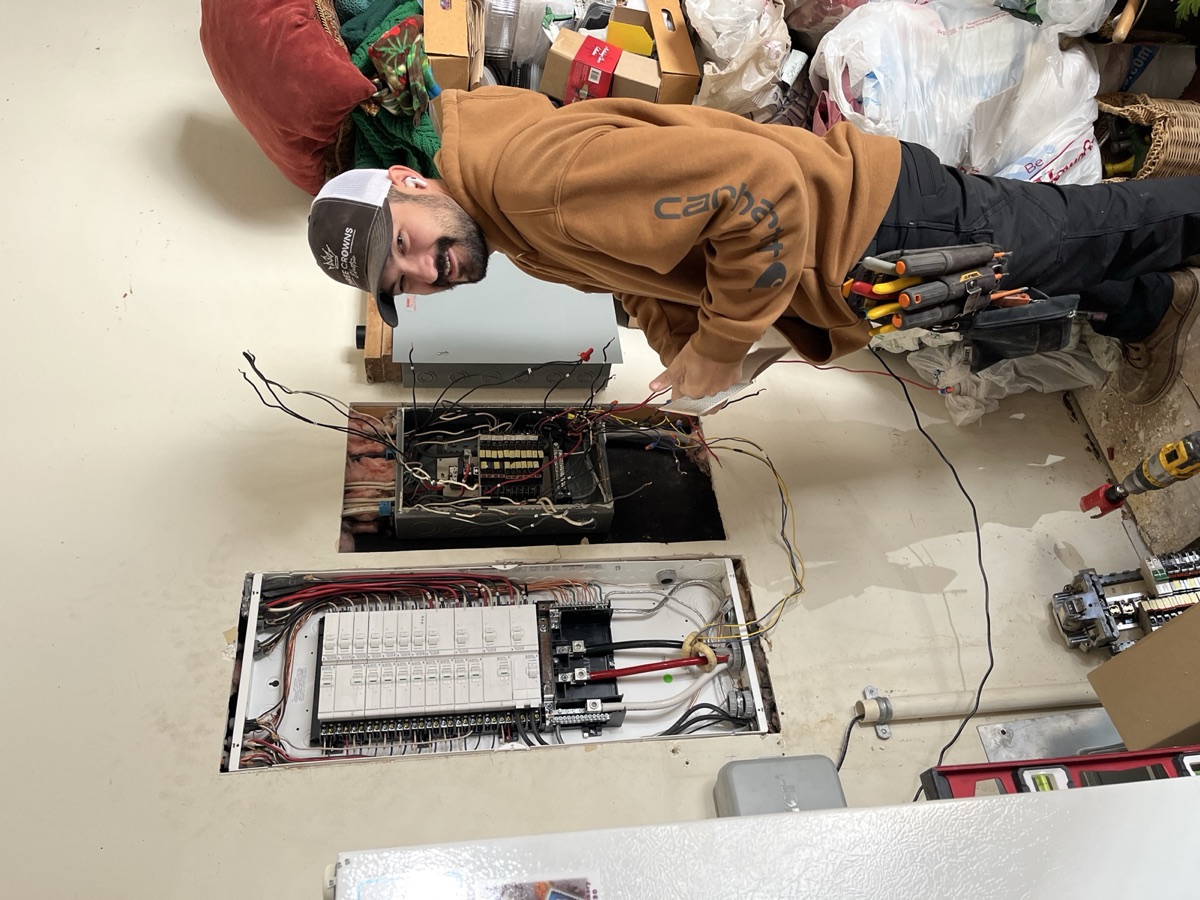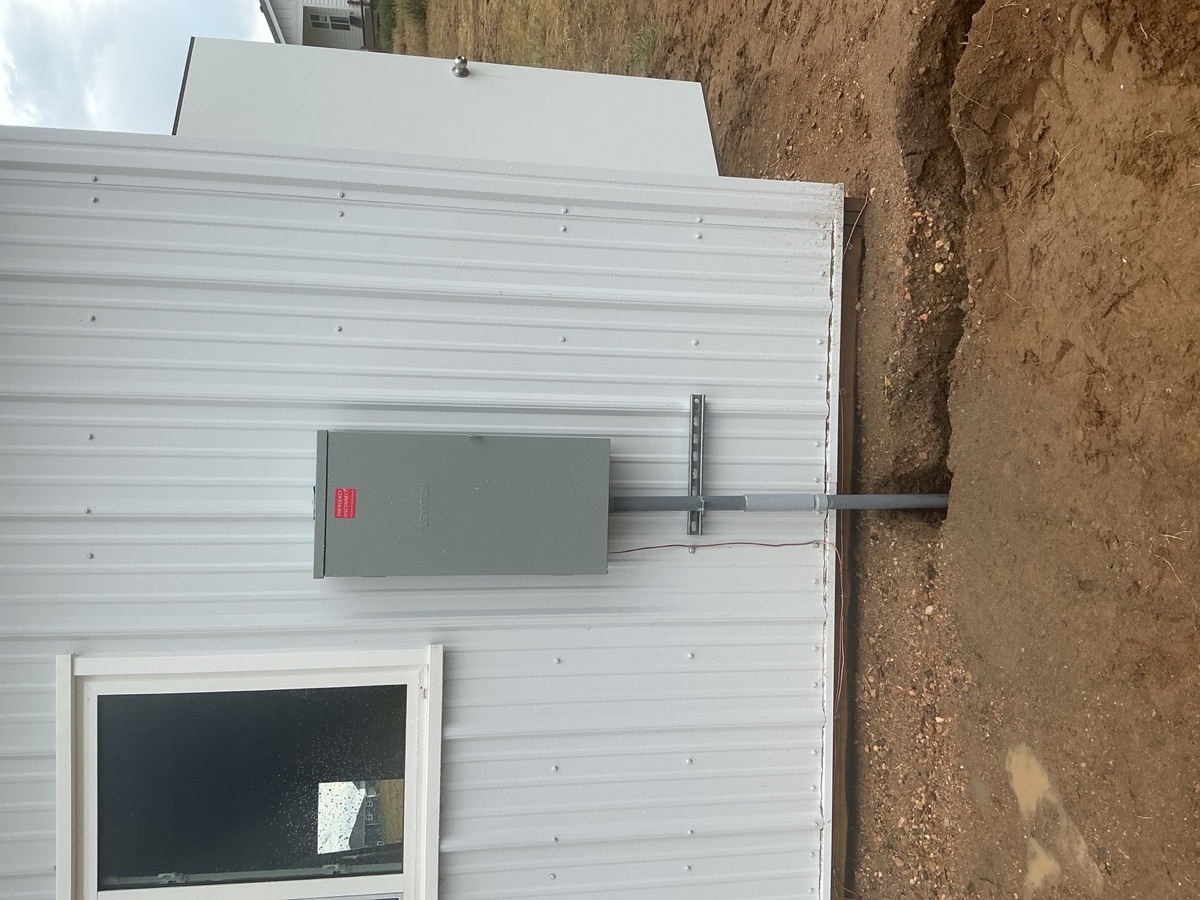
A commercial generator in Northern Colorado needs an electrical permit at minimum, and often gas, building, fire, or zoning sign-off on top of it. The permit comes from whoever has jurisdiction at your exact address — a city like Fort Collins, Loveland, or Greeley, or Larimer or Weld County if you’re unincorporated. Reviewers want a load calculation, a one-line drawing, the transfer switch details, and the fuel plan before anything gets set. Get those right up front and the permit is just paperwork.
The permit office treats a generator as a change to your building’s power system, because that’s what it is. It ties into your service through a transfer switch, needs a fuel supply, and sits outside with clearances a fire reviewer checks. Each piece touches a different set of rules.
Which permits does a commercial generator need?
Start with which office issues the permit. A building inside Fort Collins city limits goes through the city. A shop on a county road between Windsor and Greeley may go through Weld County instead. A contractor who’s done a dozen installs in Fort Collins doesn’t automatically know how Boulder or Greeley handles the same job, so ask whoever you hire to name the jurisdiction in writing.
From there, the usual list:
- Electrical permit for the generator, transfer switch, feeders, grounding, and bonding
- Gas or mechanical permit if you’re running natural gas or propane to the unit
- Building or zoning review for the concrete pad, setbacks, and enclosure
- Fire review when the generator serves life-safety loads or sits near exits, windows, or air intakes
Fort Collins generator projects commonly involve electrical permitting, inspections, clearance checks, transfer-switch approval, fuel coordination, and grounding and bonding review.
Emergency, legally required, or optional standby?
This one question changes the whole project. The NEC splits backup power into three buckets. Article 700 covers emergency systems like egress lighting and fire alarms. Article 701 covers legally required standby — loads a code or authority says must stay powered. Article 702 covers optional standby, which is most businesses: you want the coolers, servers, and registers running, but no code forces it.
Optional standby is the simplest path. Emergency and legally required systems carry stricter rules on transfer timing, separation of wiring, and testing. If you’re a restaurant that just wants to save inventory, say so plainly to your electrician so the design doesn’t get over-built.
What reviewers want to see before you dig
A permit application that says “install 150 kW generator” isn’t enough. On our own generator installs, Jon Trujillo describes the paperwork this way:
“We have to send permitting paperwork off to local authorities. We have to provide them with one line drawings showing where the generator is going to be set, what wire sizes are going to be routed, what size of gas line is going to be prepared for the generator.”
— Jon Trujillo, Master Electrician
For a commercial job, add a signed load calculation that accounts for motor-starting surge from rooftop units, compressors, and pumps, plus the transfer switch rating and location. In Northern Colorado, also plan the unit’s spot around snow drifts and plow paths. A generator buried by a January storm can pass inspection and still fail to breathe when you need it.
Mistakes that stall the permit
- Leaving fuel until the end. Gas pressure and pipe size decide whether the unit can run under load. If the gas side is an afterthought, the electrical permit waits on it.
- Picking a location that’s convenient but non-compliant. Clearances from doors, windows, vents, and combustibles get checked.
- Assuming the quote covers permits. Ask who pulls each permit, who schedules inspections, and who pays to fix a failed one.
- Counting on a rebate. Fort Collins Utilities, Loveland Water and Power, and Longmont Power & Communications offer business incentives through Efficiency Works, but the categories are motors, HVAC, lighting, and EV chargers, not standby generators.
Frequently asked questions
Do we need a generator by code, or is it just good business?
Most businesses don’t need one by code. If your building has legally required emergency loads, such as certain medical, fire-pump, or egress systems, those fall under NEC 700 or 701. Everyone else is installing optional standby under Article 702, which is a business decision, not a code requirement.
Will this pass inspection and meet local code requirements?
It will if the design is done before the install. A load calculation, one-line drawing, transfer switch spec, and fuel plan submitted up front cover what inspectors typically check. Projects fail inspection when those pieces get figured out on site.
What does a commercial generator installation cost in Northern Colorado?
Our commercial generator projects run $10,000–$50,000+. Size and fuel type drive most of it, followed by gas line work, trenching, the pad, transfer switch and service changes, and permit fees.
How Three Crowns handles it
We pull the permits, draw the one-line, size the gas line, and schedule the inspections, so you get one point of contact instead of four. Our salaried technicians are backed by a 2-year warranty and 518 five-star Google reviews. See our commercial generator service or call (970) 645-3114 to walk your site.