The difference between 100-amp and 200-amp service is total capacity: how much electricity your whole house can draw at the same time. A 100-amp service tops out around 24,000 watts; 200-amp doubles that. If your furnace, water heater, and range run on gas and you’re not adding an EV charger or hot tub, 100 amps is usually enough. Stacking two or more big electric loads — EV charger, heat pump, induction range — is when 200 amps becomes the honest recommendation. In Northern Colorado, a 200-amp panel upgrade typically runs $2,800–$4,500.
If you’re trying to figure out the difference between 100 amp and 200 amp service, it’s probably for one of two reasons. Either an electrician just told you your panel can’t handle something you want to add, or you’re getting quotes and the numbers are all over the place. Both are normal. Three Crowns Electric has upgraded close to 2,000 electrical panels across Northern Colorado — from Boulder up to Wellington — and the 100-vs-200 question comes up on almost every one.
Here’s the plain-language version: what each size supports, how the math works, and when 100 amps is genuinely fine.
What’s the actual difference between 100-amp and 200-amp service?
The amp rating on your service is a ceiling. It’s the maximum current your home can pull from the utility at one time — through the meter, through the main breaker, and out to every circuit in the house.
- 100-amp service = up to about 24,000 watts available at once (100 amps × 240 volts)
- 200-amp service = up to about 48,000 watts available at once
It is not a measure of how much electricity you use in a month. Your bill doesn’t change because you upgraded. What changes is how much can run at the same time without the main breaker giving out.
100-amp service was the standard when most Northern Colorado neighborhoods went up in the 1960s and 70s. Gas furnace, gas water heater, gas range, one refrigerator — 100 amps covered it with room to spare. The house hasn’t changed. What’s plugged into it has.
100-amp vs 200-amp panel: what each one can run
Here’s the practical comparison. These are typical draws; every home is different.
| Load | Typical draw | Fine on 100A? | Fine on 200A? |
|---|---|---|---|
| Lights, outlets, fridge, electronics | 15–30 amps | Yes | Yes |
| Central air conditioning | 20–30 amps | Yes, usually | Yes |
| Electric dryer | 20–30 amps | Yes | Yes |
| Electric range / induction cooktop | 30–50 amps | Tight | Yes |
| Hot tub | 40–60 amps | Tight to no | Yes |
| Level 2 EV charger | 30–50 amps | Usually no | Yes |
| Heat pump (whole home) | 25–60 amps | Usually no | Yes |
| Any two of the big loads above at once | 70–100+ amps | No | Yes |
The pattern: any one big load can often squeeze onto a 100-amp service if the rest of the house is gas. It’s the stacking that breaks it. AC plus hot tub plus EV charger is not a 100-amp house, no matter how carefully you time your laundry.
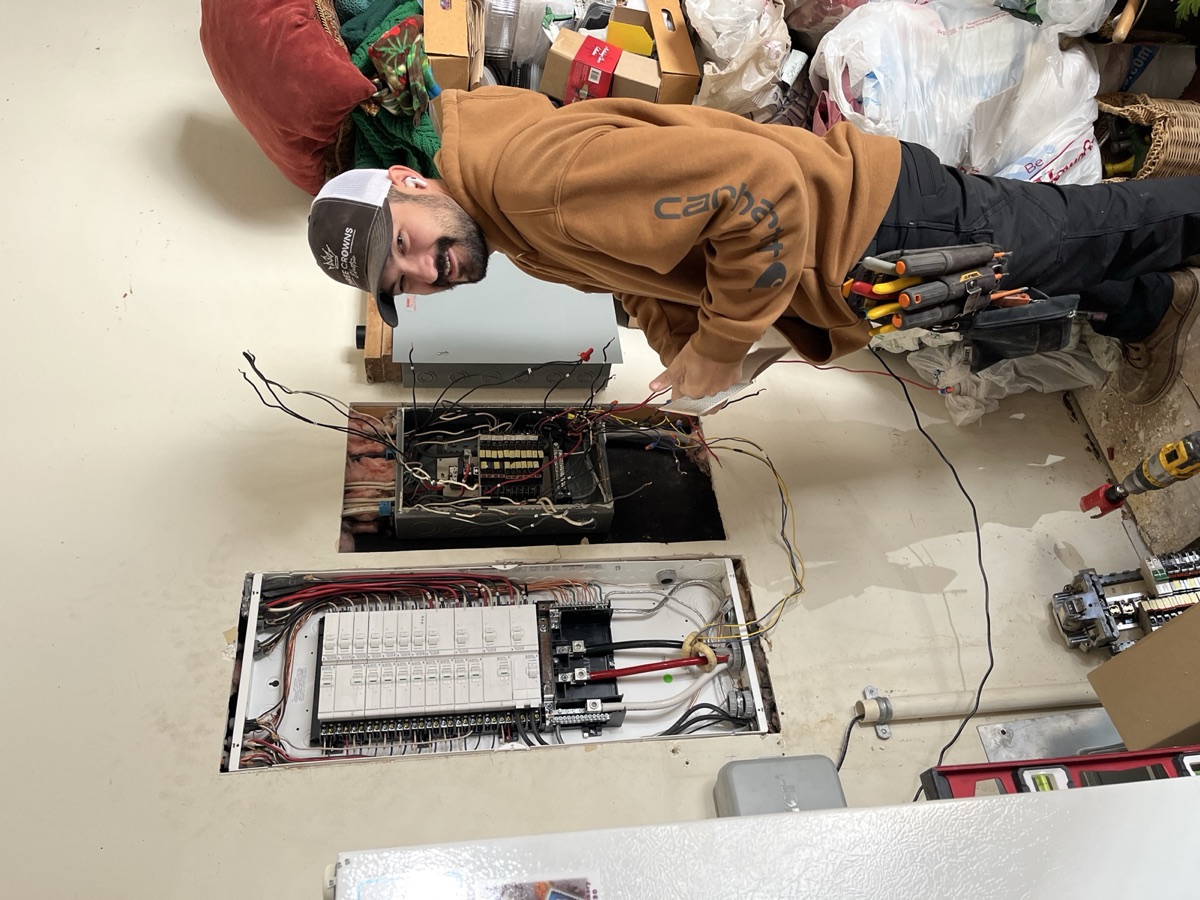
This is what Jon Trujillo sees on site visits week after week:
“A lot of them we notice are 100amp or they’re 125 max. And they’ve already have hot tubs running in their homes. They’ve already have AC units running. So now they’re wanting to add either electric cooktop or they’re looking at adding an EV charger.”
— Jon Trujillo, Master Electrician
The panel was already near capacity. The new load is just the thing that finally forces the question.
How do I know which one my house has?
Open your panel door and look at the main breaker — the big one at the top, separate from the rows of smaller breakers. It has a number stamped on the handle: 100, 125, 150, or 200. That’s your service size.
Two Northern Colorado clues if you can’t get to the panel: a home built before about 1985 and never upgraded is probably 100 or 125 amps; anything built in the last 20 years is almost certainly 200. And if the panel brand is Federal Pacific, Zinsco, or Challenger, the size is the smaller problem — those panels were recalled because the breakers fail to trip under fault. Jon has personally shorted FPE breakers in testing and watched them weld instead of tripping. That panel conversation comes before the size conversation.
For 150-amp and 320-amp service and the full load-calc walkthrough, see the electrical panel size guide.
The load math, in plain language
Amps are watts divided by volts. Your big appliances run on 240 volts, so a 9,600-watt hot tub draws 40 amps. A 12,000-watt Level 2 charger draws 50. Add up what could realistically run at the same time on a summer evening — AC, oven, dryer, car charging — and compare it to the number on your main breaker.
The formal version is a load calculation under the National Electrical Code, and it’s more forgiving than straight addition because not everything runs at once. That’s also why two honest electricians can quote the same house differently — the code has more than one calculation method. The way around the guesswork is to measure first. Here’s how Jon describes the process:
“We do an amperage reading and check out what their home is drawing for power. And then we kind of let them know where they’re at with their power usage now. And depending on what they plan on adding, then we’d run a calculation, a load calculation for all their electricity running in the home and give them a sufficient upgrade from there.”
— Jon Trujillo, Master Electrician
Measurement first, then math, then a recommendation. If an electrician glances at your panel for thirty seconds and quotes a full upgrade without a reading or a calculation, get a second opinion.
When 100 amps is genuinely enough
Not everyone needs 200 amps, and we’d rather say so on the first visit than sell capacity you’ll never use. Our technicians are salaried, not commissioned. Nobody’s paycheck gets bigger when your quote does.
100-amp service is usually fine if:
- Your heat, water heater, and range are gas and you plan to keep them that way
- You’re not adding an EV charger, hot tub, or heat pump in the next several years
- The house is modest — under roughly 2,000 square feet with normal loads
- The panel itself is healthy — no recalled brand, no burned bus bar, no breakers that keep popping
A 1970s ranch in Loveland with gas everything and no EV in the driveway can run on 100 amps for another decade without a problem. Upgrading it “just in case” buys nothing. If a quote pushes you toward 200 amps without walking you through what you’re actually adding, that’s a sales pitch, not a load calc.
One honest middle path: if you’re adding exactly one load and the numbers are close, a load-management device or a dedicated sub-panel can sometimes defer the full upgrade. Sometimes that’s the right call. Sometimes it’s a $900 band-aid on a house that needs the real thing. The amperage reading tells you which — more on that in our EV charger panel guide.
The electrification tipping point: when 200 amps becomes the right call
The pattern across Northern Colorado, especially in 1960s–80s housing stock in Old Town Fort Collins, East Loveland, and Greeley: a homeowner converts gas appliances to electric one at a time, and somewhere around the second big load, the 100-amp service becomes the wall.
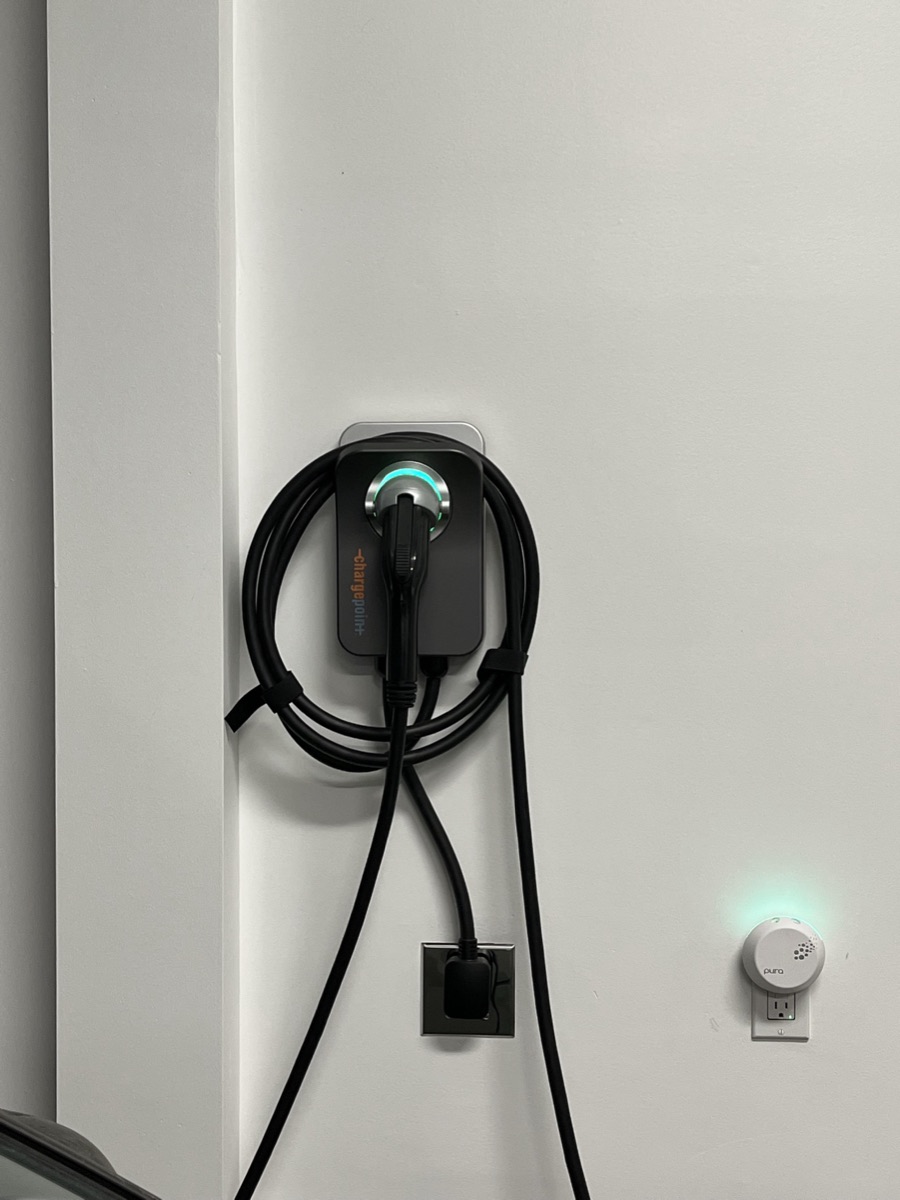
- EV charger alone: about half the EV charger installs we do need a panel upgrade first. The other half don’t. It depends on what else the house is running.
- EV charger + heat pump: almost always 200-amp territory. A cold-climate heat pump is the largest single load most homes will ever add.
- EV charger + heat pump + induction range: the full-electrification stack. Not a close call — 200 amps.
If you’re planning to electrify over the next 5–15 years — and a lot of NoCo homeowners are, between Xcel rebates and the state’s push toward heat pumps — the service size is the first domino. Do it before the heat pump quote, not after, and you avoid the trap where the panel cost kills the whole project. We regularly quote the panel work standalone so homeowners can stage the rest on their own timeline.
Panel upgrade vs service upgrade: which one are you actually buying?
This trips up almost everyone comparing quotes, and it explains why quotes vary.
- A panel upgrade replaces the breaker box — the panel itself, the breakers, and (on a complete job) any sub-panels, brought up to current code with AFCI/GFCI breakers. On every panel upgrade we do, a whole-home surge protector is included — worth having in a region that takes lightning from June through September.
- A service upgrade is everything upstream of the panel: the meter base on the outside wall, the main feeder conductors, the mast, and the coordination with Xcel or Poudre Valley REA to disconnect and reconnect the drop.
Going from 100 to 200 amps usually means both, because the meter base and feeder that served 100 amps aren’t rated for 200. A quote that only covers the panel but leaves a 100-amp-rated feeder in place isn’t an upgrade — it’s a future inspection failure. When you compare quotes, ask one question: does this include the meter base, the service entrance, and the utility coordination? That explains most $1,500 quote gaps.
Permits and inspection are part of the job, not an add-on. The utility won’t energize a new service until the permit is pulled and the inspection passes. We handle that scheduling start to finish.
What a 100-to-200-amp upgrade costs in Northern Colorado
The short version:
- 200-amp panel upgrade: $2,800–$4,500 is the typical NoCo range
- Meter base replacement, if needed: add $600–$1,200
- Panel relocation, if needed: add $800–$1,500
- AFCI/GFCI breakers to current code: roughly $200–$400 within the job
- Permit and utility coordination: $150–$300, handled by us
Power is off four to six hours on one day, and you’re back on by afternoon. For the full line-item breakdown of what pushes a job to the top or bottom of that range, see the 200-amp service upgrade cost guide.
When to call a licensed electrician
Call the same day if:
- Breakers keep popping and there’s any burning smell, warmth, or buzzing at the panel
- No power to half the house, and resetting the main doesn’t hold
- Your panel is a Federal Pacific, Zinsco, or Challenger and breakers are tripping — or worse, not tripping when they should
Schedule a visit soon if:
- You’re planning an EV charger, heat pump, hot tub, or induction range and your main breaker says 100 or 125
- Lights dim every time the AC kicks on
- Your insurance carrier flagged the panel at renewal
- Your quotes vary wildly and nobody has measured anything
The site visit is free, the amperage reading is part of it, and the price goes on paper before any work starts. Three Crowns Electric is family-owned, based in Loveland, with 518+ five-star Google reviews across Northern Colorado. Call (970) 645-3114 for a free quote — and if the honest answer is that your 100-amp service is fine, that’s the answer you’ll get. For general home electrical safety guidance, the Electrical Safety Foundation is a solid independent resource.
Frequently asked questions
Is 100 amps enough for a modern home?
It depends on what runs on electricity. A home with gas heat, gas water heating, and a gas range can live comfortably on 100 amps. A home with an EV charger, a heat pump, or a hot tub — or plans for any two of those — usually can’t. The deciding factor isn’t age or square footage alone; it’s the total of the large 240-volt loads that could run at the same time.
How do I know if I have 100-amp or 200-amp service?
Look at the main breaker at the top of your panel — the number stamped on the handle is your service size. If you can’t read it, the era of the home is a decent proxy: pre-1985 and never upgraded usually means 100 or 125 amps; anything built in the last two decades is almost certainly 200.
Can I run an EV charger on 100-amp service?
Sometimes. If the rest of your big loads are gas, a Level 2 charger can often fit — especially at a lower charging amperage, or with a load-management device that pauses charging when the house is busy. About half of the EV charger installs we do need the panel upgraded first and half don’t. An amperage reading and a load calculation settle it; a glance at the panel doesn’t.
Does upgrading from 100 to 200 amps mean replacing everything?
Usually the meter base, main breaker, panel, and grounding get replaced together, because equipment rated for 100 amps can’t legally or safely carry 200. Your branch circuits — the wiring to your outlets and lights — stay as they are unless there’s a separate problem, like the aluminum branch wiring we still find in some Old Town Fort Collins homes.
How long is the power off during an upgrade?
Four to six hours on a single day, in most cases. The utility disconnects in the morning, the swap happens, the inspector signs off, and the utility reconnects — we schedule the sequence so the fridge and the home office survive the day.
Will my insurance company make me upgrade?
Insurers in Northern Colorado increasingly flag recalled panel brands (Federal Pacific, Zinsco, Challenger) and, less often, undersized service on older homes. The recalled panel is what draws hard deadlines — many carriers now require replacement before renewal. If you’ve received a letter naming your panel, bring it to the site visit and we’ll quote what the carrier needs.
Last reviewed by a licensed Master Electrician: August 2026