For a lot of new homes in Northern Colorado, 200 amps is enough — but nobody should tell you that before they’ve run a written load calculation on your plans. The calculation adds up everything the house will run: heat pump, water heater, range, dryer, EV charger, hot tub, battery. If the number leaves no room for what you’ll add in the next ten years, you size up now, while the walls are open. Ask your builder or electrician for the calculation in writing before rough-in.
“Is 200 amps enough for a new house, or should I go bigger?” is one of the most common questions we hear from people building in Fort Collins, Loveland, Windsor, and Greeley. It’s a fair question, and the honest answer is: it depends on what’s going in the house. The way to find out isn’t a rule of thumb. It’s a load calculation.
What a load calculation actually counts
A load calculation is a worksheet. It takes the square footage of the house, the fixed appliances, the HVAC equipment, and the big dedicated circuits, applies the code’s method for how those loads overlap in real life, and gives you a number in amps. That number gets compared to the service you’re planning.
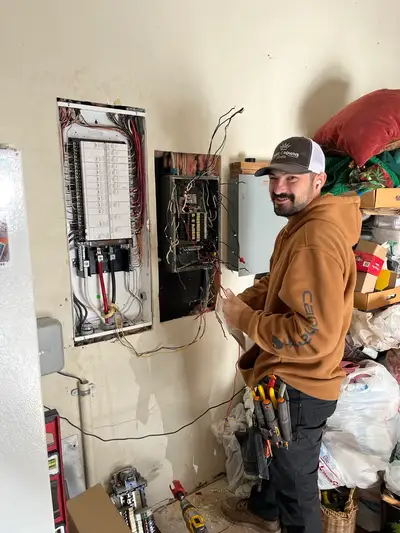
Jon Trujillo, our Master Electrician, describes the same process on existing homes:
“Depending on what they plan on adding, then we’d run a calculation, a load calculation for all their electricity running in the home and give them a sufficient upgrade from there.”
— Jon Trujillo, Master Electrician
On a new build, you do the same thing with the plans instead of the house. A gas-heated home with a gas range and water heater usually lands comfortably inside 200 amps. An all-electric home with a heat pump, heat-pump water heater, induction range, electric dryer, and a Level 2 EV charger is a different conversation. Add a hot tub or a detached shop and the margin can disappear.
What changed in the last year
Two things moved in 2026.
First, the code. Colorado’s Electrical Board adopted the 2026 NEC, effective August 1, 2026. Denver kept projects submitted before that date on the 2023 code, but Fort Collins, Loveland, Greeley, Windsor, Longmont, and Boulder each run their own permit process and can set their own amendments and transition rules. A lot just outside city limits may be inspected by Larimer, Weld, or Boulder County instead. Find out which one inspects your address before your electrician finalizes the design.
Second, electrification. Xcel and the Efficiency Works program used by Fort Collins Utilities, Loveland Water and Power, and Longmont Power are still putting real money behind heat pumps and heat-pump water heaters. Those rebates cover the equipment. They don’t pay for the circuits, disconnects, or service capacity the equipment needs. If you plan to go all-electric now or in five years, that load belongs in today’s calculation.
The mistakes we see on new builds
Taking “200 amps is standard” as the answer. It might be the right answer. But a builder-standard panel gets specced before anyone asks what you’re putting in the garage or the backyard.
Leaving future loads off the worksheet. If an EV, a hot tub, or a battery is likely in the next ten years, put it on the calculation now. Upsizing a service or running conduit before drywall is far easier than doing it after the house is finished.
Not asking what’s left over. The best single question to ask: “What is the remaining calculated capacity after everything in this plan is included?” If the answer is close to zero, you know where you stand.
Not getting it in writing. The calculation, the panel schedule, and the permit number should be in your file before the walls close.
Frequently asked questions
Is 200 amps enough for an all-electric new home? Sometimes. A modest-size all-electric house can fit inside 200 amps, especially with a load manager on the EV charger. A larger home with a heat pump, induction range, EV, and hot tub may need more. The load calculation on your plans decides it.
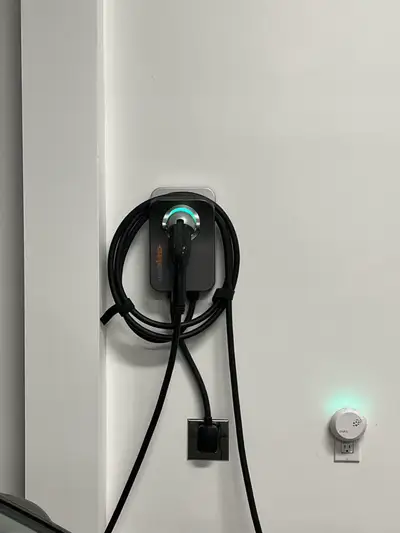
Should I have the builder run an EV circuit now, even if I don’t own an EV? Yes. A dedicated 240-volt circuit or at least conduit to the garage costs much less at rough-in than after drywall, and it needs to be counted in the load calculation either way.
Who pulls the electrical permit on a new build? Usually the licensed electrical contractor doing the work. Ask whose name and license are on it, and who schedules the rough-in and final inspections.
How Three Crowns handles it
We run the load calculation on your plans before we quote, tell you whether 200 amps covers it or where you’d need more, and put it in writing. We work with your builder from rough-in through final inspection. Salaried technicians, a 2-year warranty, and 5.0 on Google. See our new construction wiring service or call (970) 460-0014.