Colorado’s Electrical Board adopted the 2026 National Electrical Code with an effective date of August 1, 2026, so most remodel permits filed since then are reviewed against the new edition. Projects submitted before that date can generally stay on the 2023 code, though each building department sets its own transition rules. For a kitchen, bath, or basement remodel, the edition matters less than the permit date, your city, and whether new loads push your panel past what it can carry. Ask whoever pulls the permit which edition applies before the walls close.
Which code edition will my remodel be inspected under?
The permit date decides it, not the day demo starts. Colorado’s Electrical Board approved NEC 2026 at its May 27, 2026 rulemaking hearing and set August 1, 2026 as the effective date. Denver’s transition policy says projects submitted before August 1 can stay on the 2023 edition, and new submittals after that date use 2026.
Northern Colorado is less tidy. Fort Collins, Loveland, Greeley, Windsor, and Longmont each run their own building department, and home-rule cities like Fort Collins and Boulder can adopt local amendments on top of the state baseline. A few statewide references still list NEC 2023 as enforced. If your permit is going in this fall, the person pulling it should tell you which edition and which local amendments apply.
What a remodel permit actually triggers
A kitchen or basement remodel rarely touches just the new outlets. Adding a circuit, moving wiring, or changing a panel is an alteration to the permanent wiring, and that opens the existing work nearby to review. New or altered portions have to meet whatever code the building department has adopted. Existing wiring can sometimes stay, but “grandfathered” is not automatic, so ask which existing conditions have to be corrected.
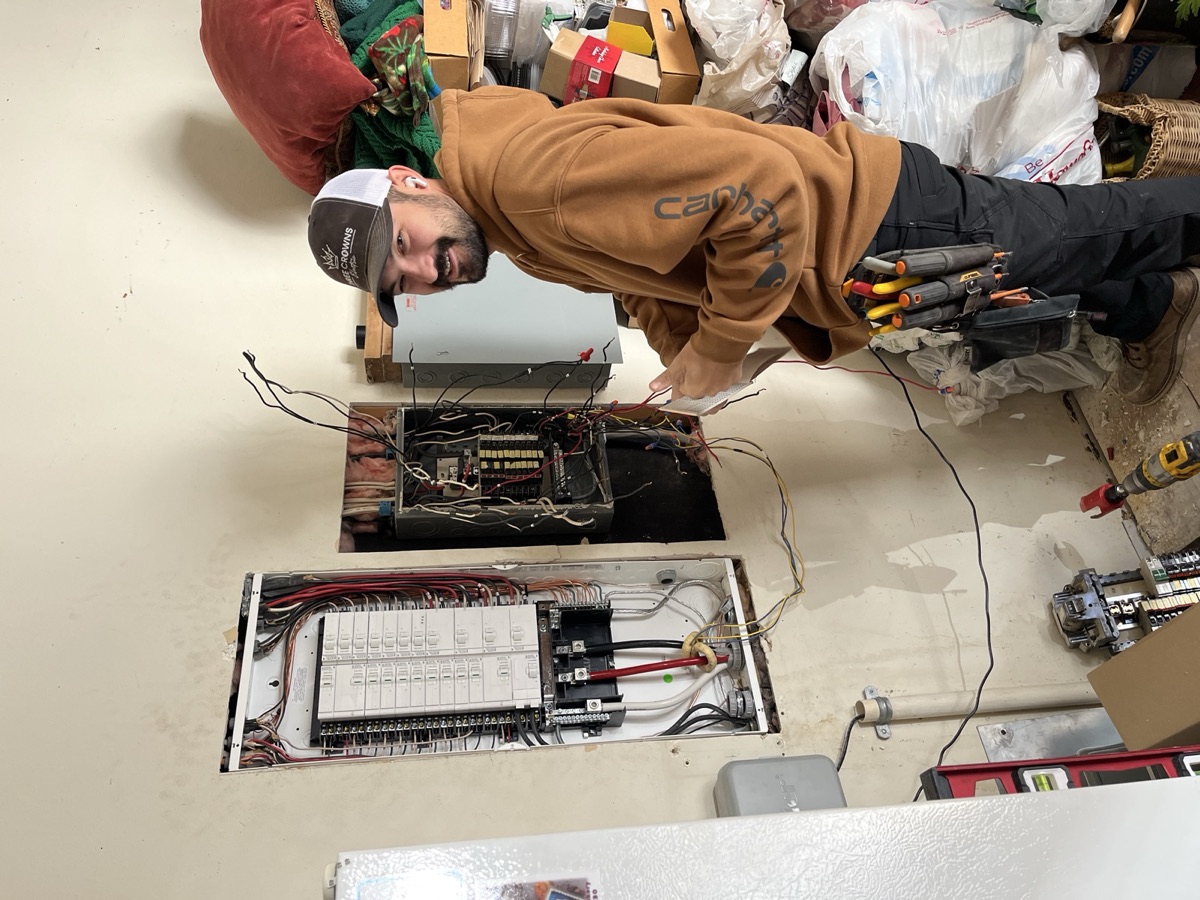
In practice, the code questions show up in the same places on every remodel: GFCI protection in kitchens, baths, laundry, and garages; AFCI protection on dwelling circuits; dedicated circuits for appliances; and a load calculation any time you add a big draw. Heat pumps, induction ranges, EV chargers, and hot tubs all land on the same panel, and many older 100-amp services don’t have room for all of them.
A Colorado remodeling source also reports that newer energy code requirements for electric-ready infrastructure can add roughly $2,000–$4,000 or more to some projects. That depends on the adopted energy code and the type of project, so treat it as a budgeting flag, not a line item.
Timing a remodel around rebates
If your remodel includes a heat pump, the electrical work and the rebate are tied together. Xcel’s reported schedule pays up to $2,250 per heating ton for qualifying cold-climate mini-splits through September 30, 2026, then drops to $1,500 per ton on October 1. In Fort Collins, Loveland, Longmont, and Estes Park, the Efficiency Works program made cold-climate mini-splits eligible starting January 1, 2026.
Those rebates pay for the equipment, not the wiring. The heat pump still needs a dedicated circuit, a disconnect, and panel capacity, so plan the circuit, load calculation, and permit together before the unit is ordered.
The mistakes we see before walls close
Assuming it’s too small for a permit. New circuits, relocated wiring, new recessed lighting locations, and panel changes generally need one.
Reading empty breaker slots as spare capacity. Physical space in the panel isn’t electrical capacity. The load calculation tells you what the service can carry.
Budgeting for what’s visible. Opening walls in an older home can turn up ungrounded circuits, aluminum branch wiring, or junction boxes buried by an earlier remodel.
Comparing bids by the total. A low number can leave out permit fees, drywall access, AFCI and GFCI upgrades, or inspection corrections. Compare scope line by line.
Frequently asked questions
Do I need an electrical permit for my remodel, and what inspections are required?
Usually yes if you’re adding or moving circuits, changing the panel, or wiring an addition. A permitted remodel typically gets a rough-in inspection while walls are open and a final inspection at the end.
Can I add circuits for a basement finish or kitchen remodel without rewiring the whole house?
In many Colorado homes, yes. New circuits can often be added, or the panel upgraded, without replacing all the existing wiring.
Do I need to upgrade from a 100-amp panel to 200 amps?
Not automatically. It depends on the calculated load after the remodel. A 100-amp service may handle a kitchen refresh but not a kitchen plus a heat pump plus an EV charger. We run the numbers before recommending an upgrade.
What we do about it
Three Crowns Electric handles the electrical side of kitchen, bath, basement, and addition remodels across Northern Colorado. We confirm with your building department which code edition and local amendments apply, run the load calculation, pull the permit, and coordinate rough-in timing with your general contractor so inspections don’t hold up drywall. Remodel electrical work typically runs $2,000–$10,000+ depending on scope, and we line-item it before you sign. Our work carries a 2-year warranty and is backed by Master Electrician Jon Trujillo and 518 five-star Google reviews. See our electrical remodeling service or call (970) 460-0014.