





A whole-house surge protector installed at your panel runs $300–$800 — device, dedicated breaker, and labor included. Three Crowns Electric includes Type 2 surge protection FREE with every panel upgrade (most NoCo electricians charge $200–$400 extra). The Front Range gets more lightning than almost anywhere else in Colorado, with strikes concentrated June through September. One direct hit near your home can fry every electronic device inside if there’s no panel-mounted surge protection in place.
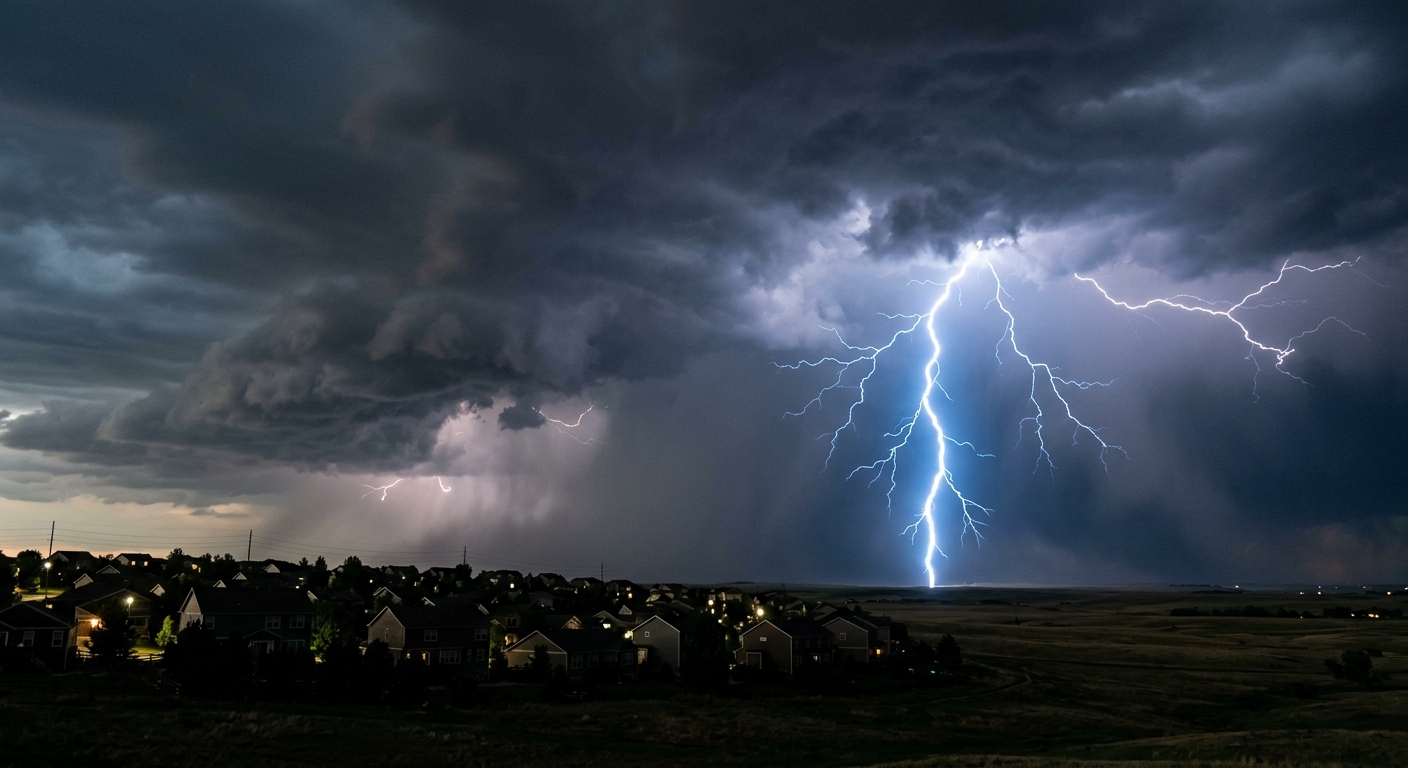
The Front Range gets more lightning than almost any other part of Colorado. Every June through September we get calls from homeowners whose entire AC condenser, modem, smart thermostat, and TV got fried in a single storm — sometimes from a hit that wasn’t even on their property. Whole-house surge protection installed at the main panel clamps that spike before it reaches anything in the house.
“We do get a lot of those [lightning strikes] through starting really from June all the way through September.”
— Jon Trujillo, Master Electrician
What follows is what a surge protector install actually costs in Northern Colorado, why we include it FREE on every panel upgrade, and what a real lightning strike does to a home that doesn’t have one.
How much does a whole-house surge protector installation cost in Northern Colorado?
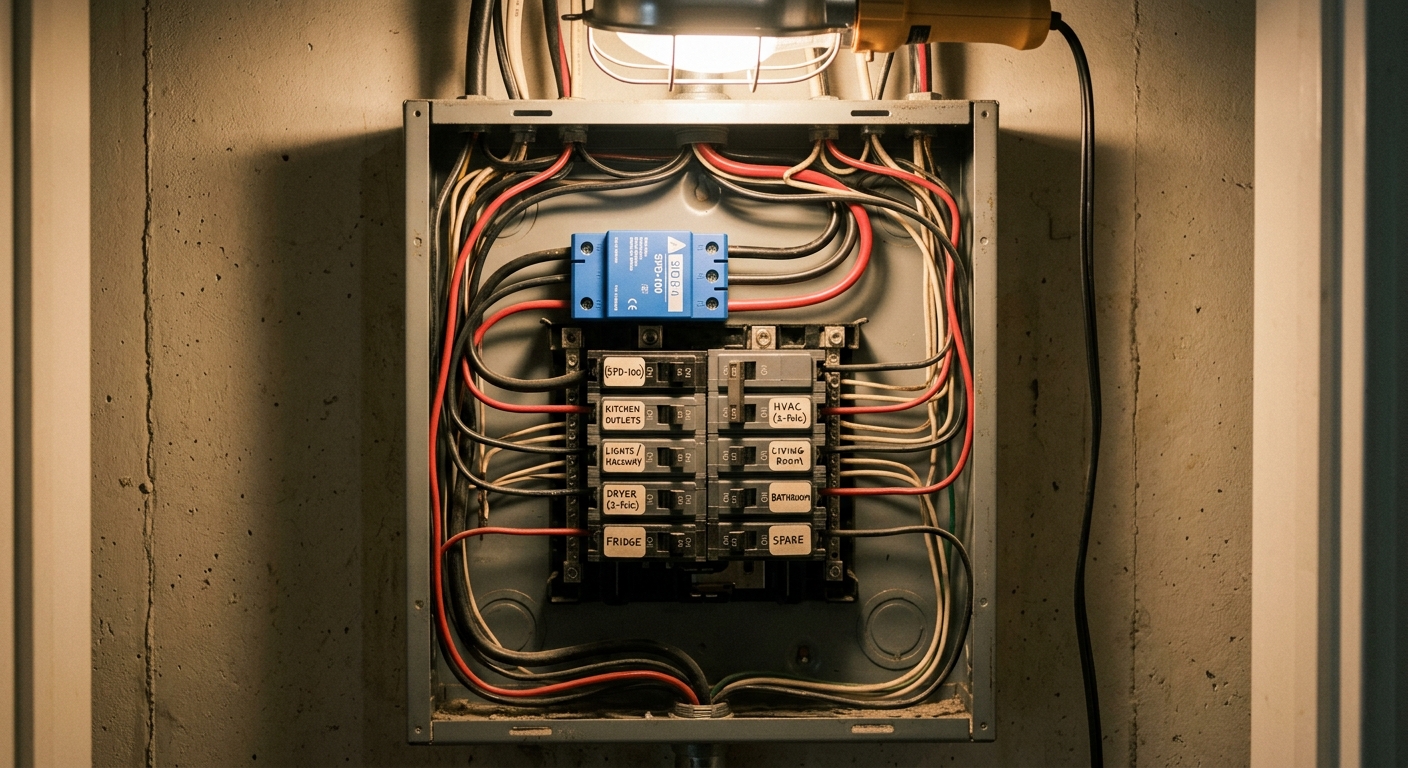
A standalone whole-house surge protector installation runs $300 to $800 for most Northern Colorado homes. That includes the Type 2 surge protective device (SPD), the dedicated breaker, and the labor to install it. We use mid-grade units from Siemens, Eaton, or Square D — all with a visible status LED so you can tell at a glance whether the device is still active.
| Scenario | Approx. cost | Notes |
|---|---|---|
| Standard Type 2 SPD install (free breaker slot in existing panel) | $300–$500 | Under 1 hour on site |
| Install with breaker slot reshuffle (panel near full) | $450–$650 | We move circuits to make room |
| Install with panel breaker upgrade | $500–$800 | Older panel needs new breaker first |
| Surge protection bundled with panel upgrade | $0 (FREE) | Included scope on every panel upgrade |
The reason the bundled price is zero: when we already have your panel open for an upgrade, installing the SPD is a 20-minute add-on for us. Charging another $300 for it would be a margin grab. We’d rather build it in and be the only NoCo electrician doing it that way.
Do I need an electrician to install a whole-house surge protector?
Yes. The device itself is sold at Home Depot and Amazon for $50–$200 — but installing it on a live 200A panel without killing yourself or voiding the manufacturer’s warranty requires a licensed electrician. Three things make this not a DIY job:
- The work is on a hot panel. Even with the main breaker off, the lugs and the line side of the meter base are still energized at 200A from the utility feed.
- The neutral and ground bonding has to be right. A misbonded SPD won’t clamp surges effectively and may actually create a fire risk.
- The warranty requires professional install. Most SPD manufacturers (Siemens, Eaton, Square D) void the connected-equipment warranty if installation isn’t done by a licensed electrician. That warranty is the whole reason to buy a Type 2 device — without it, you’re paying for hardware without the insurance.
We pull the permit on every install. The inspector verifies the device is wired correctly. You get a permit final and a registered SPD with the manufacturer’s warranty intact. None of that happens with a DIY install from the box store.
Is whole-home surge protection actually worth it?
For any home in Northern Colorado, yes. The math is straightforward:
“We highly, highly recommend any update that we do, we include a surge protector for those new panels.”
— Jon Trujillo, Master Electrician
A single direct lightning hit near the home — not even on the home — can destroy every grounded electronic device inside. The replacement cost adds up fast: AC condenser ($3,000–$8,000), furnace control board ($400–$1,200), smart thermostat ($150–$400), TVs ($400–$3,000 each), refrigerator ($1,200–$3,500), microwave ($150–$700), home office equipment ($500–$5,000), modems and routers ($150–$400). One bad strike can be a $15,000–$30,000 insurance claim — and many homeowner policies now require surge protection as a condition of coverage.
A $400 SPD that lasts 10–15 years is the cheapest insurance against that math.
What does a Type 2 surge protector actually do — and how does lightning damage a home?
A Type 2 SPD installs at your main panel and clamps incoming voltage spikes to a safe level — typically anything above ~600V on a 240V circuit gets shunted to ground before it can travel through your circuits. The device itself sacrifices a small amount of its absorption capacity per spike, which is why the status LED matters: it tells you when the device is spent and needs replacement.
The way Jon describes a real lightning strike on a house:
“We have came across some customers where their home got hit with lightning. Whether it’s their gutter system is where we see a lot of it. The lightning will strike their gutter system and then it’ll travel throughout the home. And depending if the home’s grounded properly or if they have a surge protector, the first place the lightning strike exits is all of your equipment. So it goes out through your TVs, goes out through any phone systems, computers, any electronics. Is your least path resistance that the electricity will look for a place to go to ground and take out all that equipment in the meantime.”
— Jon Trujillo, Master Electrician
That’s the mechanism: lightning hits the gutter, travels through the home structure, and exits through whatever electronic device offers the lowest-resistance path to ground. Without a Type 2 SPD at the panel, every TV, computer, fridge, oven, microwave, and HVAC unit in the path gets destroyed in series as the strike works its way out of the house.
A panel-mounted Type 2 device gives the lightning a controlled path to ground BEFORE it reaches any of those devices. The device clamps. The spike dumps to ground. Everything inside the house keeps working.
When is lightning season in Northern Colorado?
“We do get a lot of those [lightning strikes] through starting really from June all the way through September.”
— Jon Trujillo, Master Electrician
The Front Range lightning season runs June through September — about four months of regular afternoon thunderstorms driven by the foothills’ upslope flow. The peak window is mid-July through mid-August, when the storms are most frequent and most intense. Boulder County, Larimer County, and Weld County all sit in the Front Range corridor that gets the bulk of NoCo strike activity.
If your panel doesn’t have a surge protector by Memorial Day, you’re rolling the dice on the next 16 weeks. We get the most surge-protector-install calls in early June every year, immediately after the first storm of the season fries somebody’s AC condenser. Better to install in May before the storms start than after.
Do you include surge protection with a panel upgrade?
Yes. Free. Standard. On every panel upgrade.
“We also install surge protection to meet new code. And what that will do is help out on all of your appliances through the home. Installing a surge protector will protect that from any lightning strikes or anything close to the home.”
— Jon Trujillo, Master Electrician
“No, that comes built in with our upgrade.”
— Jon Trujillo, Master Electrician
This is one of the few places in the electrical industry where we’re genuinely doing it differently from competitors. Most NoCo electricians charge $200–$400 to add a Type 2 SPD when they upgrade a panel. We don’t. The reason is operational — when the panel cover is off, the SPD goes in alongside the rest of the work. There’s no marginal cost for us, so we don’t charge a marginal price for you.
It’s also now required by code for new panel installations — that’s the “new code” Jon references. So even if we wanted to skip it, we couldn’t. The other thing this means: if a competitor quotes you a panel upgrade and tries to charge surge protection as a separate line item, they’re double-billing.
For details on the panel upgrade itself, see our electrical panels page.
Do the surge strips I have throughout my house do the same thing?
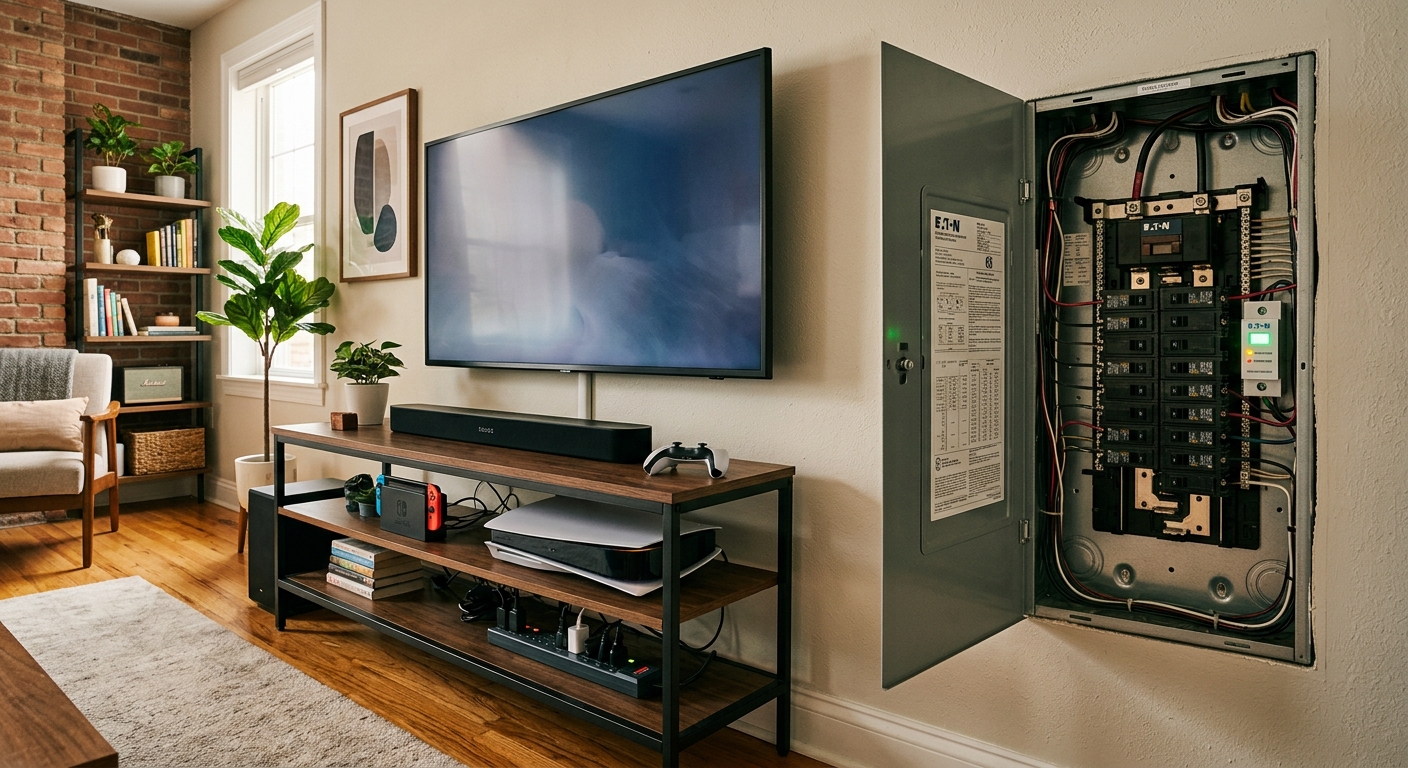
No. Point-of-use surge strips ($20–$60 power strips with surge protection) catch small spikes — the kind of micro-fluctuations that happen during normal grid operation. They cannot handle a real lightning-induced surge. Those voltages and currents (sometimes 10,000+ volts and thousands of amps) blow right through a $30 power strip without slowing down.
A whole-home Type 2 device at the main panel is your first line. It catches the big hits — the lightning-driven spikes that would otherwise destroy everything downstream. The point-of-use strips become your second line, catching whatever residual voltage slips past the panel-mounted SPD.
Both layers matter. The whole-home device handles the catastrophic events. The point-of-use strips handle the everyday wear-and-tear. Together they cover almost every realistic surge scenario. Alone, neither is enough.
How long does a Type 2 surge protector last?
Most Type 2 devices we install last 10–15 years under normal NoCo conditions, depending on how many surge events the device absorbs over time. A Type 2 SPD is a sacrificial device — it absorbs each surge event by burning a small fraction of its rated capacity. After enough hits (or one really big hit), the device is spent.
The status LED tells you when. Every device we install has a visible green/red indicator on the front. Green = active and protecting. Red (or off) = spent and needs replacement. We recommend checking the LED during your annual fall walk-through — same time you swap your furnace filter — and replacing the SPD if it’s showing red.
A direct or near-direct lightning strike will sometimes consume the entire device in a single event. That’s not a failure — it’s the device doing exactly what it was designed to do, taking the hit so your equipment doesn’t. Replacement after a major event is normal and worth every dollar.
Last reviewed by a Master Electrician: April 29, 2026.
Have a question about whole-house surge protection? Call (970) 645-3114 for a free estimate. We’ll come look at your panel, recommend a Type 2 device that fits your service size, and put a written quote on paper before any work starts.