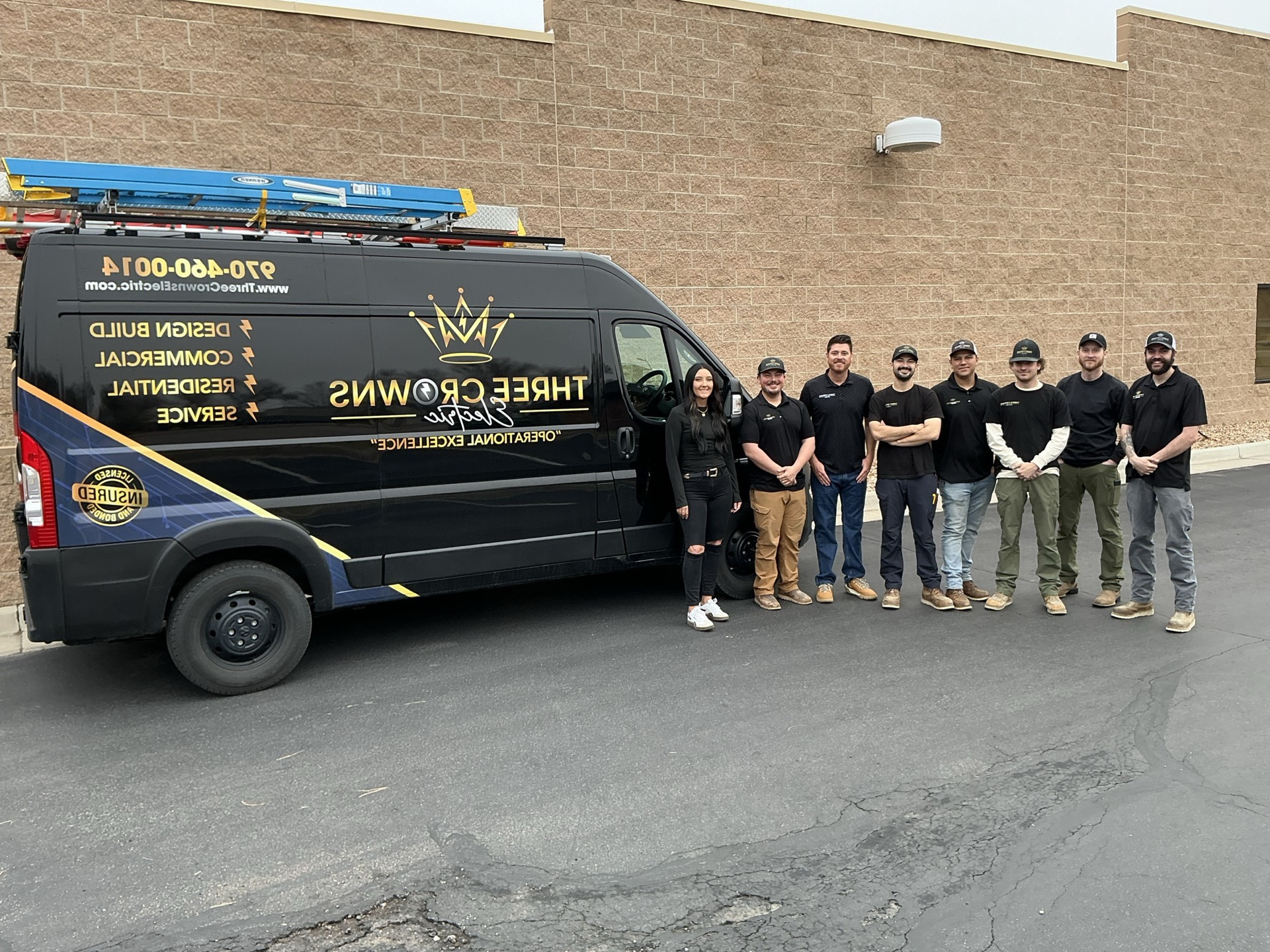





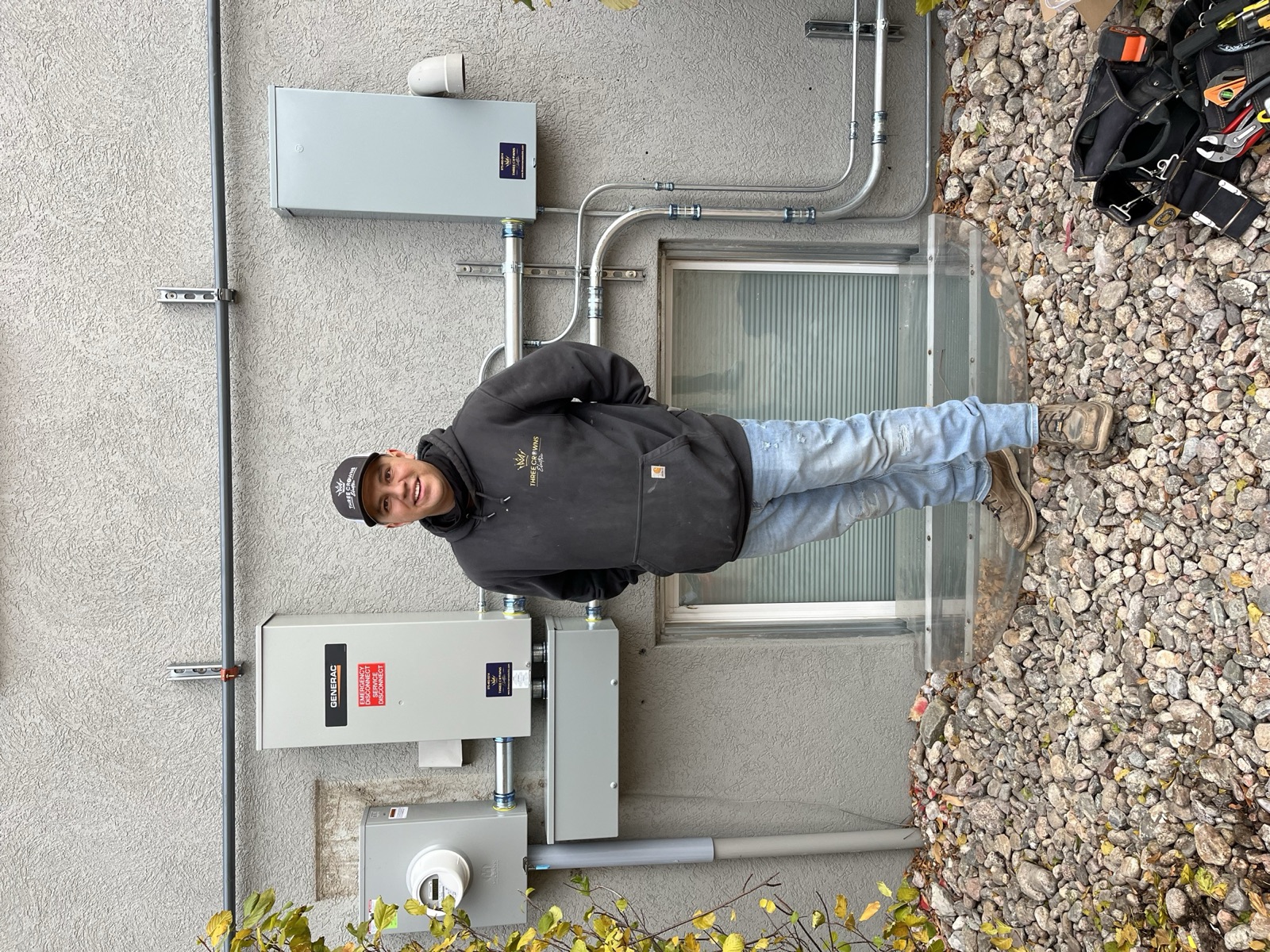

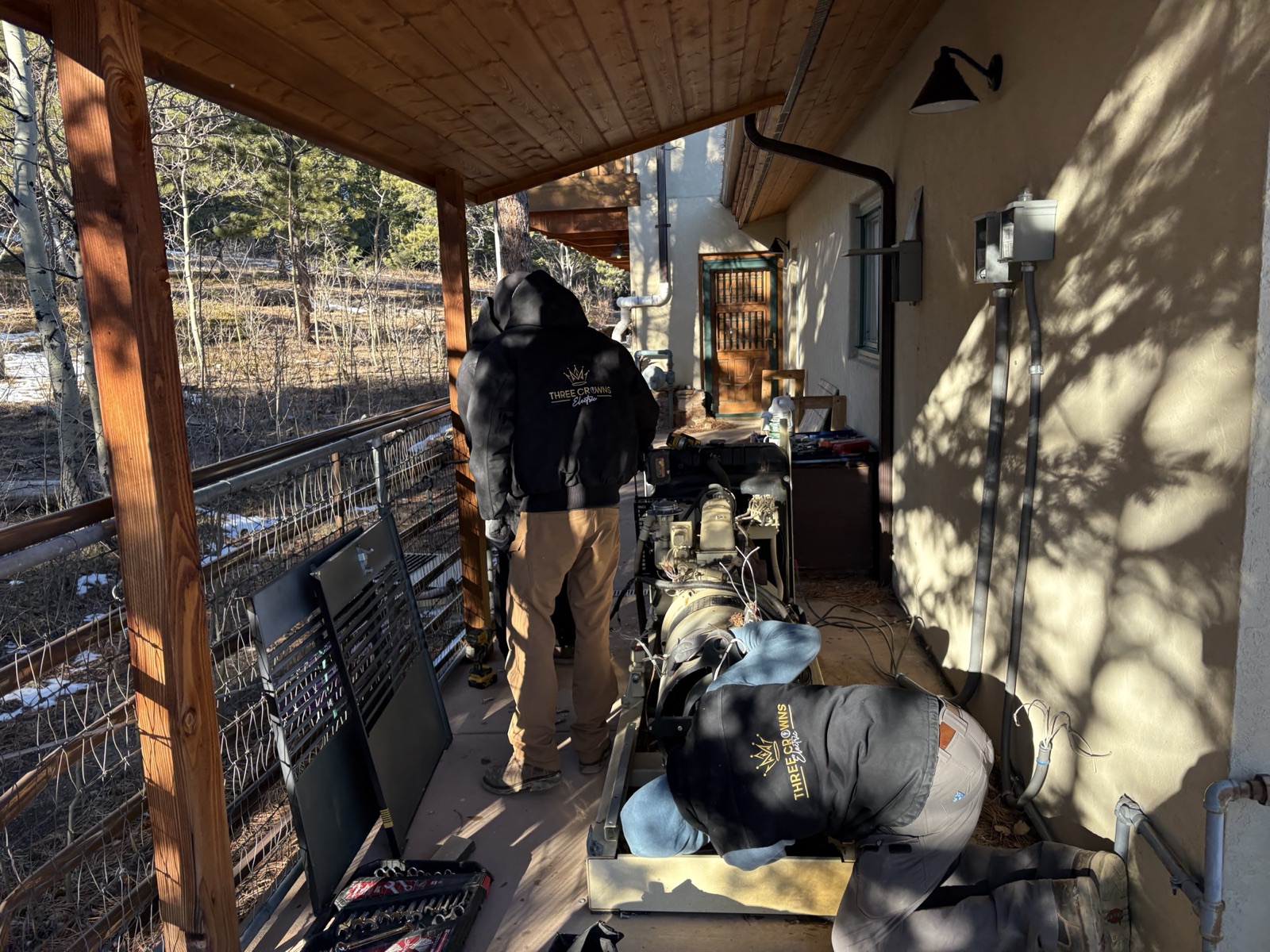
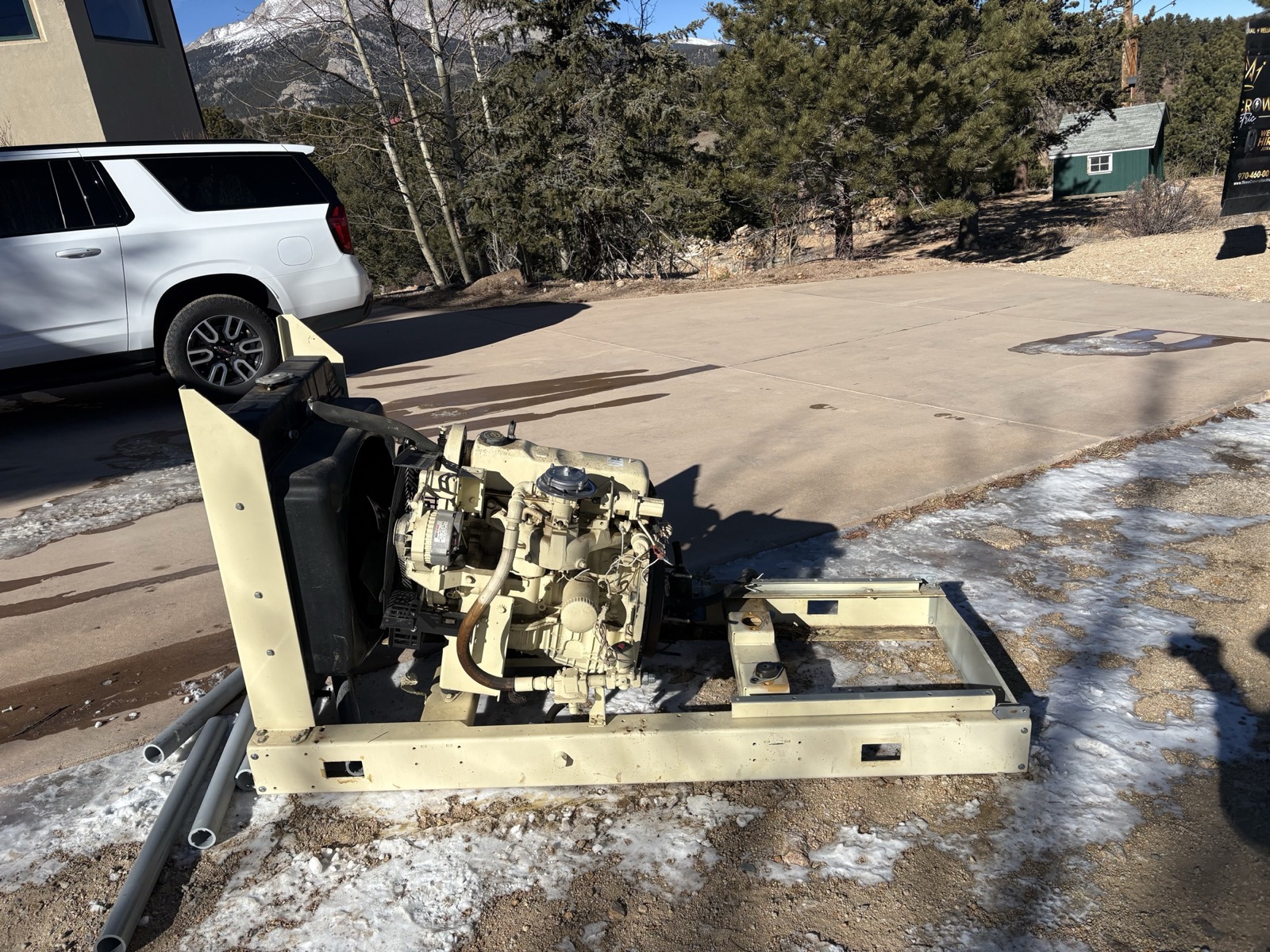
Whole-home standby generator installation in Northern Colorado runs about $14,000 for a complete package — Generac generator, automatic transfer switch, gas line, concrete pad, permit, and inspection. Three Crowns Electric is a certified Generac installer and has installed 70+ standby generators across NoCo since 2002. Sale-to-install timeline is roughly 2 weeks, transfer time during an outage is milliseconds, and we recommend a cold weather kit on every Colorado install for sub-zero start reliability.
When the power goes out for two days in a Wellington farmhouse with an electric well pump, or for four days at a mountain cabin in Estes Park, a standby generator is the difference between a livable house and a frozen one. We install Generac, Kohler, and Cummins whole-home standby generators across Northern Colorado — sized to the house, fueled by natural gas where it’s available, and tied to an automatic transfer switch that brings the power back in milliseconds.
“We particularly installed Generac. Due to the availability of parts, we have great access to parts. If servicing the generator, we can get parts readily available. So that’s why we really push Generac. We’re certified Generac installers.”
— Jon Trujillo, Master Electrician
What follows is the actual cost, the actual timeline, the brand decision logic, and the local code quirks Northern Colorado homeowners need to know before they buy.
How much does whole-home generator installation cost in Northern Colorado?
A typical whole-home standby generator installation in Northern Colorado runs about $14,000 for the complete package. That covers the generator itself, the automatic transfer switch, the electrical rough-in and connection, the gas line (run by our third-party plumber), the concrete pad, the permit, and the inspection. One quote, one number, one job.
“Typical price range, start to finish, is about $14,000. That’s going to get your complete package. Automated transfer switch.”
— Jon Trujillo, Master Electrician
The main variable that moves the price up is the distance between the gas meter and where the generator gets set:
“Where we see the price going up is if we have to — depending on where the gas line’s located in your electrical utility, if they’re on the opposite sides of the wall, then we got to figure out which one makes sense and where to locate the generator. So certain jobs we got to trench, you know, 30, 40 feet through the ground to get the gas to where the generator is going to go.”
— Jon Trujillo, Master Electrician
| Scenario | Approx. cost | Notes |
|---|---|---|
| Standard install (gas + electric on same side, ≤10ft trench) | $11,000–$14,000 | Most common in newer Fort Collins / Loveland builds |
| Long trench install (30–40ft underground gas run) | $14,000–$18,000 | Gas meter on the opposite side of the home |
| Rural propane install (no natural gas, tank set 15ft from generator) | $14,000–$17,000 | Common in Wellington, Berthoud farmhouses |
| 24kW unit, 5,000+ sqft home, full backup | $16,000–$22,000 | Larger generator, bigger gas line, sometimes 320A service |
We don’t quote over the phone. The price depends on the load calc, the gas-line routing, and what your panel needs. We come to the house, scope the job, and put a written number on paper before any work starts.
What size generator do I need for my house?
The right size is whatever the load calculation says — and the load calculation is the same diagnostic we run for panel upgrades and EV charger installs. One site visit, every future load planned in advance.
“We like to come on site, kind of figure out — same thing we do a load calculation — where we figure out what power they are using in the home now. And then we have a calculation chart that we fill out. And at the end of it, by the time we run between your air conditioners, electric dryers running, any electric heaters you have throughout the home running, we get a — after we run the numbers and we complete the calculations, it’ll let us know exactly what size of generator we would need to provide for each home for backup power.”
— Jon Trujillo, Master Electrician
The wattage math we use on-site:
- Electric dryer / range: 5,000 watts each
- Electric oven: 4,000 watts
- AC unit, electric heaters: per nameplate rating (varies by unit)
- Square footage: factored alongside actual loads
Generators size from a 14kW unit (covers essentials — heat, fridge, well pump, some lights) up to 24kW or larger for full whole-home backup with AC running. We don’t quote a size without coming on site:
“It varies on different homes. So we’d come on site, we’d calculate the wattage of each usage of each equipment… between the calculations of square footage, equipment running in the home, we get different calculations for each home.”
— Jon Trujillo, Master Electrician
The big misconception we correct on every quote:
“I think the biggest misconception is how much power can people use off the generator. I think a lot of people are thinking it’s just going to turn their lights on and keep the lights turned on while they have no power. But we design our generators to back up the entire house, and it’s all automated, so you’re not doing anything. Within a blink of an eye, the generator’s kicking on and you’re not even noticing you lost utility power.”
— Jon Trujillo, Master Electrician
Generators aren’t just for rural farmhouses or estates either. We install them anywhere from condos to mansions:
“We can install them from a 500 square foot house up to a 10,000 square foot house. It’s — that’s when it goes back to the calculation of sizing your generator properly so you do get the proper backup power.”
— Jon Trujillo, Master Electrician
Generac vs. Kohler vs. Cummins — which standby generator is right for my home?
We install all three. We push Generac because of parts availability, not brand loyalty.
“We’ve installed Kohler, we’ve installed Cummins generators. All three of them are great generators. But we really like Generac for the technical support reasons and the product availability.”
— Jon Trujillo, Master Electrician
| Brand | Why we install it | Key reason |
|---|---|---|
| Generac (preferred) | Certified installer, broad part availability, accessible tech support | When you need a part in January, Generac wins on serviceability |
| Kohler | Solid build quality, slightly quieter operation | Premium option — parts harder to source quickly |
| Cummins | Industrial-grade reliability | Often spec’d by homeowners with diesel preference or commercial backgrounds |
The reason matters more than the brand name. In a Northern Colorado winter, when a generator throws a code at 2am during an actual outage, you want the part on the truck the next morning. That’s been our experience across 70+ installs — Generac parts are the easiest to source through certified channels, and Generac’s tech support line gets a real engineer fast.
For homeowners who care about brand for non-technical reasons (existing relationship with a Kohler dealer, family loyalty, etc.), we’re happy to install whichever brand makes sense. The install scope is the same regardless.
Natural gas, propane, or diesel — which fuel type works for my property?
Natural gas wins almost every time it’s available. Propane is the answer for rural properties without gas service. Diesel is rare on residential — usually farms or properties already running diesel equipment.
“Number one is always trying to run the generator from natural gas. So everything’s just tied into the home.”
— Jon Trujillo, Master Electrician
The reason natural gas wins is what happens during the outage:
“When you lose utility power, that’s just killing the power to your home. But your home’s always going to have natural gas that’s going to continue to be provided. So that’s when the generator will kick in and turn on your furnace if it’s wintertime to keep the house warm — if it’s middle of summer, well, now the generator is going to kick on the air conditioning system and pretty much just run the entire home like it would be normally running off utility power.”
— Jon Trujillo, Master Electrician
Natural gas keeps flowing during a power outage because the gas grid is independent of the electrical grid. The generator pulls fuel from the same line that runs your furnace and water heater. No tank, no refilling, no runtime ceiling.
For rural properties — a Wellington farmhouse, an Estes Park cabin, a Berthoud horse property — propane is the play:
“Rural areas, farmers — I mean, you got people out in the country now that have no natural gas. Those are the customers that we either set up diesel generators for, or we’ll set up a propane tank about 15 feet away from the generator and it’ll run off liquid propane.”
— Jon Trujillo, Master Electrician
The propane tank needs to sit roughly 15 feet from the generator (per code). Tank size is sized to runtime needs — typical residential setup runs a 500-gallon tank, which can keep a 22kW generator running for several days at full load.
Should I get a whole-home generator or a Tesla Powerwall battery system?
It depends on how long you’re going to be without power. The rule of thumb we use:
“I personally would go with a natural gas generator due to — if you’re without power for a week, two weeks — well, that generator is going to stay running the full time. If you use battery power, then it’s like, hey, you might have three days of backup power. Once the batteries are dead, you’re done.”
— Jon Trujillo, Master Electrician
| Outage duration expected | Recommended | Why |
|---|---|---|
| More than 3 days | Whole-home generator | Unlimited runtime on natural gas; survives multi-day winter storms |
| 1–3 days | Tesla Powerwall (or generator) | Battery handles short outages; no engine maintenance |
| Power-quality / brief flickers only | Powerwall | Battery is silent, automatic, and instant |
| Want both maximum runtime AND silent default | Generator + Powerwall stack | Battery handles short outages; generator is the backstop |
For homeowners who don’t want to deal with engine maintenance, batteries are a real option:
“If they’re just thinking a couple days that they’ll be dealing without power and they don’t want to mess with any kind of engine — because with a Generac engine, you got to maintain that engine. So it’s just like a vehicle. You got to go in and service the engine, which would be an oil change, spark plug replacement, air filter replacement. We do that on a yearly basis with our gas engines.”
— Jon Trujillo, Master Electrician
We install both. They’re not competing products in our mind — they serve different outage profiles. For full details on the battery option, see our Tesla Powerwall page.
What’s included in a complete generator installation?
Sale-to-install is about a two-week process:
“From sale to actually installing the generator, it’s about a two week process. We have to send permitting paperwork off to local authorities. We have to provide them with one line drawings showing where the generator is going to be set, what wire sizes are going to be routed, what size of gas line is going to be prepared for the generator. So from meeting the customer on site, providing the estimate and actually installing the generators, about a two week lead time.”
— Jon Trujillo, Master Electrician
The full scope of every install:
- Site visit + load calculation — sizes the generator to the house
- One-line drawings prepared and submitted to the local building department
- Permit pulled (Fort Collins, Loveland, Windsor, Greeley, Boulder, Longmont, Wellington — each runs a separate office)
- Concrete pad poured at generator location
- Generator delivered + set on the pad
- Gas line run by our third-party plumber (we handle scheduling and inspection coordination)
- Electrical rough-in: ATS next to the main panel, conduit and feeder back to the generator
- Final commissioning + inspection
- Self-test programmed: every 2 weeks, 15-minute cycle
The plumber side is the part most homeowners worry about. We handle it:
“We handle all the scheduling, start to finish. We do hire a plumber that works third party with us. So from a customer standpoint, it’s a one stop shop for us. We handle the scheduling with the plumber, coordinate all the inspections for the plumbing electrical where you don’t have to worry about doing anything. We’ll take care of it all from the electrical standpoint to the plumbing aspect of the job.”
— Jon Trujillo, Master Electrician
One call, one point of contact, one quote. You don’t make any phone calls to gas companies or coordinate inspections. After install, the generator runs a 15-minute self-test cycle every two weeks to keep the battery charged and the engine in running condition:
“We set the generator up so it runs every two weeks. So every two weeks the generator is going to kick itself off and it’s going to run for about 15 minutes. And that helps keep the battery charged and maintained. Just helps cycle all the fluids to the generator and just keeps the engine in a healthy running condition.”
— Jon Trujillo, Master Electrician
When utility power actually goes out, the transfer happens fast enough that most homeowners don’t notice:
“Sometimes it’s fast enough where they don’t even notice at all. But depending on where they’re at in the home — yeah, you might have a quick little flicker of lights, but it’s within instantly. The generator’s kicking on. It’s milliseconds before the generator’s firing back up again.”
— Jon Trujillo, Master Electrician
Why do you recommend a cold weather kit for Colorado generator installs?
Because Colorado winters are unpredictable, and the last thing you want is a generator that won’t start at -10°F when you actually need it.
“I would say the cold weather kit that’s an accessory to the generator. And with us living in Colorado in the winter time, you know, it’s hard saying what temperatures will be. Luckily it was a mild winter this last winter. But I would highly recommend doing a cold weather kit. And that’s always going to help keep that generator to fire up at the coldest times of the year. That keeps your oil pan heated up, keeps the engine just ready to be fired at all times.”
— Jon Trujillo, Master Electrician
The cold weather kit is an add-on accessory that does two things: it keeps the oil pan warmed via a small heater so cold-weather oil doesn’t thicken, and it keeps the engine block at a temperature where it’ll fire reliably regardless of ambient conditions. Without it, sub-zero starts can fail or take long enough that the ATS times out.
We add it to nearly every quote in Northern Colorado as a standard recommendation. The cost is small relative to the install, and the failure mode it prevents is exactly the failure you bought the generator to avoid in the first place. No national generator brand page tells you this — they don’t know the local climate. We do.
For homeowners in Estes Park, Wellington, and the foothills above Boulder, the cold weather kit is non-negotiable. For lower-elevation suburban installs in Fort Collins or Greeley, it’s still strongly recommended. The math is simple: you bought the generator for the worst-case outage, which in NoCo is a January storm. The cold weather kit makes sure the generator actually works in that scenario.
Last reviewed by a Master Electrician: April 29, 2026.
Have a question about your specific generator install? Call (970) 645-3114 for a free estimate. We’ll come to your home, run the load calculation, look at your gas line routing, and put a written quote on paper — no pressure, no commission-driven upsell.