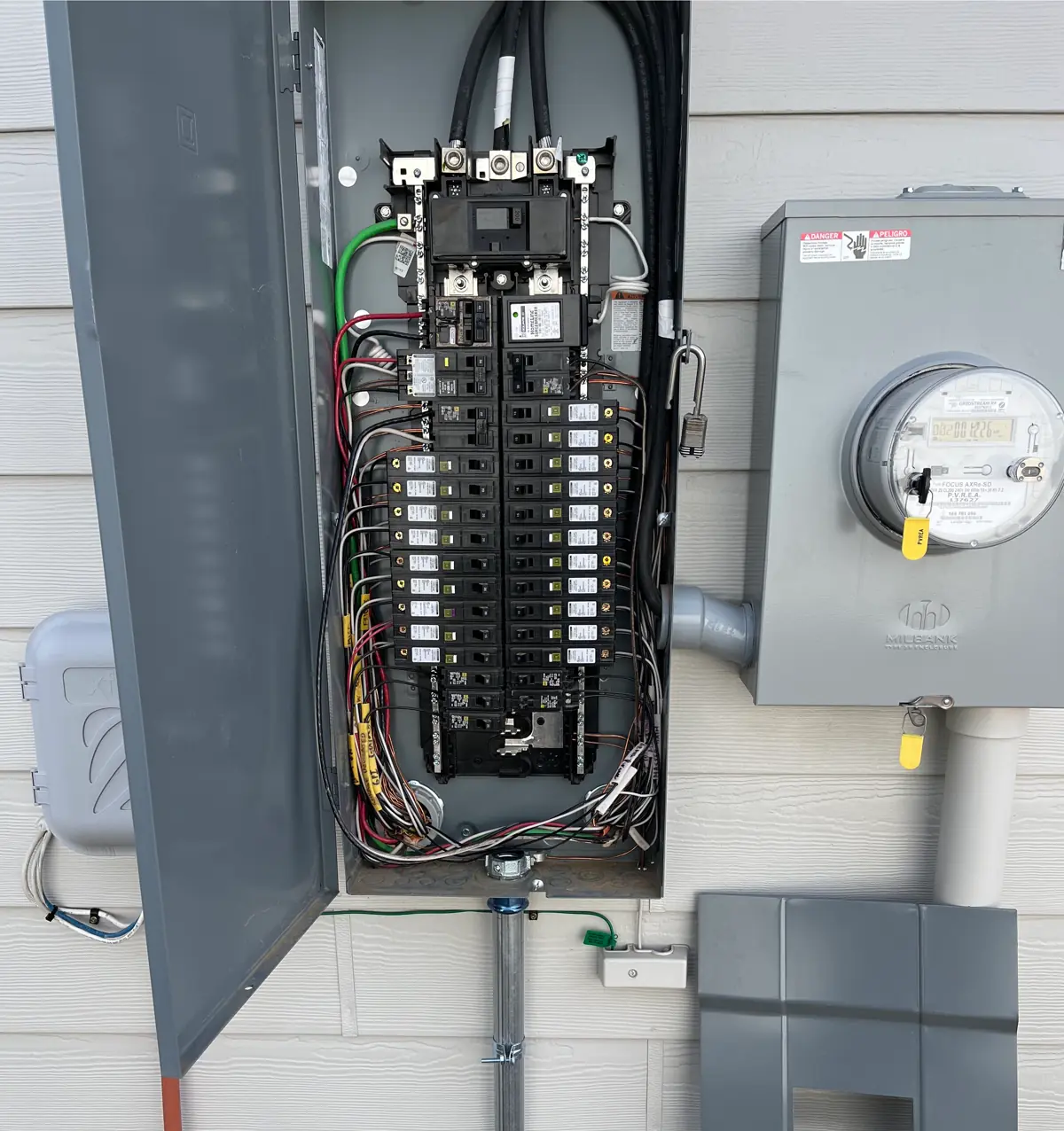
A power strip and a whole-home surge protector are not competing products. A strip only protects whatever is plugged into it. A panel-mounted surge protector sits at your electrical panel and clamps spikes before they spread through the house, including to the furnace, AC or heat pump, fridge, and garage-door opener, none of which plug into a strip. For most Northern Colorado homes the right answer is both: whole-home protection at the panel, plus good strips at the TV and the computer.
What a power strip actually protects
A surge strip handles small spikes at the outlet it plugs into. That’s useful for a TV, a gaming PC, or a home network, and you should keep using them there. But a strip has no idea what’s happening on the other 30 circuits in your house.
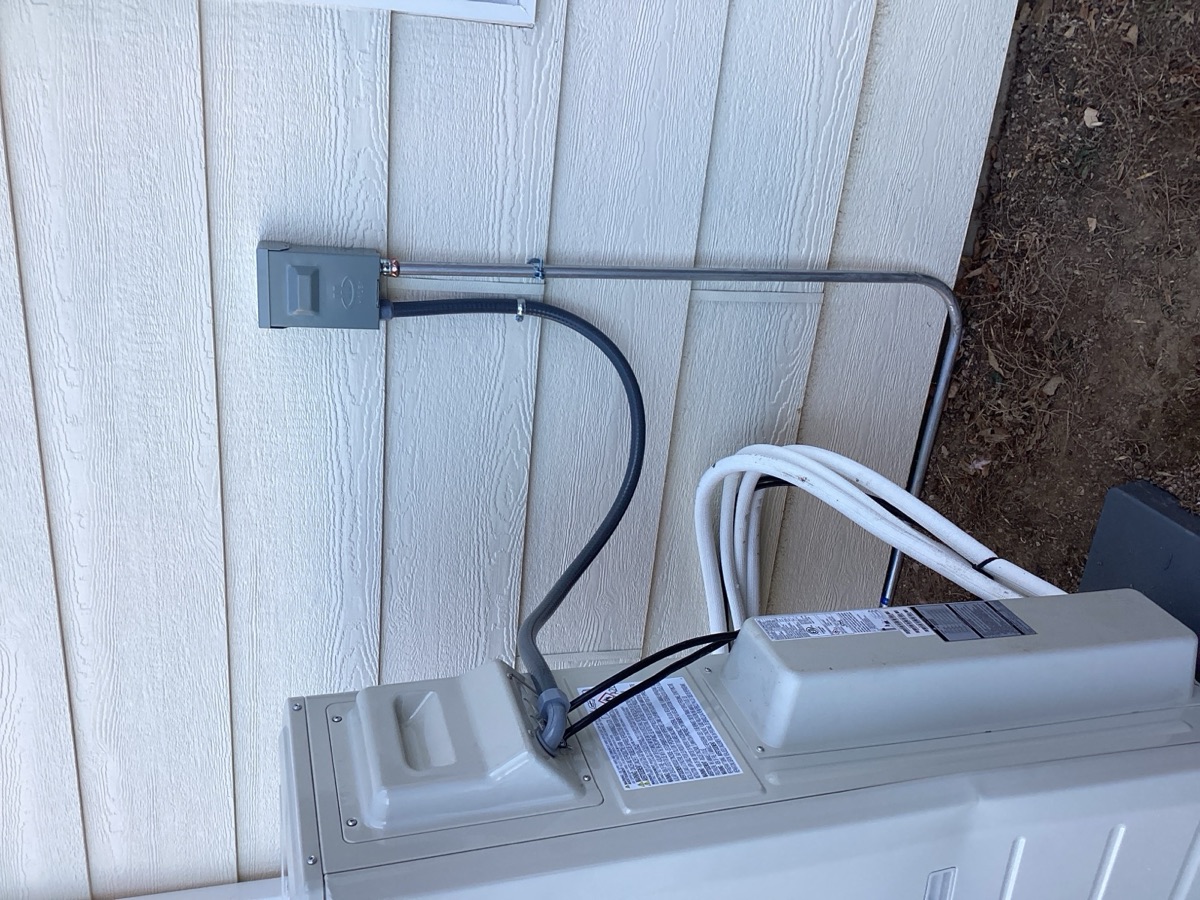
The expensive stuff in a modern home mostly isn’t plugged into a strip. Your furnace, your AC condenser or heat pump, the range, the dishwasher, and the garage-door opener all have electronic control boards, and they’re either hardwired or plugged into a wall outlet. Those boards are exactly what a surge takes out first.
There’s also the side-door problem. A surge can come in on the cable or phone line and go right around a strip to reach the TV or modem. Jon Trujillo, our Master Electrician, has seen it after strikes here: “The lightning will strike their gutter system and then it’ll travel throughout the home.” Without protection at the panel, it goes looking for a path to ground, and that path is your electronics.
What whole-home surge protection does differently
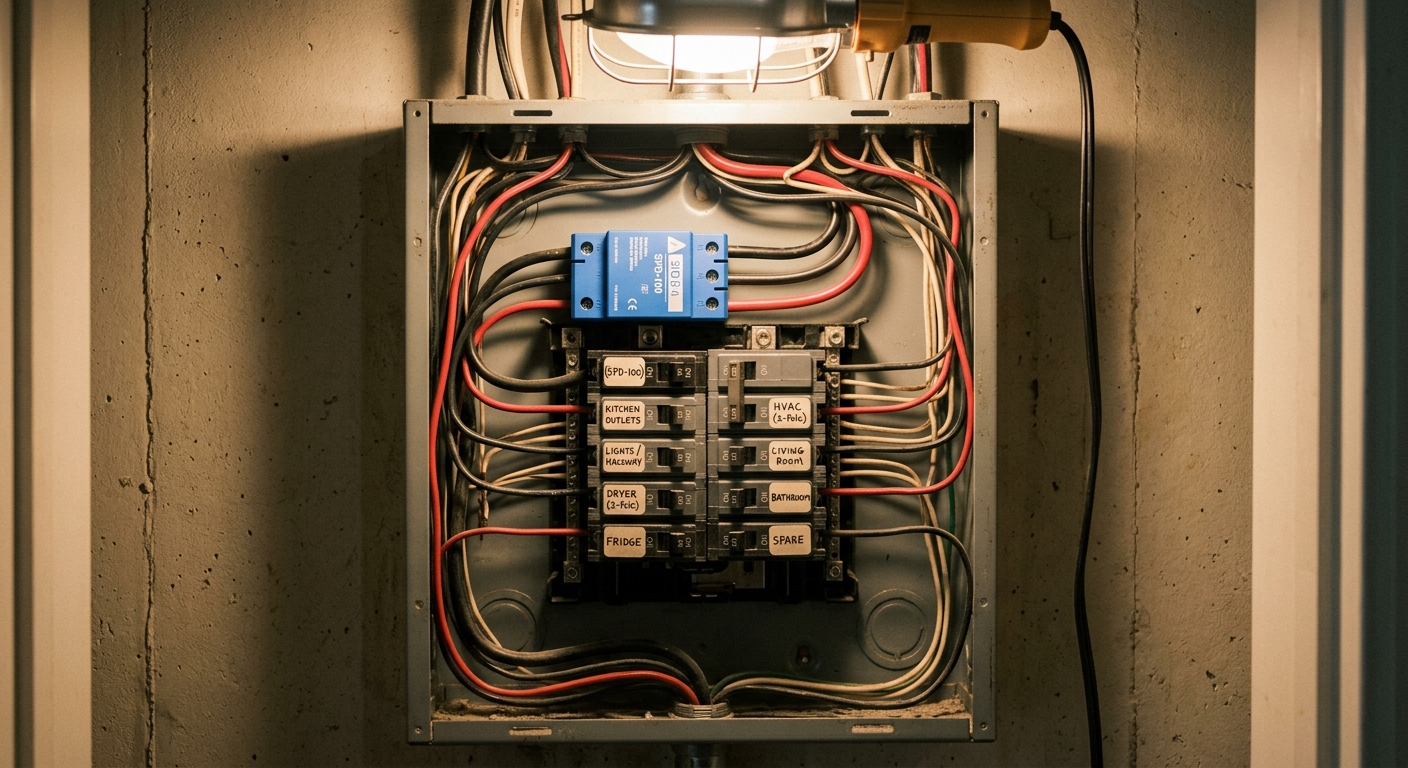
A whole-home SPD is installed at the service panel, usually on a dedicated breaker. When voltage spikes, it diverts the excess to ground before it spreads out across your branch circuits. One device covers every circuit in the house.
That matters in Northern Colorado. Jon puts our lightning season at roughly June through September, and the summer storms that roll off the foothills over Fort Collins, Loveland, and Longmont are the big events. But most surges aren’t lightning. Utility switching, power coming back on after an outage, a downed line, and big appliances cycling on and off all send smaller spikes through your wiring. Those smaller hits add up, and control boards often fail months later without an obvious cause.
What it won’t do: stop a direct strike on the house. No surge device can promise that, and you should be wary of any quote that says otherwise.
Why you want both layers
Electricians describe this as layered protection. The panel device takes the big hit and protects the hardwired equipment. The strip at the TV or desk catches what’s left and adds a second layer for your most sensitive electronics. One doesn’t replace the other.
If you only pick one, the panel device protects far more of what you own. A strip protects one entertainment center. The panel protects the furnace that heats the house in January.
Mistakes we see before people call
- Treating the breaker as surge protection. Breakers trip on overloads and shorts. They don’t react fast enough to stop a voltage spike.
- Shopping on the kA number. A big surge rating on the box doesn’t mean much if the install is poor. Lead length, breaker position, and grounding decide how well the device works.
- Skipping the grounding check. An SPD sends the surge to ground. If the grounding or bonding at your service is bad, the device can’t do its job. We check it on every install.
- Ignoring the indicator light. Most units have a status light. If it’s out or red, the device has absorbed what it can and needs replacing.
Frequently asked questions
Is a whole-home surge protector worth it, or is a good power strip enough?
A strip is enough only for what’s plugged into it. Your HVAC system, appliances, and hardwired equipment get no protection from a strip. If you have a heat pump, a furnace with a control board, or newer appliances, panel protection covers far more of the house for $300–$800 installed.
Do I still need surge strips if I have whole-home protection?
Yes, for your most sensitive electronics. Keep good strips on the TV, computer, and home network. The panel device handles the bulk of the surge; the strip adds a second layer at the device.
Does Colorado code require a surge protector when I replace my panel?
In jurisdictions on NEC 2020 or later, a service or panel replacement generally triggers the requirement, and new construction needs one. Rules vary by city, so we confirm with the local building department before we start.
What Three Crowns does
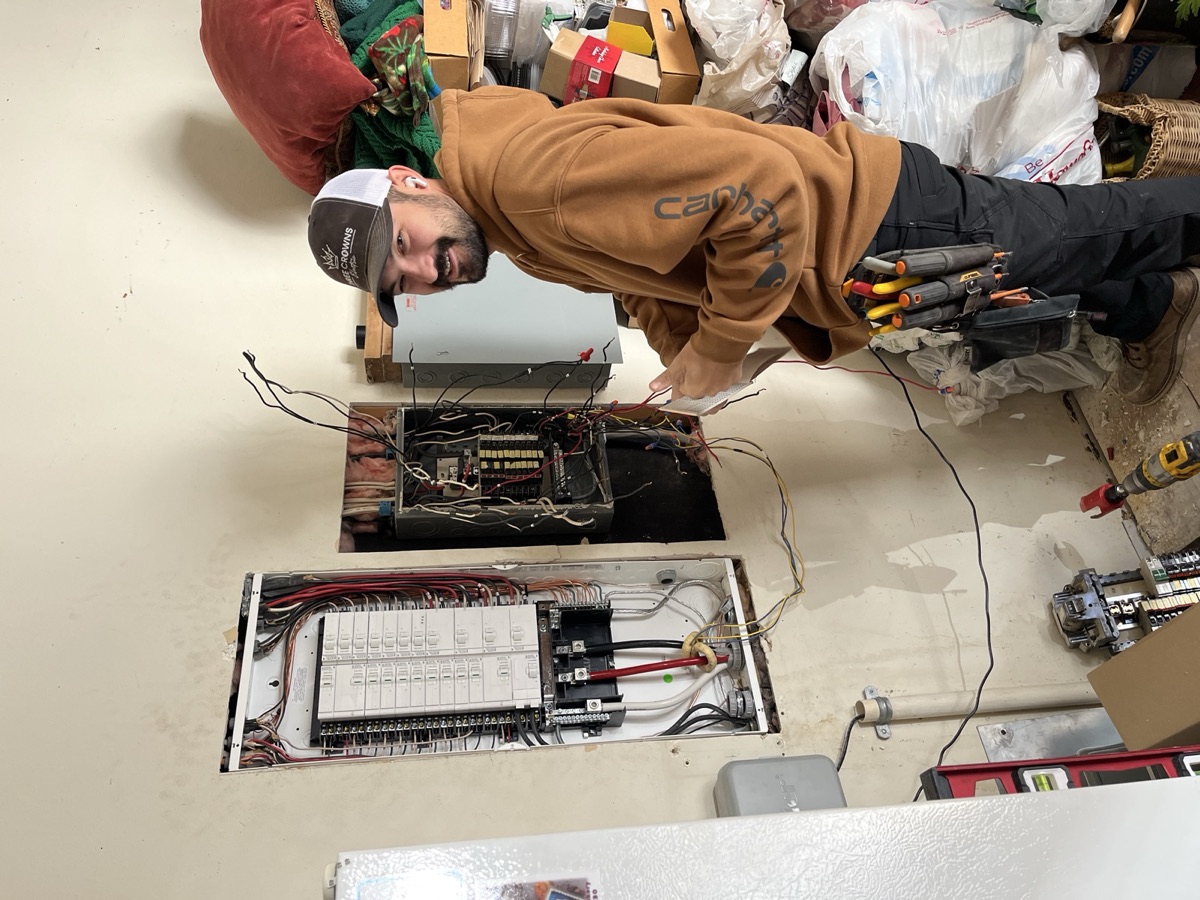
We install panel-mounted surge protection on a dedicated breaker, keep the leads short, and check your grounding before we call it done. If we’re upgrading your panel, the surge protector is included with the upgrade. You get the device model and install date in writing, and the work is backed by our 2-year warranty. See our whole-home surge protection service or call (970) 645-3114 to get a quote.